Arko Chandra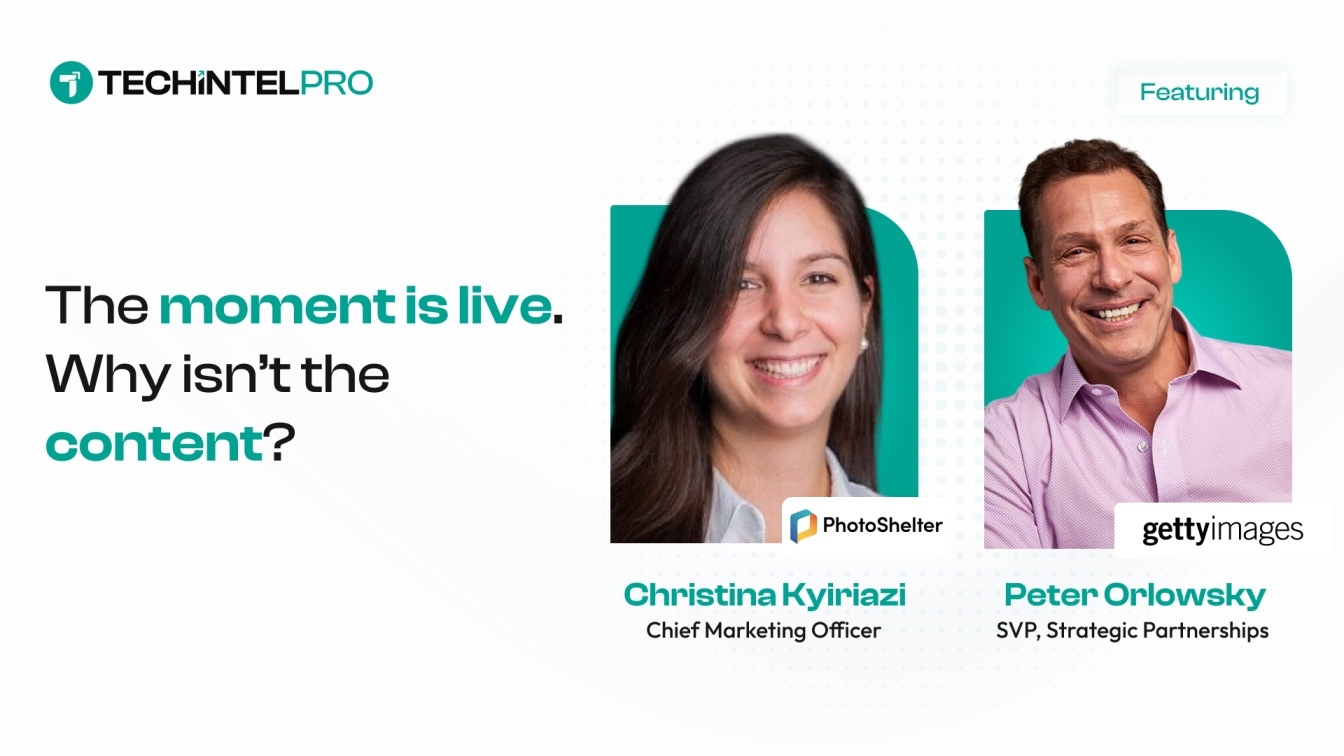
For live content teams, the pressure does not end when the shutter clicks.
An image captured at a game, major sporting event, or press conference can be incredibly valuable in the moment. But getting that image tagged, rights-cleared, formatted, submitted, discovered, and licensed quickly enough is another challenge altogether.
That gap is becoming harder to ignore. Audiences expect major moments almost instantly, while the organizations producing those moments are often still dealing with workflows built around manual handoffs and disconnected systems.
PhotoShelter and Getty Images are bringing those two sides closer together through a joint workflow designed to help sports organizations, higher education institutions, leagues, teams, and other content creators move imagery from capture to global distribution more efficiently.
For Christina Kyiriazi, CMO of PhotoShelter, the biggest opportunity is removing the operational work that has traditionally followed the creative process.
“It’s everything that happens after you take the shot,” she says, pointing to tagging, metadata, matching files to partner specifications, and manually pushing content to different destinations. During a live event, those tasks consume the time teams should be spending on storytelling.
Peter Orlowsky, SVP Strategic Partnerships at Getty Images, sees the same challenge from the distribution side. At Getty Images, speed has long been central to the editorial workflow, with customers increasingly expecting imagery “within seconds or minutes after something happens.”
The question, then, is no longer simply how quickly organizations can create content. It is how quickly they can turn that content into something discoverable and commercially available.
When the workflow becomes the bottleneck
Creative teams are often measured on what they produce, but much of their time can disappear into everything surrounding that production.
A photographer captures hundreds of images during a live event. Someone then needs to identify the right files, add metadata, organize, and send them where they need to go. Multiply that across an entire event and the administrative burden is humongous.
“Do that for hundreds of visuals during a live event, and your team is spending more time on file logistics than actually telling the story,” Christina says.
For Getty Images, the expectation has always been to move quickly. Peter points out that the company has spent years refining its technology, editorial processes, and relationships with venues and contributors to get important imagery to customers as efficiently as possible.
That urgency is especially visible during major sporting events.
“For priority moments at major events like the Olympics or World Cup, we're moving content faster than ever before, in less than 30 seconds and often before television replays,” Peter says.
That kind of speed is becoming the benchmark. Getty Images maintains a specific live window for contributors, with the expectation that imagery reaches the marketplace within minutes of a moment happening and through the hours that follow.
“The quicker the better and we're always looking for ways to do it even faster,” Peter adds.
The reason is simple: customers want the right photograph while the moment is still relevant, so they can compete and connect with audiences.
A tighter workflow between PhotoShelter and Getty Images addresses more than convenience. It reduces the number of steps between capturing an image and putting it in front of someone who might want to license it.
The archive is an opportunity waiting to be activated
There is another opportunity sitting inside many organizations: everything they have already captured.
Sports leagues and university athletic departments can have enormous visual archives spanning years of games, ceremonies, campus life, recruiting visits, and other events. Yet much of that content remains primarily an internal resource.
Christina believes organizations need to change their thinking about those collections.
“Most archives get treated like a storage closet. Put it away, move on,” she says. Instead, she recommends treating them as inventory, particularly when the right metadata and rights infrastructure are in place.
That changes the commercial equation. A photograph from years ago can suddenly become relevant because of an anniversary, a Hall of Fame induction, an alumni milestone, or a current story involving the people and institutions pictured.
The PhotoShelter-Getty Images workflow gives organizations a way to bring high volumes of existing content into the Getty Images marketplace, where it can become available for licensing.
Peter sees this as particularly compelling because so much sports and higher education content has historically been used for only a handful of purposes.
“These universities and leagues are now capturing so much content,” he says, from gameplay and press conferences to ceremonies, recruiting visits, and media day photoshoots.
Historically, much of that imagery might only appear on a website or in a marketing campaign. Connecting it to a global marketplace creates another path for that content to generate value.
Peter also sees the workflow as a way to make existing archives more useful when customers need more than the image they initially find.
“There are often times where a customer may ask for other frames from a sequence,” he says. With the content already connected to the Getty Images workflow, providing additional imagery becomes much easier.
That matters in a high-volume environment. Rather than treating every additional request as a new manual process, organizations can make more of their existing content available without putting additional pressure on the people managing it.
AI can remove friction without taking over the story
AI is quickly becoming part of modern content operations, but its most useful role may not be deciding what makes a compelling image. It may be taking care of the repetitive work that makes good content harder to distribute.
For Christina, the sweet spot is fairly clear.
“AI’s strength here is logistics,” she says, pointing to tasks such as tagging players, logos, and objects, formatting metadata to specifications, and routing files to the appropriate destinations.
That is precisely the kind of work that slows teams down. AI can clear that friction while humans remain responsible for the decisions that require context and judgment.
“AI should own the structural work, like getting content organized, tagged, and distribution-ready so it can move fast,” Christina says. “Deciding which content actually tells the story is still a human call.”
Peter takes an equally cautious approach, particularly when it comes to editorial metadata.
Getty Images has a 99.9% threshold goal for metadata accuracy, and Peter says the company continues to rely on human editors as the most trusted way of finalizing metadata.
That becomes particularly important during major sporting events, where context can change from moment to moment. Getty Images puts content experts on events such as the World Cup who understand the players, celebrities, key moments, and storylines unfolding throughout the tournament.
“We still trust editors putting in the metadata themselves as the most efficient and trustworthy way,” Peter says.
The stakes are high because the imagery is moving so quickly.
“These images are being sent within seconds, and we have to make sure we're doing it right,” he adds.
AI still has a role. Getty Images uses it in areas such as search and discovery. The company also does not accept AI-generated content onto its platform or use AI tools to edit the content itself.
For Peter, that human touch is part of what has underpinned Getty Images’ position in the editorial content space.
Connecting creation to a global marketplace
The bigger shift is happening in how organizations think about digital asset management itself.
DAM can be excellent at storing and organizing content, but if getting that content into a marketplace still requires a separate manual process, there is a significant gap in the workflow.
“The next generation of DAM platforms will be defined by real-time distribution built into the workflow itself,” Christina says.
That is the direction PhotoShelter-Getty Images integration is all about: bringing content management and marketplace distribution closer together so contributors don’t have to treat distribution as an entirely separate operation.
Peter sees the value in giving contributors more choice without forcing them to overhaul how they already work.
“What has made Getty Images so successful over the years is our ability to adapt to our customers’ and contributors’ needs, and work with them no matter what program, distribution or workflow they're using,” he says.
The company’s experience and editorial infrastructure allow it to work with partners and contributors in different ways, rather than forcing everyone into a single model.
The PhotoShelter integration builds on that approach.
“The tighter integration that we have with PhotoShelter is only going to help our contributors deliver high-quality, rights-ready content into the Getty Images marketplace faster,” Peter says. He also sees it increasing both the availability and commercial potential of content at global scale.
For sports leagues, institutions, and governing bodies, that creates an opportunity to do things that may previously have seemed too difficult or too time-consuming.
There is another critical piece to that equation: rights.
Getty Images has longstanding relationships and official designations with more than 125 of the world’s leading sports governing bodies, leagues, and clubs. Peter says those relationships give Getty Images the rights to license content commercially to brands, creators, and organizations, while also giving customers confidence in the imagery they are licensing.
In an increasingly crowded content environment, that trust matters. Buyers do not simply need more images, but imagery they can find, license, and use with confidence.
What the next content workflow looks like
The future of visual content is likely to be defined by how well all the pieces work together.
Capture, metadata, rights management, asset management, AI, submission, distribution, and licensing are increasingly becoming parts of one connected journey.
For Christina, that means DAM platforms need to evolve from places where content is stored into systems that actively move content toward its next opportunity. AI for the repetitive work and humans retain responsibility for quality and storytelling.
For Peter, the opportunity is significant for organizations producing large volumes of sports and institutional content but without the resources to build complex distribution workflows themselves.
“The integration is designed to support high-volume content production environments where speed and accuracy are critical,” Peter says.
The aim is to make distribution feel like a natural extension of the work content teams are already doing.
“We hope to make the experience more seamless and help put an actual workflow into place that suits them where it’s not adding too much extra work or time,” Peter says.
A live event photograph can reach a global customer while it’s still fresh. A decade-old image can find a new commercial audience. And the creative team doesn’t need to spend hours making either outcome happen manually.