
 Arko Chandra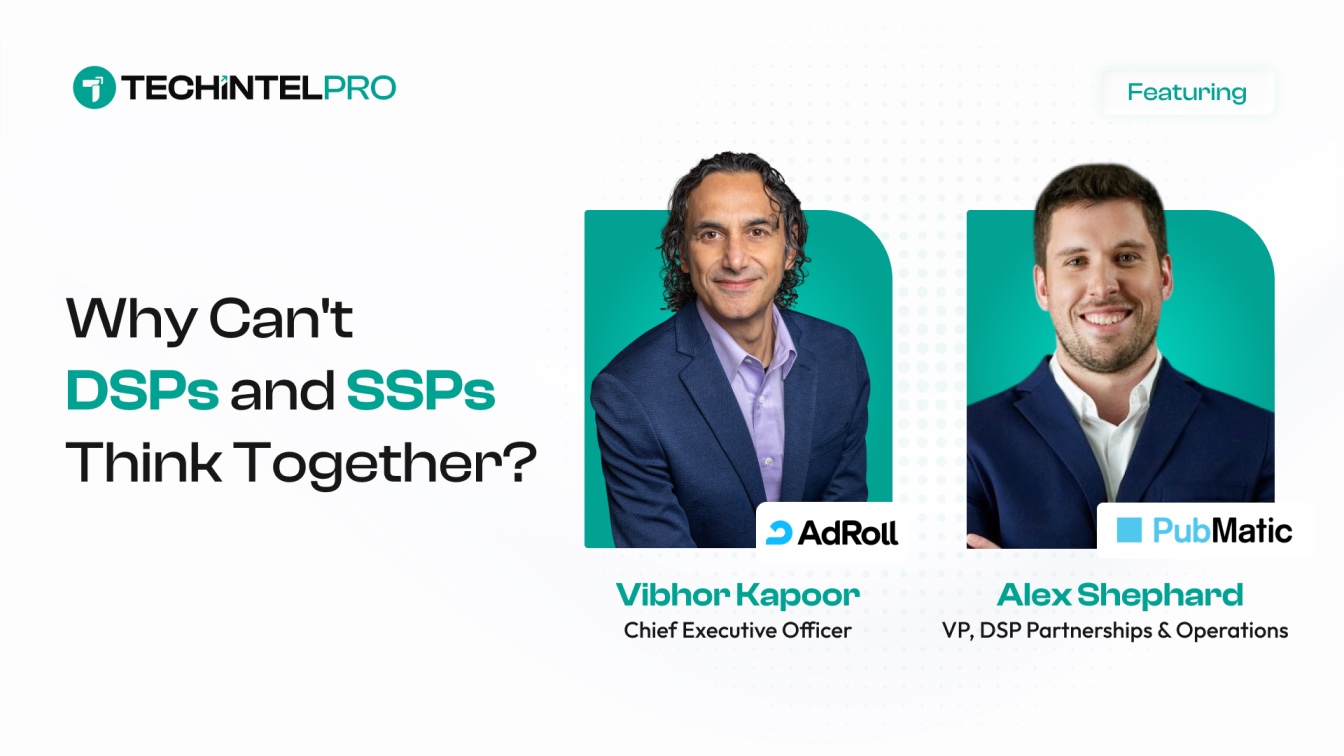
Every programmatic advertising campaign generates an abundance of data and signals. Bidding behavior, audience engagement, inventory availability, auction dynamics, and it goes on.
Yet the moment something breaks, marketers find themselves frantically searching for the root cause in the maze of disconnected platforms, fragmented reports, and lengthy back-and-forth conversations.
As advertising turns increasingly AI-heavy, the operational complexity is becoming harder to justify. Marketers are now desperate for systems that can bridge information across the demand and supply sides, reason through what happened, and recommend the next best action.
That’s the vision behind the latest partnership between AdRoll and PubMatic. The integration explores how the Model Context Protocol (MCP) can enable AI agents to communicate across platforms, turning isolated diagnostics into coordinated workflows.
Bringing together perspectives from Vibhor Kapoor, CEO of AdRoll, and Alex Shephard, VP of DSP Partnerships & Ops at PubMatic, this piece offers a glimpse of the agentic AI-powered future of programmatic advertising.
Programmatic has plenty of data. What it lacks is context.
Campaign data is available. Information is right there for marketers to access. The problem is disorganization. The data is scattered. In order to juice out meaningful context, marketers have to manually pluck data from multiple systems and stitch them together.
As Vibhor Kapoor explains, “Too much of programmatic still depends on disconnected systems and manual investigation. When something like a deal ID isn't delivering as expected, the answer often sits somewhere between the demand-side platform, the supply-side platform, campaign configuration, inventory rules, and exchange-level constraints.”
The fragmentation creates unnecessary friction, making the entire system ambiguous. Marketing, account management, and customer success teams each hold part of the answer via their respective platforms, but none has clue about the complete picture.
PubMatic sees the same problem from the opposite side of the ecosystem.
According to Alex Shephard, “The supply chain has too many handoffs and no shared language for what went wrong. A campaign underdelivers, and you immediately have three or four parties running their own diagnostics in parallel. Each is seeing a fragment of the same problem. None of them are looking at the same data at the same time.”
The consequences extend beyond slower troubleshooting. By the time an issue moves between advertisers, DSPs, SSPs, and publishers, campaign performance has often already suffered a dip.
As Alex puts it, “By the time a DSP flags an anomaly, escalates it to their account team, and that team reaches us, a meaningful chunk of flight time has already burned. At that point you're doing forensic archaeology, not active troubleshooting.”
Together, their observations point to a common challenge surfacing across the industry: modern advertising systems generate enormous intelligence, but very little shared understanding.
Moving beyond siloed advertising systems
The trouble doesn’t end here. The growing complexity of consumer journeys exposes another limitation of traditional ad infrastructure: its propensity to operate in silos.
Vibhor believes those silos no longer reflect how marketing actually works.
“Buyers don't experience brands in silos, and the systems that support advertising shouldn't operate that way either,” he says. “Agent-to-agent collaboration is a natural next step because it allows independent platforms to work together around a shared objective.”
Instead of marketers stitching together campaign context from multiple dashboards, Vibhor envisions AI agents securely exchanging relevant information across platforms. This is how they can reason through problems collectively.
For Alex, interoperability becomes even more pivotal as AI assumes a larger operational role.
He notes that buying systems have already become increasingly autonomous, with machine learning models continuously adjusting bids, pacing, and audience targeting. The disconnect, however, is that these intelligent systems still communicate through largely manual processes.
“Once you see that, the need for machine-readable, interoperable AI communication specs becomes obvious,” he explains. “If autonomous agents are going to perform the diagnostic and optimization work that humans currently do manually, they need a structured way to communicate with one another across organizational boundaries.”
In other words, the future of advertising is as much about enabling smart platforms to collaborate as it is about making individual platforms smarter.
From reactive troubleshooting to real-time resolution
Troubleshooting workflows remain surprisingly manual. So much for automation.
A marketer investigating an underperforming campaign might review DSP reports, request additional information from partners, compare delivery metrics, wait for responses, and wait for feedback from internal specialists who understand the nuances of different systems.
As Vibhor notes, “The biggest time sink isn't finding data, but connecting those data points across systems so they're interpreted correctly.”
That fragmented workflow often stretches investigations across days instead of minutes.
The AdRoll–PubMatic proof of concept explores a different approach.
Using MCP, campaign context from AdRoll can be connected with supply-side diagnostics from PubMatic inside a unified AI workflow. Rather than just retrieving reports, the AI can reason across information from both environments to identify likely causes and suggest next steps.
Vibhor describes it, saying, “The AI then connects—and, more importantly, uses context from both systems to reason through the issue and identify a likely root cause. That changes the experience from ‘here are the reports you asked for’ to ‘here’s what's happening, here’s why, and here are the next steps.’”
Alex sees the same transformation through the lens of continuous optimization.
“The core shift is moving from reactive diagnostics to continuous optimization,” he says. “Agentic diagnostics run all the time, across all the layers simultaneously, and they don't wait for a human to escalate.”
Instead of waiting for a support ticket, an AI agent in the SSP layer could detect declining query-per-second (QPS), correlate it with auction dynamics and floor pricing, and immediately communicate those insights to AI agents working on the DSP side.
Beyond expediting troubleshooting, this facilitates shared situational awareness across the advertising supply chain.
MCP could become the common language for AI collaboration
The AdRoll-PubMatic collaboration also reflects a broader industry conversation around interoperability.
Historically, advertising platforms have relied on custom integrations built for specific workflows. While they do fine in isolation, the integrations rarely scale across an increasingly AI-native ecosystem.
Vibhor believes MCP represents a meaningful shift toward standardization.
“MCP provides a common way for AI systems to securely and consistently interact with external platforms,” he explains. “This moves us away from one-off integrations and toward a more standardized model for interoperability.”
The standardization becomes particularly valuable as organizations introduce more autonomous AI systems into campaign management.
Alex echoes this perspective, explaining that PubMatic's early work on an agent-to-agent MCP specification stemmed from recognizing that AI systems needed a shared communication model, not just APIs.
For him, interoperable AI workflows are about creating shared context, where adjacent systems understand not only what happened but why.
This philosophy also changes how supply-side intelligence contributes to campaign performance.
“The supply side has always held data that buyers should have had earlier,” Alex says. Auction dynamics, floor price history, bid density, inventory quality, and traffic signals have traditionally remained within SSP environments.
In AI-native workflows, however, “We can push supply-side intelligence upstream... so that DSP systems are incorporating SSP signal before the auction, not after.”
Proactive intelligence enables bidding strategies, pacing algorithms, and troubleshooting workflows to adapt continuously instead of reacting after performance declines.
Agentic advertising could look like this
As AI workflows mature, Vibhor and Alex envision advertising becoming significantly less fragmented for marketers.
It means marketers could interact with a single intelligent interface capable of coordinating information across multiple platforms.
Vibhor paints that picture clearly.
“A marketer should be able to ask why a campaign is underdelivering, which audience is responding, whether a deal is configured correctly, where to move budget, or how performance in one channel should inform performance in another.”
Instead of simply surfacing reports, the system would “connect signals, explain tradeoffs, recommend actions, and keep the marketer in control.”
Importantly, Vibhor stresses that “AI-native advertising isn't about removing the marketer. It's about removing the friction around the marketer so they can focus on strategy, judgment, and growth.”
Alex extends the vision to the broader advertising ecosystem, noting that SSPs are evolving from passive infrastructure providers into active intelligence partners.
“The shift is from the SSP as a passive auction operator to the SSP as an active intelligence partner in the campaign execution layer,” he explains.
The evolution also demands greater transparency.
“The efficiency gains that are on the table are real and significant,” Alex says. “None of that happens if SSPs treat their data as proprietary moats. It happens when SSPs build the infrastructure to share relevant intelligence in machine-readable formats that DSP agents can consume.”
Interoperability itself may emerge as a competitive edge as AI agents increasingly coordinate decisions across organizational boundaries.
Alex concludes that “The SSPs that earn a strategic seat in AI-native buying workflows are the ones that treat interoperability as a core product commitment, not a compliance exercise.”
Coordination is the next competitive advantage
Intelligence alone won't eliminate the operational friction that has long characterized programmatic advertising.
The next stage of evolution lies in coordination. Connecting demand-side and supply-side intelligence so AI systems can reason together is the game.
The AdRoll–PubMatic partnership offers an early example of what that future might look like. By exploring MCP-enabled agent-to-agent communication, the integration demonstrates how advertising workflows can move beyond disconnected diagnostics toward continuous, contextual decision-making.
For marketers, that could mean spending less time navigating dashboards and escalating support tickets, and more time making strategic decisions. For the broader ecosystem, it signals a shift toward open, interoperable AI workflows where platforms no longer compete solely on the intelligence they generate, but on how effectively they share that intelligence to deliver better outcomes across the advertising supply chain.