Shradha Vaidya
At the recently concluded Google I/O 2026, Google introduced one of its boldest developer tools yet — Google Antigravity 2.0. Designed for the “agent-first” era of coding, the platform is rapidly becoming a major talking point among developers, AI enthusiasts, and enterprise teams.
Unlike traditional AI coding assistants that simply autocomplete code, Google Antigravity 2.0 focuses on orchestrating autonomous AI agents capable of handling complex workflows, parallel tasks, and even long-running software operations. The announcement signals Google’s larger ambition to integrate intelligent agents deeply into modern development ecosystems powered by Gemini.
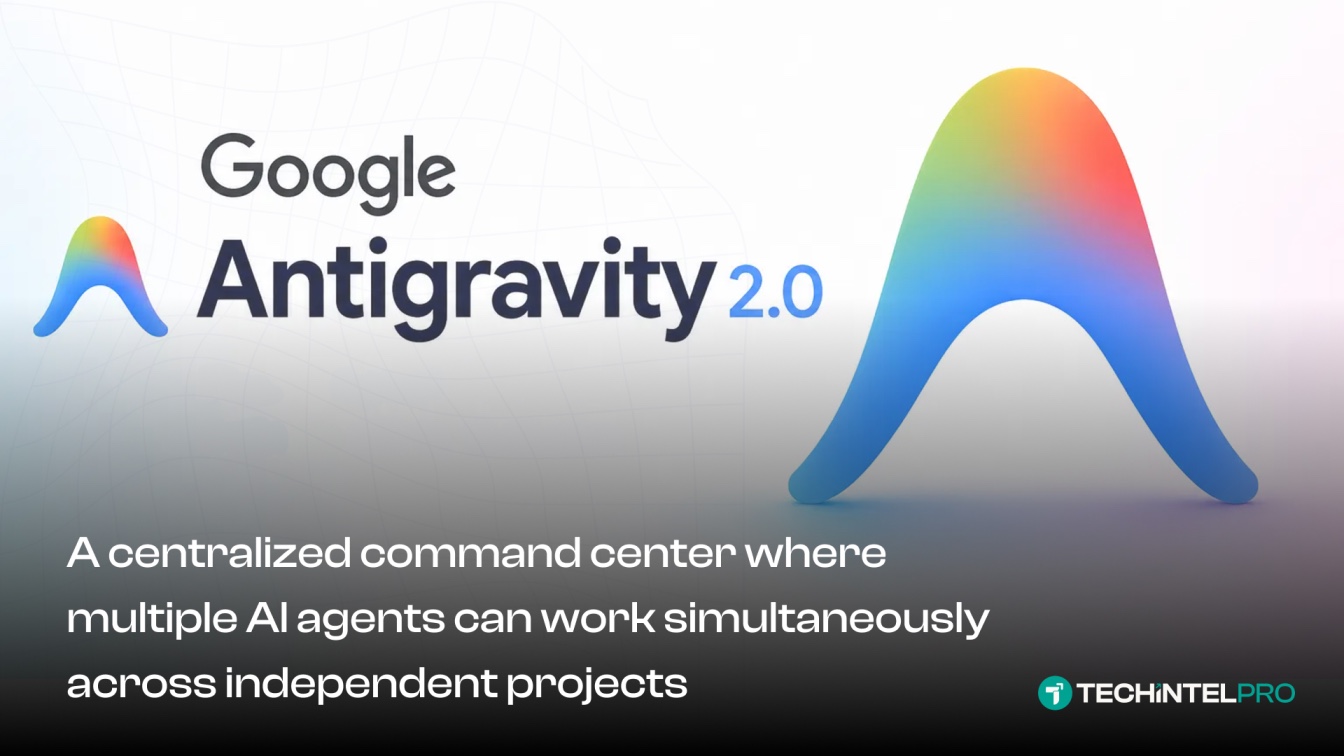
According to Google’s official Antigravity page, the new platform acts as a centralized command center where multiple AI agents can work simultaneously across independent projects. Developers can monitor agents, manage workflows, and automate coding operations from a unified interface.
One of the most significant changes in Antigravity 2.0 is its break from the traditional IDE model. Instead of functioning like a standard code editor, it now operates as a standalone desktop application for Windows, Linux, and macOS, designed to manage complex multi-agent workflows. This shift lets developers oversee and coordinate AI agents handling tasks in parallel, reducing the need to micromanage every line of code manually.
Google says the platform supports “dynamic subagents,” which are specialized AI agents capable of splitting large projects into smaller parallel tasks. This enables the concurrent distribution of a single development project among multiple autonomous agents, significantly enhancing operational efficiency and delivery speed.
Another significant announcement at Google I/O 2026 was the addition of the Gemini 3.5 Flash model to the platform. Google noted that Gemini now supports key Antigravity workflows, including real-time voice transcription, task automation, and advanced code orchestration. Developers can even issue spoken prompts directly into the system using live voice transcription features.
The company also launched a new CLI (Command-Line Interface) tool and SDK as part of the Google Antigravity 2.0 kit, enabling developers to integrate AI agents into custom workflows and enterprise systems. This makes the platform much more than just a coding assistant — it effectively becomes an AI operating layer for software development.
Industry experts are already drawing comparisons between Google Antigravity 2.0 and rival AI coding platforms like OpenAI Codex and Anthropic Claude Code. However, Google seems to be taking a different approach by focusing on collaboration among multiple AI agents instead of depending on a single assistant model.
The developer community has shown a range of reactions to Antigravity 2.0. Though the transition to Gemini workflows brought faster, context-aware performance, it also introduced tighter usage quotas and a loss of manual control that some users miss from the old CLI. Reddit threads reflect both optimism and apprehension about the platform’s future.
Still, Google’s broader vision is becoming increasingly clear. During the keynote, executives described this transition as part of the “Agentic Gemini Era,” where AI systems move beyond assistance and begin acting autonomously across products and services. Google Antigravity 2.0 appears to be one of the strongest examples of that strategy in action.
For developers, startups, and enterprises exploring the future of AI-assisted coding, Google Antigravity 2.0 could signify a major shift in software development. Even if it doesn’t become the dominant platform, its launch has already positioned Google as a major contender in the race toward autonomous software engineering.