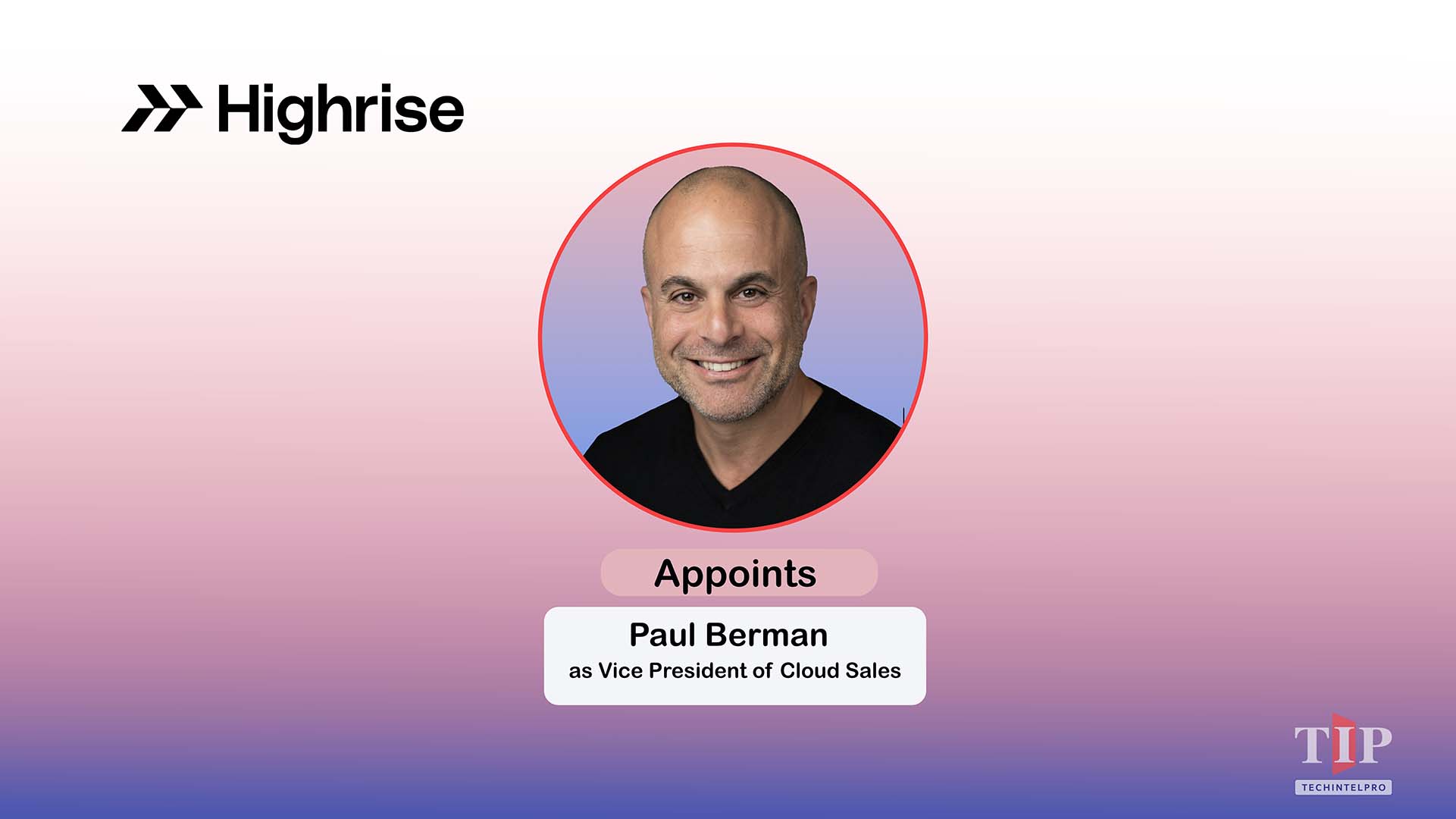

Highrise AI has appointed Paul Berman as Vice President of Cloud Sales to lead go-to-market strategy and strategic partnerships across North America and Europe. This move supports the company's rapid scaling of dedicated GPU infrastructure deployments amid surging demand for production-scale AI workloads.
Quick Intel
The transition of AI workloads from experimentation to full production is creating urgent demand for dedicated, high-performance GPU infrastructure that avoids the limitations of shared cloud environments. Highrise AI's platform meets this need by providing greater control over performance, cost, and security while enabling seamless scaling for developers and enterprises.
Vince Fong, Co-Founder and CEO of Highrise AI, said: "AI workloads are moving rapidly from experimentation into production, driving demand for infrastructure that delivers predictable performance, uncompromising security, and the ability to scale reliably. Highrise was built for this reality. As demand accelerates, we are expanding our commercial organization to better support enterprise deployments and deepen relationships with customers building large-scale AI systems. Paul has built and scaled go-to-market teams for high-growth infrastructure platforms, and his experience will be instrumental as we capture this opportunity."
Paul Berman, Vice President of Cloud Sales at Highrise AI, said: "We are seeing strong demand from both AI-native companies and enterprises seeking alternatives to shared cloud environments. As workloads mature, many teams are prioritizing dedicated GPU infrastructure that gives them greater control over performance, cost, and security. Highrise provides that foundation, and I look forward to working with customers and partners to help them build long-term infrastructure strategies and scale deployments on the Highrise platform."
Highrise combines bare-metal GPU clusters with advanced orchestration and confidential compute capabilities, making it well-suited for mission-critical AI applications. Backed by Hut 8 Corp.'s extensive energy infrastructure, the platform ensures reliable, scalable power for next-generation compute demands.
About Highrise AI
Highrise AI is a GPU-native infrastructure platform designed for production-scale AI workloads. Our platform delivers scalable GPU compute across dedicated clusters, managed cloud environments, and confidential compute deployments for developers and enterprises operating in performance-critical and security-sensitive environments. Highrise combines bare-metal GPU performance with full-stack orchestration, API-driven access, and hardware-enforced isolation to support training, fine-tuning, and production-scale deployment of AI models. Our platform is powered by high-density GPU clusters built on latest-generation NVIDIA architectures, with support for next-generation architectures. Our infrastructure is optimized for distributed training workloads that require high-bandwidth networking, high-throughput storage, and predictable cluster performance. Highrise AI is a subsidiary of Hut 8 Corp. Leveraging this integrated platform, Highrise designs, deploys, and operates GPU clusters backed by scalable power and purpose-built infrastructure. For more information, visit highrise.ai and follow us on LinkedIn.
About Hut 8
Hut 8 Corp. is an energy infrastructure platform integrating power, digital infrastructure, and compute at scale to fuel next-generation, energy-intensive use cases. We take a power-first, innovation-driven approach to developing, commercializing, and operating the critical infrastructure that underpins the breakthrough technologies of today and tomorrow. Our platform spans 710 megawatts of energy capacity under management, 330 megawatts of energy capacity under construction, and 1,230 megawatts of energy capacity under development across 15 sites in the United States and Canada: five ASIC compute, hosting, and Managed Services sites in Alberta, New York, and Texas; five cloud and colocation data centers in British Columbia and Ontario; one non-operational site in Alberta; one site under construction in Louisiana; and three sites under development across Texas and Illinois.