
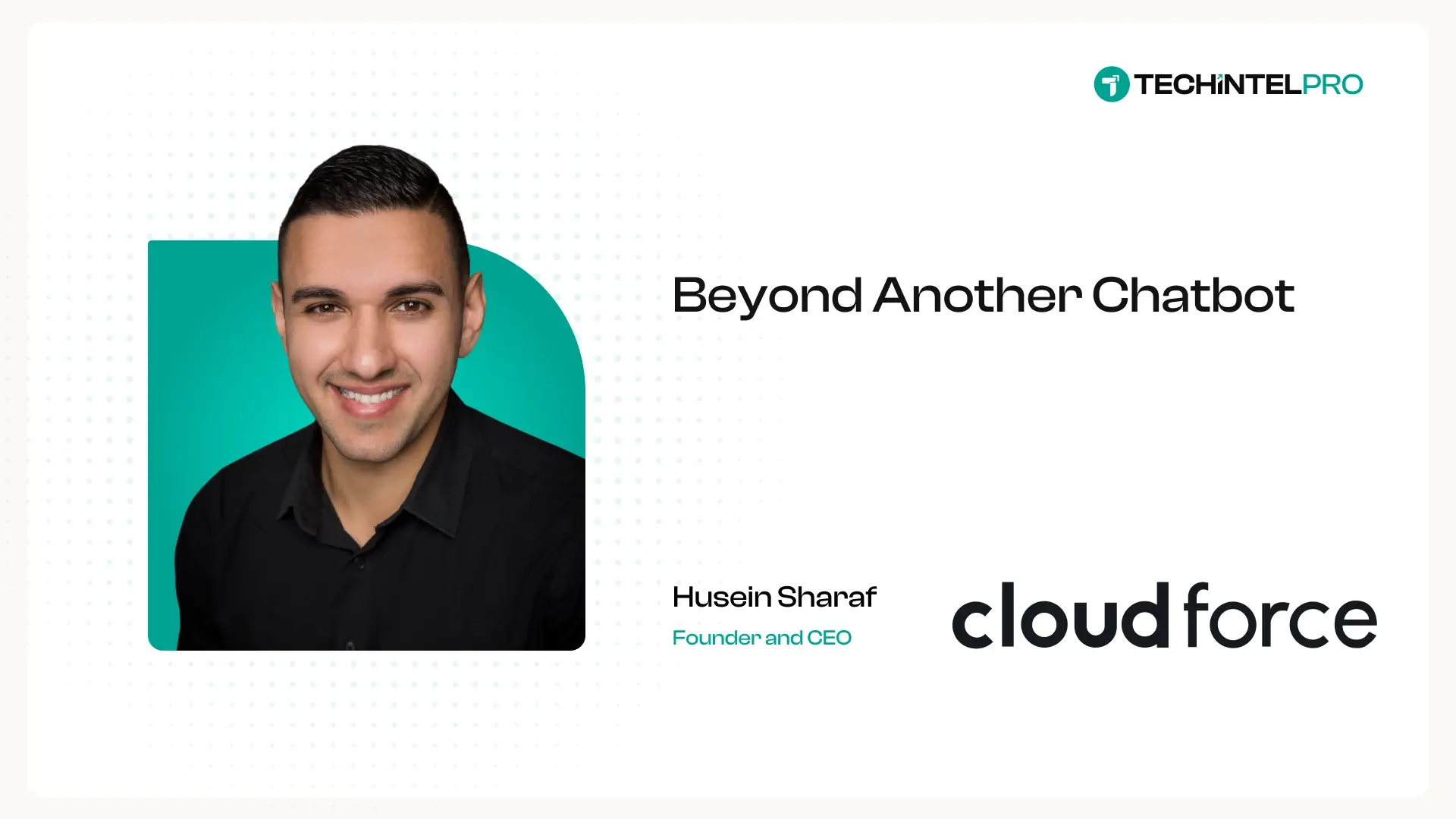
Husein Sharaf, Founder and CEO of Cloudforce, says the way most institutions buy AI is working against them. Per-seat licenses for a single provider’s product penalize organizations twice, he argues: once for licenses that go unused, which he says is over half of those in Cloudforce’s customer base, and again for users who exceed token limits and are charged overages. Cloudforce’s alternative with nebulaONE is a flat annual platform fee, consumption-based pricing for the models actually used, and an administrator-defined monthly budget for every user.
In this conversation, Sharaf explains why higher education was the right place to prove the platform, how Cloudforce vets new models centrally so each institution doesn’t have to, and why he chose to build on Microsoft Azure. He also discusses how healthcare differs from campus deployments, why he says people, process and use-case selection are bigger barriers to adoption than technology, and how Cloudforce plans to scale without losing its hands-on model. He closes with a prediction that runs against the grain: that within three years, AI will make a university’s own faculty more valuable to its students.
Higher Ed is one of the few industries where you can get access to tens of thousands of new software users in a single implementation, and those users are not afraid to try a new product and generate a ton of useful insights very rapidly. Combine this with the varied nature of the audiences (students, faculty, staff, researchers, etc.) and the constant influx of new users each semester, and you have a software testing ground unlike any other. If you can survive as a new product in this environment, and you can gain organic user adoption through unique value creation and peer-to-peer sharing, you have something quite special. Not to mention that the people likely to be most impacted either positively or negatively by AI are new grads, and as an organization we want to be a force for good in contributing to a positive outcome for the millions of students who have access to our platform.
From a practical perspective, buying thousands of per-seat licenses for a single frontier model provider’s product, like ChatGPT or Claude, makes very little sense for large, distributed environments like a university or a state government. The reasons are obvious: very few can afford to license every user at any set dollar amount monthly, with such large audiences the users’ needs and preferences will require different models, and the nature of AI inference cost means these budget-constrained orgs are penalized both for underused licenses (which our data implies is over 50% of AI licenses in our customer base) and for users that exceed a certain tokens-per-month limit (and are subsequently charged overages). Our model is simple: pay a flat platform fee for the entire organization per year (typically pennies per user per month when calculated at scale) and then pay only for the models you use on a consumption basis. No model lock-in, no wasted per-seat licenses, no unexpected overages because every user has an administrator-defined monthly budget that is transparent to them and to organization leadership on day 1.
Keeping up with the barrage of new AI models released weekly is a bit like playing wack-a-mole these days, but our team has well-defined processes to handle this work for our customers and to ensure we always have the latest models and capabilities available to all our platform users with every release. We do the heavy lifting of vetting every new model for safety, privacy, compliance, capability, performance, cost, and environmental impact centrally, and all our customers benefit collectively as a result. There’s no reason every institution should have to do this work alone, and because they each can weigh in on what they feel is important, and we listen to their needs intently, we’ve been able to cultivate a collective that is stronger than any one institution on its own. We host monthly customer advisory board and office hours meetings (attended by over 50 institutions regularly) where we create space for peer-to-peer sharing of best practices, lessons learned, and input into our platform roadmap.
We’ve built a strong and mutually beneficial partnership with Microsoft over a decade of working together, and we’ve gained an incredible distribution channel for nebulaONE as a result. We chose Microsoft as our hyper-scaler partner very intentionally, due to a few key factors that matter to us and to our customers:
What that means for Cloudforce is we can focus on what we do best; spending time with the actual humans who are solving real-world problems with AI, and building a platform our users and administrators love as a result. Microsoft takes on the burden of running safe, reliable, highly resilient infrastructure in every region of the world where our customers rely on nebulaONE to deliver.
Large user audiences, sensitive data sets, and strict compliance requirements are our typical operating constraints in both Higher Ed and Healthcare. That said, the margin for error in a clinical setting is certainly tighter given the nature of the potential outcomes, and we take that responsibility incredibly seriously at Cloudforce. The work we’ve done thus far with our customers in healthcare centers primarily around operational and research use cases, as we collectively gain greater confidence in this technology’s ability to deliver accurate and reliable results in every scenario. That said, saving a clinician from spending an extra hour a day filling out insurance claims means they can spend that hour with their patients, and that space to focus should result in better patient outcomes even when our AI isn’t directly involved in the clinical interaction. Working closely with Microsoft’s Healthcare Data Services team, we’ve brought capabilities like the Healthcare Agent Orchestrator for tumor board evaluations into nebulaONE as a turn-key solution, and we’re excited to continue pushing the boundaries of the Frontier for clinical workflows.
The biggest barriers to adoption that we’ve identified firsthand are a combination of all of the above, but tend to start with people, process, and use case identification. AI is a general-purpose technology, meaning it can be applied to just about any business problem, but identifying the right use cases that drive both ROI and end-user delight is a far more nuanced exercise than most organizations realize. Every large enterprise has hundreds or thousands of use cases for AI, but less than 20% of them are fit-for-purpose and worth the investment of resources in this moment. That’s where our customers arguably benefit the most from our experience having seen what works and what doesn’t across well over a hundred enterprise environments. Building repeatable patterns, agents, data integrations, and the change management, training, and strategic communications around them has been a heavy focus for our team in the last year. The net result is we can deliver high-value agents in the first 30 days of a new nebulaONE implementation, along with very targeted OCM, that drive rapid user adoption and measurable ROI.
One unique benefit of building an AI platform is we’re also a heavy user of our own technology, and we’re embedding AI agents and workflows in every aspect of how we deliver to our customers. What that means practically is we can grow our customer base and our revenue at a rapid pace, while growing headcount responsibly in the areas where we believe a human touch has the greatest impact. Humans want to buy from other humans, they want to build relationships through personal connection, and their needs are most deeply understood by people with experience and empathy. These are the areas we’re choosing carefully to invest in, while AI augments tasks that don’t create the same level of leverage when done by a human. Choosing to stay and grow in Maryland was an obvious choice, as we’ve received incredible support from both the State and our County to continue to expand our footprint here, and we believe wholeheartedly in investing our profits back into the community that enabled our success.
Within three years, I believe AI will make a university's own faculty more valuable to its students. That runs against the idea that increasingly capable models will make it matter less where you study or who teaches you. My prediction is that institutions will compete on how well their AI expresses what makes their education distinct.
Faculty spend careers developing expertise and learning how to help students acquire it. That includes the questions they ask, the boundaries they set, and the judgment they want students to develop. Institutions will embed those choices into AI that supports students throughout their courses. A student working through a problem at midnight should get help shaped by their professor's approach and intended learning outcomes. Faculty should be able to extend that experience without surrendering their work as training material for someone else's next model.
For students asking whether their degree is worth the cost, access to another chatbot is a thin answer. More access to the expertise they chose that university for is a much stronger one. That's what we're building toward with nebulaONE: faculty shaping an AI-supported learning experience only they could deliver. The more students learn with AI, the more they should benefit from what makes their university worth attending.

Husein Sharaf is the founder and CEO of Cloudforce, a cloud and AI company working with higher education, government, and commercial organizations. Cloudforce is behind nebulaONE, a secure AI gateway built on Microsoft Azure that helps organizations provide governed access to multiple AI models.
A self-taught technologist, Husein began his career at Booz Allen Hamilton at 18 and later worked as a systems engineer and consultant supporting commercial and federal organizations, including NIST.
Today, he works closely with organizations navigating the shift from AI experimentation to broader adoption. His areas of expertise include AI governance, shadow AI, enterprise AI strategy, institutional adoption, cloud infrastructure, and proving value from AI investments. He can also speak to the lessons higher education is surfacing around AI access, policy, and scale, and how those challenges translate to government and other complex industries.
More about Husein: 
Cloudforce is the Frontier Firm behind nebulaONE, the leading AI platform for public-sector organizations globally. We specialize in helping educators, healthcare professionals, and public servants unlock their full potential by leveraging the cutting-edge capabilities of AI and the Microsoft Cloud.
Our team of Cloud & AI Subject Matter Experts are highly specialized, certified, and experienced to tackle even the most formidable business challenges faced by the world's most influential organizations.
Learn more at: www.gocloudforce.com.
Tell others what you think of TechIntelPro.


 Rate us on G2

