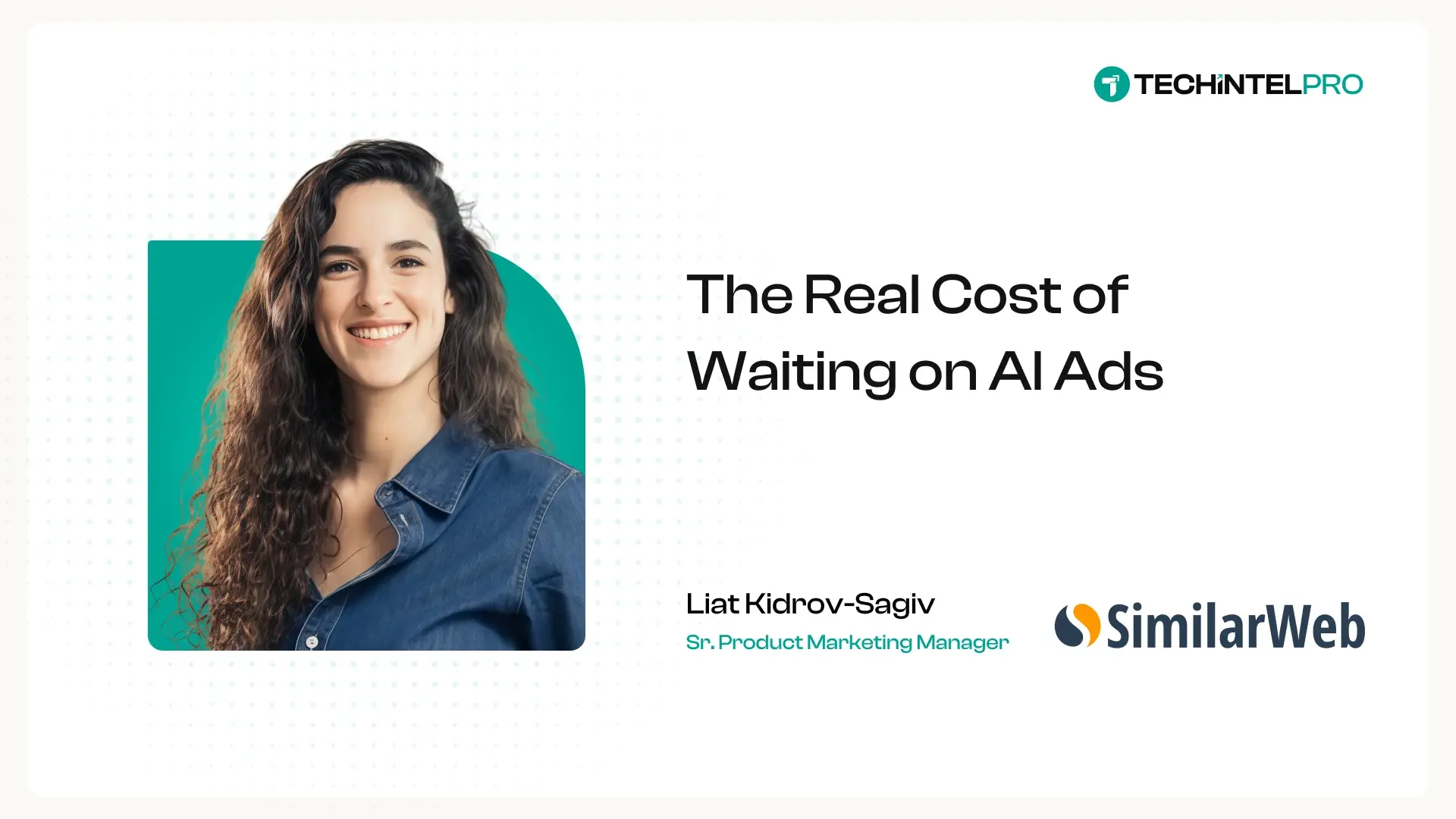
Liat has built her career around what she calls solving a “black box”: finding the moment a persona is flying blind, whether that's a demand gen manager, an SEO lead, or an advertiser trying to prove AI ads are real, and closing that gap with data instead of guesswork. In this conversation, she explains why she deliberately avoided promising clean, closed-loop attribution for AI ads before the rigor was there to back it up, what changed once she shared a stage with an actual top-3 ChatGPT advertiser, and why she believes the real risk for brands isn't a missed channel, it's still measuring organic, paid, and AI as separate decks instead of one connected journey.
Bringg was a much smaller company, a startup. Their product supports last mile logistics, everything from fleet management and delivery orchestration to consumer communications. But the truth is a company like Bringg depends heavily on its partners. In e-commerce, delivery is just the last step, but all the systems before it need to work together for the whole flow to function, from discovery to the moment you hit purchase to the moment the package shows up. So partner marketing there was really a revenue led role. A lot of what I did was scoping joint value propositions and partner go to market strategies. After a while it was obvious I was already doing product marketing work alongside it, so the move felt natural, not like a leap.
Coming to Similarweb was more intentional. In this AI era I wanted to be at a data led company, because I believe that data is the new fuel of the tech world (and beyond). I don't actually think of Similarweb as product led, I think of it as data led. The real question is how our data helps customers make better decisions, in marketing, content, strategy, sales, retail, you name it. How they get that data varies too. Some want it visualized in our platform, but more and more want it through MCP, API, or a custom data feed.
I've always gravitated toward value led positioning, so moving to a company where the data itself is the value made complete sense to me.
As a Senior PMM, I work closely with product, sales, customer success, marketing, analysts, and the market, so I understand the real pain points of the persona I'm marketing to. The way I think about it, a black box is when a persona is missing the information they need to do their job well. That's the muscle I'd tell someone earlier in their career to build: sit close enough to a persona that you feel the gap yourself, rather than assuming it. At Similarweb, my world is Growth, so I stay close to demand gen, PPC, copywriters, and the SEO and GEO teams. That's where the gaps actually show up (for me right now, this changes depending on the product you’re marketing of course!
A black box is never just a day to day inconvenience. It flows upstream. When a persona lacks the right data, it becomes harder to justify budget, defend initiatives, or prove value. The bigger the gap, the harder that case becomes to make. Giving people the right data closes that gap and turns them into champions who can make the case themselves. At Similarweb, that means arming our end users with the data to be excellent at their job, replace guesswork with answers, and prove ROI with confidence.
The discipline itself travels anywhere: find where a persona is flying blind, understand what that costs them upstream, and translate that gap into something both the product and the market can act on.
This was the first launch I've worked on that was tied so tightly to a brand new trend as it was happening. ChatGPT ads launched and Similarweb had data from day one, and what made that data actually differentiated is that it comes from real user behaviour, not synthetic prompts. That distinction matters more than people realize. A lot of AI visibility tools submit constructed queries and record what comes back, but that's not how ChatGPT ads actually get triggered, it depends on intent building up across a real conversation. Watching that unfold with real behavioural data, in real time, and being first to make sense of it for advertisers, that's what made this launch feel different from anything I'd worked on before.
This really changes between industries, and depends entirely on the organization. But what our own data keeps showing us is that AI visibility can't be optimized in isolation. The impact is downstream, a bit like brand awareness initiatives that are hard to measure one to one, but where the attribution is clearly correlated for brands investing across channels, organic and paid alike.
The value of an AI mention or an AI ad isn't always realized inside that single interaction. Sometimes we see referral traffic or a strong CTR right away, but a lot of the time it shows up later, in a branded search, a direct visit, a higher converting session. If you're only measuring the click inside the AI surface itself, you're missing a big chunk of where the return actually lands.
So instead of asking what a brand loses by waiting six months on AI ad visibility alone, I'd reframe the question: are they even set up to see the full journey, across organic, paid, and AI, as one connected path rather than separate team decks. The brands falling behind aren't just the ones under investing in AI ads, they're the ones still measuring each channel in isolation and missing the compounding effect of the middle of the funnel. That's the real cost of waiting: not a missed channel, but a blind spot in how ROI gets proven at all.
What stuck with me most was how fast the conversation turned practical. When you're next to someone actually spending real money on ChatGPT ads, nobody's debating whether the channel is real anymore. The question becomes how do you do this well, and how Similarweb data supports that success. My role isn't to tell organizations whether they should advertise there or not. It's to help show who's there, what's working, what competitors are doing, and how it connects to or completes their other channels.
The partnership with Natural Intelligence wasn't just the webinar either. They were genuinely a design partner in helping us understand what metrics actually matter to advertisers, and that's what turned the whole conversation, and the product, from theory into practice.
Now I spend a lot of my time with customers, prospects, and sales reps walking through the next layer of questions: which prompts are owned at the topic or intent level, who owns share of voice, how landing pages are built, what creatives are winning, who you're up against, how you know it's working. The black box feeling around AI ads comes from these gaps, from not being able to see into the channel yet. Once people see the data, their confidence rises and they're able to make better, data driven calls.
The one I was most careful about was suggesting we could offer clean, closed loop attribution for AI ads the way marketers are used to from search or social. Measurement here is still genuinely early. The models and surfaces are shifting month to month, so I didn't want to promise we could tell someone exactly what an AI ad impression turned into before we had the rigor to prove it.
What I was comfortable saying early on was narrower: we can show creatives, landing pages, topics, intent, share of voice, and more inside these new AI surfaces as they emerge. That claim holds up. The fuller attribution story is something I want us to earn, not get ahead of. In the meantime, organizations can start thinking about how they'd build their own attribution models using our data.
One thing that's made this feel real rather than theoretical is what we're already seeing in the data. Over 65 percent of ChatGPT advertisers are running AI specific campaigns with dedicated landing pages and their own tracking. That tells me the market isn't waiting around for perfect attribution either, they're building the infrastructure now, and we can help them do that with real visibility instead of guesswork.
I'd steer away from ranking one channel above the others, because they're not really competing. They're different angles on the same question, which is where your audience's attention is going and who's fighting for it there.
If I had to give real advice, it's that paid marketing doesn't live in a vacuum. An organization needs to look at how it actually acquires customers. Different models have different best practices and tactics, is this a B2B, B2C, D2C business or something else? That changes the answer. Are the campaigns built for awareness or for conversion? That changes it too. You need to look at the whole marketing strategy, organic, referral, email, and everything in between, and then make the calls that are right for you.
For some companies that still means core paid search and social. For others it might be something else entirely. And if you're already seeing even a small amount of traffic from AI surfaces, that's worth doubling down on.
But the truth is, this is very individual, and I'd be cautious before handing out one size fits all advice.
Liat Kidron-Sagiv is Senior Product Marketing Manager at Similarweb, where she leads positioning and go-to-market strategy for Growth-focused products, including the company's Ad Intelligence and AI Ads capabilities. She approaches product marketing as the discipline of closing “black box” gaps: finding the moments when a persona, whether in demand gen, SEO, PPC, or content, is missing the information they need to do their job well, and turning that gap into something both product and market can act on.
Before joining Similarweb, Liat led partnership marketing at Bringg, the last-mile logistics platform, where she built joint value propositions and go-to-market strategies with e-commerce and delivery partners. That revenue-led, cross-functional grounding shaped the value-led approach to positioning she brings to Similarweb today, one built on staying close enough to a customer's real workflow to feel the gap yourself rather than assume it.
At Similarweb, Liat has been closely involved in one of the company's most timely launches to date: AI Ads intelligence, built on real user behavioural data rather than constructed queries, tracking how advertisers are showing up across ChatGPT and other emerging AI surfaces. She's a frequent voice on how AI is reshaping organic and paid discovery alike, and on why AI visibility can't be measured in isolation from the rest of a brand's marketing strategy.
More about Liat Kidron-Sagiv: 
Similarweb (NYSE: SMWB) is a leading Digital Intelligence company that helps businesses win their markets with data. By combining comprehensive web and app analytics with AI-powered insights, Similarweb gives organizations a 360-degree view of the digital landscape, spanning competitive intelligence, SEO and content strategy, AI visibility, sales intelligence, and shopper intelligence. Its platform draws on data from more than 100 million websites, 4 million apps, 5 billion search keywords, and 20 million companies, accessible through an intuitive platform, API, MCP, or custom data feed. Similarweb is headquartered in Tel Aviv, Israel, with offices around the world. For more information, visit similarweb.com.
Tell others what you think of TechIntelPro.


 Rate us on G2