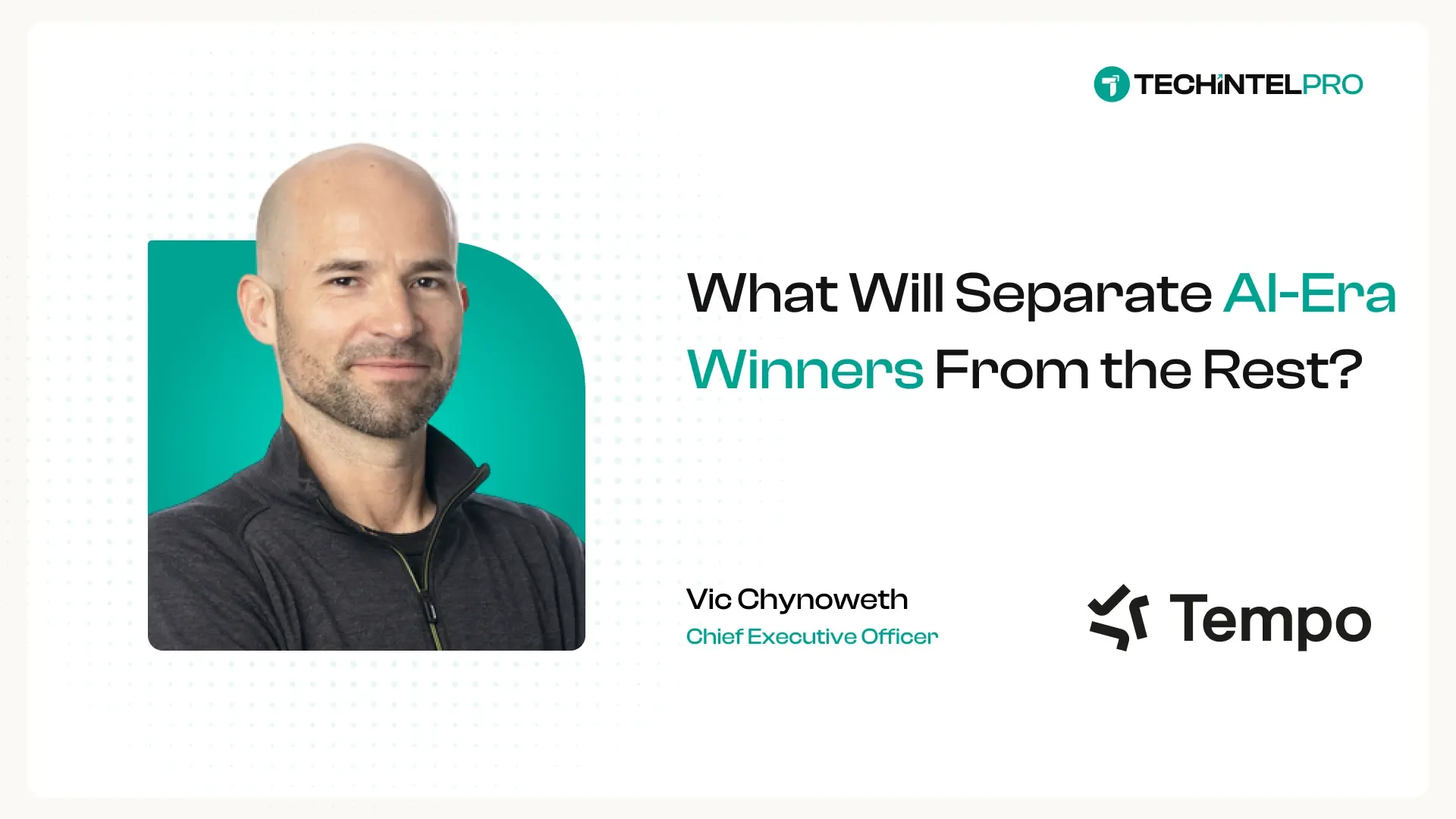
Vic Chynoweth didn’t arrive at strategic portfolio management by simply studying how businesses plan. Over more than two decades across CEO, CFO, and COO roles, he learned firsthand that strategy only creates value when people and organizations can move together. One early lesson at Cray proved especially lasting: strong analysis and vision aren’t enough if you can’t bring others along.
Today, as CEO of Tempo Software, Chynoweth is applying that lesson to a much bigger challenge: helping enterprises connect strategy with execution at a time when AI is dramatically accelerating innovation cycles. He argues that traditional portfolio management approaches are struggling because they were built around static planning, complex systems, and broad transformations that can be difficult to adopt.
For starters, I was fortunate to have worked with and for a handful of great managers who helped to shape how I work with others. Secondarily, I was fortunate to work at companies where the status quo clearly would not work, so vision and change were required to remain relevant and effective. The first time these two elements came together and began to catalyze the scaling and effective orchestration of teams, rather than ineffective ones, was during my time at Cray. We were working through a set of holistic strategic and operational shifts that required material changes, including reductions, in all parts of the business, and I was leading much of the analysis and vision-setting. Toward the latter stages of the work, my direct manager pulled me aside and said, “Hey, Vic, your analysis and suggestions are thoughtful and probably right, but to facilitate the outcomes you envision, you need to bring others along. At the pace you are moving and communicating, that isn’t happening.” Admittedly, it took me a bit of time to really internalize this, but that conversation has stuck with me and I, within a couple of years, engaging my peers, my direct reports, and the broader organization was solidified as paramount to how I work, which means meeting others where they are at and taking the time to optimize the receiving side of communications, not just the saying side of it. I also began to codify principles to achieve the scaling and orchestrating capabilities and outcomes so that the broader organization could grow together.
A multitude of culprits exist for why organizations that have purchased portfolio management solutions still struggle to connect strategy and execution. At the core of these struggles is adoption, or rather, the lack thereof. Legacy portfolio management tools have been inherently hamstrung by a lack of flexibility and usability, resulting in limited adoption. Additionally, the cost of implementing and maintaining a legacy portfolio management solution is time-consuming and costly. What’s missing is modularity, simplicity, and the ability to meet customers where they are (aka solve specific problems that fit under the portfolio management umbrella, not necessarily solve all portfolio management challenges in a one-fell-swoop approach). Tempo does this - we meet customers where they are and address specific pain points, and expand value creation from there for customers via what we call “The SPM Journey.”
Technology has consistently sped up innovation and innovation cycles; AI has sped it up by a potential order of magnitude. This acceleration makes adaptive planning requisite: SPM at the speed of AI. Today, planning and orchestration are limiters, and many organizations just skip over them, opting to provide loose guidance so they can continue to move fast. Working without planning results in strategic drift and wasted resources. Adaptive planning closes this gap by enabling organizations to plan at the speed of AI, limit or eliminate strategic drift, and optimize intentional outcomes.
Our strategy is to meet customers where they are, whether that’s from a single team with a single piece of functionality or an entire organization with the full Adaptive SPM suite of functionality out of the gate. Most customers do not want to fix every challenge they have on day one, but instead, they want to address a specific pain point. We typically start there and grow with them throughout the SPM Journey, so they can ultimately ingest and adopt the full set of capabilities… and realize the full value of strategic portfolio management.
AI has created an enormous tailwind for Tempo by speeding up innovation cycles and putting pressure on planning and orchestration. It has also pushed legacy solutions to the breaking point. We are seeing customers re-evaluate their legacy solutions and look for alternatives. The primary catalyst is the pain of planning, which is why we are building core functionality that starts with adaptive planning. When that core functionality is built in, your plans adapt with your organization’s work and as priorities and timelines change, to ensure they stay aligned with overall business strategy, removing the pain point of quarterly or annual static planning cycles that are outdated two weeks after they’ve been created.
The AI-era winners are likely to be the companies that adapt the fastest. Oftentimes, this starts with a willingness to recreate themselves, which means a willingness to part with the past. The ones who fall behind will be those who hold on to legacy businesses and processes rather than reinvent.
Vic Chynoweth is the Chief Executive Officer at Tempo Software, where he drives the company’s vision to help organizations achieve digital maturity and strategic agility through modern portfolio management. With deep executive experience across both finance and operations, Vic brings a unique perspective to the intersection of corporate strategy and execution. Under his leadership, Tempo is redefining how teams use Strategic Portfolio Management (SPM) tools to align work with business goals and adapt at speed.
More about Vic : 
Tempo Software is a leading provider of Strategic Portfolio Management (SPM) solutions. Its modular platform extends Jira with its #1 add-ons for time tracking, capacity management, financial oversight, and portfolio management – connecting strategy, investment, people, and delivery in a unified system. Trusted by 30,000+ customers and 350+ global solution partners, Tempo is a leading partner in the Atlassian ecosystem. Discover more at Tempo.io.
Tell others what you think of TechIntelPro.


 Rate us on G2