
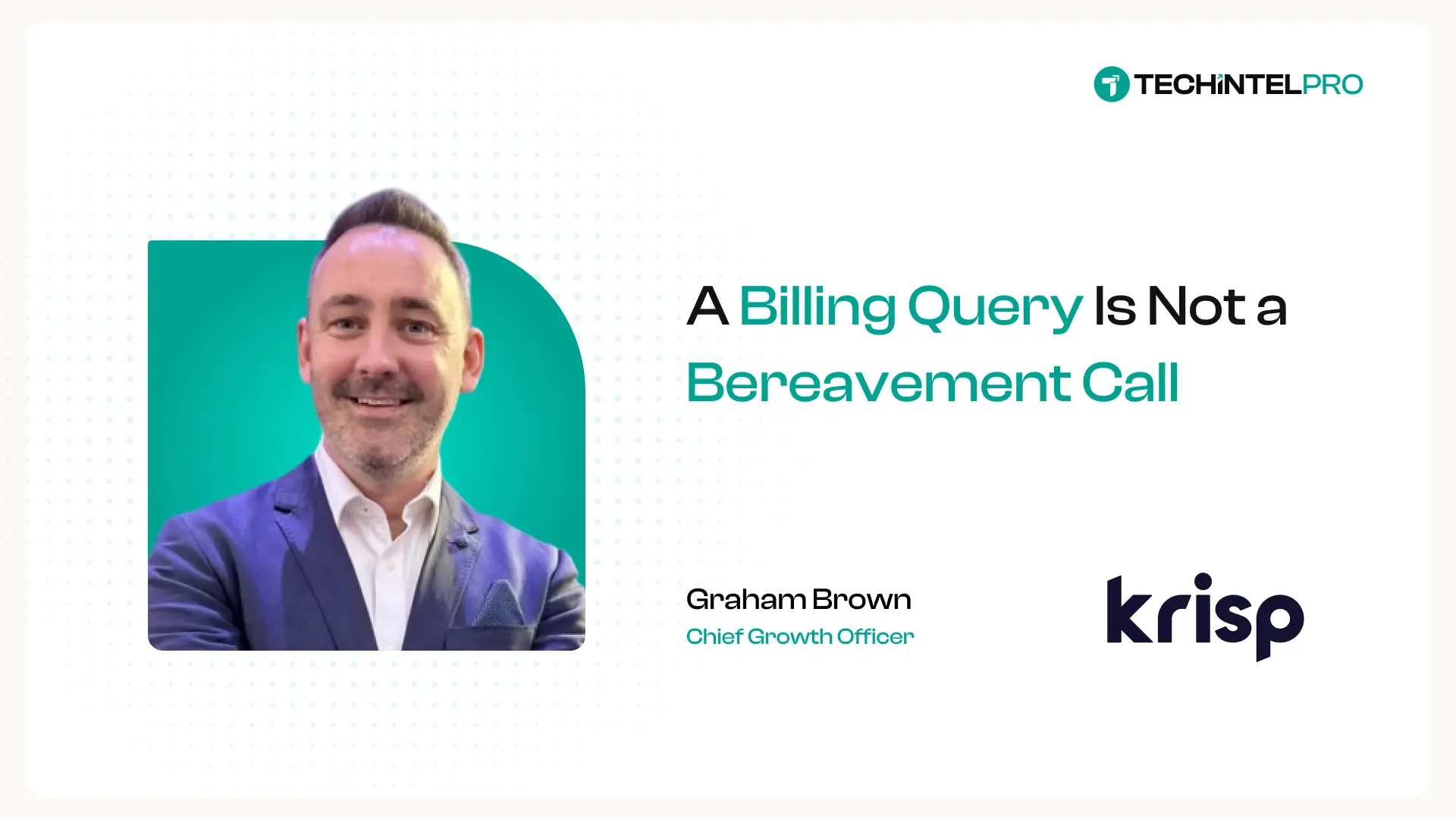
After 25 years inside customer experience outsourcing, Graham Brown watched operations teams try to solve the same problem the same expensive way: hiring for accents and languages instead of skill. It's a big part of why he left BPO leadership to join Krisp as Chief Growth Officer for Europe & Africa. In his view, language stopped being a nice-to-have some time ago, and most organizations are still budgeting for a customer experience world that no longer exists.
Krisp works at the audio layer, stripping out noise, accents, and language friction from live conversations before they ever reach an agent, an AI model, or a downstream system, technology now deployed across more than 200 million devices and processing over 80 billion voice minutes a month. In this conversation, Brown explains the tell that separates companies genuinely improving customer experience from those simply automating it, why he sells an entirely different pitch in Europe than he does in Africa despite it being the same technology, and why he believes the next five years won't reduce the human agent's role so much as raise the difficulty of every call left on their desk.
The biggest shift is that customers' expectations are set holistically and not based on industry or channel used. They grade us against the best experiences they had that week, whether that was a bank, an airline, or a food delivery app, and no longer accept differentiated service by channel.
Three changes stand out:
That last point is becoming increasingly challenging and expensive and is the primary reason I moved away from BPO to join Krisp. I spent years watching operations teams try to solve language with headcount, hiring for accents and languages instead of skill. It is expensive and inflexible. Voice AI changes the maths. You keep your best agents, and technology handles the friction so the conversation actually works.
The tell is which metric they lead with. If the business case starts with cost per contact, you are automating. If it starts with resolution, you are improving experience. Both can save money, but only one of them survives contact with an angry customer.
The second difference is where they point the AI. The automators point it at the customer and hope the customer does the work: menus, bots, deflection. The better organizations point it at the agent. Same technology, but it removes friction from the conversation instead of removing the conversation.
Third, and this is the least glamorous one, they know which contacts should never be automated. A billing query is not a bereavement call. Organizations that genuinely improve experience spend real effort deciding what stays human, then protect that ruthlessly.
Krisp is real-time voice infrastructure that works at the audio layer, inside the live conversation.
What that layer does is remove friction from the conversation. Language barriers, accent barriers, background noise, echo, other voices in the room, and it does that in both directions, for the agent and the customer. Take that friction out and the call simply works, in any market, from any location.
Then everything sitting above it gets better. Agent assist, speech to text, transcription, summaries, speech analytics, voice security. Those systems are only as good as the audio you feed them, so if you clean the signal at source, they all improve without anyone touching them. That is the part organizations tend to discover late, usually after they have spent a year tuning analytics on poor quality audio.
So the four capabilities are not four tools you buy. They are the infrastructure behind an exceptional voice experience, and voice is still where the highest stakes customer conversations happen.
The practical result for an EMEA operation is that you stop matching agents to markets by accent or language, and start matching them by skill. That is a very different and more efficient workforce plan.
The problem is identical in both markets, which is that voice friction costs you customers. What differs completely is why someone buys.
In Europe, the driver is regulation and expectation. Spain's Law 10/2025 is the obvious example, but the direction across the region is the same: shorter answer times, a right to reach a human, and real scrutiny of where data goes. Buying cycles are slower, more people are in the room, and legal has a genuine veto. You sell to that reality rather than around it.
In Africa, the driver is growth. The BPO sector there is winning English and French language contracts against much older delivery locations, and accent friction is often the thing that decides whether the contract lands. That is a commercial conversation, not a compliance one, and it moves faster.
Same technology, two entirely different reasons to buy. Our job is to be disciplined about that and not send European compliance messaging into Nairobi, which is a mistake I have seen plenty of vendors make.
If we get the customer outcome right, the commercial side largely takes care of itself. Get it wrong and it shows up as revenue churn about 12 months later.
What keeps us honest is usage. The technology is either used by agents every day or it is not, and you cannot dress that up in a QBR. If adoption is flat, the renewal conversation is already lost, whatever the original business case said. So we stay close to customers to make sure the value is actually landing, and if it is not, we would far rather hear that in month three than at renewal.
The harder discipline is saying no. Occasionally a prospect wants to buy for a fringe use case or reason the technology was not built to deliver on, usually a headcount number someone has promised the board. We would rather be straight about that early and point them at the problem we do solve brilliantly.
The job description changes more than the headcount does. Automation absorbs the simple, high-volume contacts, which means everything left for a human is harder: complex, emotional, or commercially significant. That is the part organizations underestimate.
If the easy calls disappear, you cannot staff the remaining ones with entry-level agents on entry-level pay. The role becomes more skilled, so hiring, training, remuneration, and support all have to move with it. Very few operations have budgeted for that yet.
In Europe, there is a regulatory floor under this too. The direction of travel across the region is a guaranteed route to a human being, so the question is not whether human agents survive, but how good those interactions are when they happen.
That is the interesting part. Over five years, I expect the technology to move from sitting in front of the customer to sitting alongside the agent, in the call, removing barriers in real time. The measure of a good contact center will not just be how many calls it deflected, but how well it handled the ones it kept.
Graham Brown is a senior CX and BPO growth leader with nearly 30 years of experience in the contact centre industry, including 25 years in CX outsourcing. Over this time he has built deep experience across operations, quality management, transformation, client success and sales leadership.
Graham leads Krisp's growth across the UK, Europe and Africa, with a focus on building regional customer relationships, expanding channel partnerships, and helping BPOs and enterprise organisations adopt real-time Voice AI solutions. He brings a strong global network of senior CX leaders across both service providers and large international customer organisations.
Graham has built a reputation for combining frontline contact centre experience with commercial strategy. He joins Krisp as the CX market shifts from traditional outsourcing towards AI-enabled technology solutions, helping organisations solve real business challenges across global, multilingual customer environments.
More about Graham: 
Krisp's voice AI technology provides real-time voice infrastructure that fixes conversations at the source. Operating at the audio layer, Krisp isolates voices, improves turn-taking, reduces accent friction, and breaks language barriers in live conversations, before they reach any human agent, AI model, or downstream system. One platform powers three product lines: Krisp Voice AI for Call Centers, Krisp Voice AI for Developers, and Krisp Voice AI for Meetings. Krisp is deployed on over 200 million devices and processes more than 80 billion minutes of voice conversations every month, with innovations recognized by Forbes, TIME, Gartner, and Fast Company, and recently won two 2026 Webby Awards for Technical Achievement.
Learn more at Krisp.ai.

TechIntelPro empowers B2B technology decision-makers with the latest industry trends, deep insights, leadership perspectives and actionable intelligence to drive both organizational and professional milestones, and thrive on the tech pulse.

