Revenue planning isn't an annual exercise anymore. It's a continuous system that has to keep pace with the business.
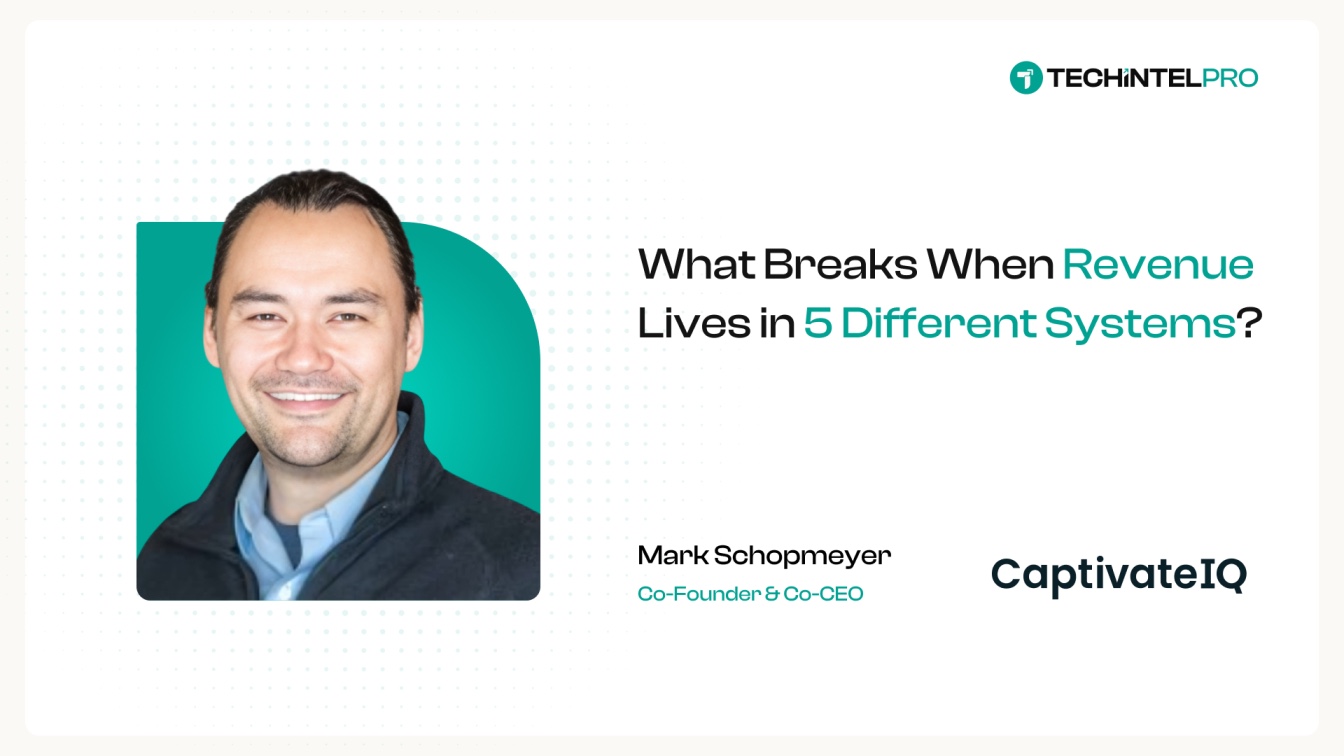
Mark Schopmeyer, Co-Founder & Co-CEO of CaptivateIQ, unpacks why traditional approaches built on spreadsheets and siloed workflows are falling behind, and how connected planning is changing the way GTM teams operate. From aligning incentives with strategy to using AI for faster scenario planning and better decision-making, he shares what it takes to build a revenue engine that's designed for constant change.
When we started talking to revenue leaders, we kept hearing the same story. Some of the most important decisions in the business were being managed in spreadsheets, manual workflows, and disconnected systems.
We also realized pretty quickly that compensation isn’t just a back-office function. Every comp plan is really a bet on human behavior. Structure incentives one way and people behave one way. Structure them differently and you get different outcomes.
That’s what made us feel this was a much bigger opportunity. If compensation touches revenue, rep motivation, retention, and growth, then it can’t just be about calculating payouts correctly. It has to connect planning, incentives, and execution so companies can move faster as the business changes.
The biggest challenge was that all of those things were connected, but companies were managing them as if they were separate.
A compensation plan does not exist independently from territory design, quota setting, headcount planning, forecasting, or business strategy. Yet in many organizations, those processes live across different teams, tools, and definitions of truth. RevOps may own quota setting, finance may own modeling, and comp operations may own the system where payouts happen.
That disconnect creates a lot of complexity. When something changes, whether it’s a new product launch, a pricing adjustment, a market shift, or a change in headcount, teams are often forced to manually connect the dots. The companies that perform best today are the ones that can adapt quickly, but adaptability requires visibility and alignment across the entire revenue organization.
For a long time, growth covered up inefficiency. We’ve all been there. Planning processes are massive. They take a lot of time and effort, and if you don’t have the right tools and processes in place, it’s hard to move quickly.
But the market is changing faster than ever. Pricing changes. Territories change. Strategies change. And every time something changes, someone is rebuilding models, rerunning numbers, and trying to get information out faster than before.
In our 2026 State of Incentive Compensation Management report, 46% of organizations said they adjust compensation plans quarterly, while 39% said it still takes 1-2 months to implement those changes. At our Captivate conference, we heard similar stories from practitioners. Some teams could make changes in 48 hours, while others said the process took a whole three months.
The challenge isn’t just technology. It’s all the handoffs, approvals, and blockers that build up over time. And by the time the change reaches the rep, you’re already behind.
What used to be an annual planning exercise is increasingly becoming a continuous process, and spreadsheets simply weren’t built for that reality.
Every revenue decision creates downstream effects.
If you change territories, that impacts quotas. If you adjust quotas, that impacts compensation. If you hire aggressively, enter a new market, or change the way a product is priced, that affects the entire operating plan.
Historically, those decisions were made across different teams using different tools. The result was slower decision-making, more reconciliation, and less confidence in the numbers. When different systems tell different stories, teams spend too much time trying to determine which version is right instead of focusing on what to do next.
Modern GTM organizations need a shared source of truth. They need to model scenarios, understand tradeoffs, and see how a decision in one area affects the rest of the revenue engine. That is why planning and compensation are converging.
AI is great at summarizing emails or conversations, but I think that’s table stakes. Where we see companies starting to pull ahead is when AI becomes part of the system rather than just another tool.
For revenue teams, that means modeling changes before they go live, understanding how planning decisions affect compensation outcomes, identifying anomalies, and helping leaders evaluate scenarios faster.
That’s where we think the biggest opportunity is. Not replacing decision-making, but helping teams move faster and make better decisions.
We spend a tremendous amount of time listening to customers.
One of the advantages of working with hundreds of organizations across industries is that we get a front-row seat to how revenue teams are evolving. Many of the challenges our customers are facing today — AI-driven change, new pricing models, more dynamic planning cycles, more complex compensation structures — did not exist at the same scale a few years ago.
At the same time, compensation is a high-stakes workflow. Outputs aren’t suggestions. It’s real money, and trust is on the line. So as we innovate, we’re always thinking about the foundation underneath it. Accuracy, governance, and trust have to come first.
Yes, I do. And as AI becomes more embedded in how companies operate, trust becomes increasingly important.
Teams are comfortable using AI to summarize emails or conversations, but when it comes to quotas, compensation, and forecasting, the bar is much higher. Real money is on the line. Every output has to be accurate, auditable, and repeatable.
That’s why we believe the foundation matters so much. AI is most powerful when it’s part of the system, not just another tool. It should help teams model changes before they go live, understand how planning decisions flow through to compensation outcomes, and adapt as the business changes without rebuilding everything from scratch.
Ultimately, companies need planning, incentives, and execution to work together. That’s where we see CaptivateIQ playing a role. We’re building the foundation that makes AI trustworthy for the decisions that move the business and allows revenue teams to move faster for what the business needs.
Mark Schopmeyer is the co-founder and co-CEO of CaptivateIQ, a sales performance management (SPM) platform he founded after spending too many years managing and tracking sales commissions in spreadsheets. Through CaptivateIQ, he now helps hundreds of go-to-market teams optimize their compensation and sales planning strategies.
More about Mark: 
CaptivateIQ is the leading Sales Performance Management solution trusted by industry leaders, including Boston Scientific, Affirm, and Datadog. By unifying sales planning and incentives in a single, AI-infused platform, CaptivateIQ gives teams the agility they need to navigate today's market volatility. Join the over 800 teams building a path to resilient revenue with CaptivateIQ.
For more info, visit www.captivateiq.com.
Tell others what you think of TechIntelPro.



 Rate us on G2