You can’t modernize 9-1-1 the way you modernize ordinary enterprise software. The technology can change. The stakes can’t.
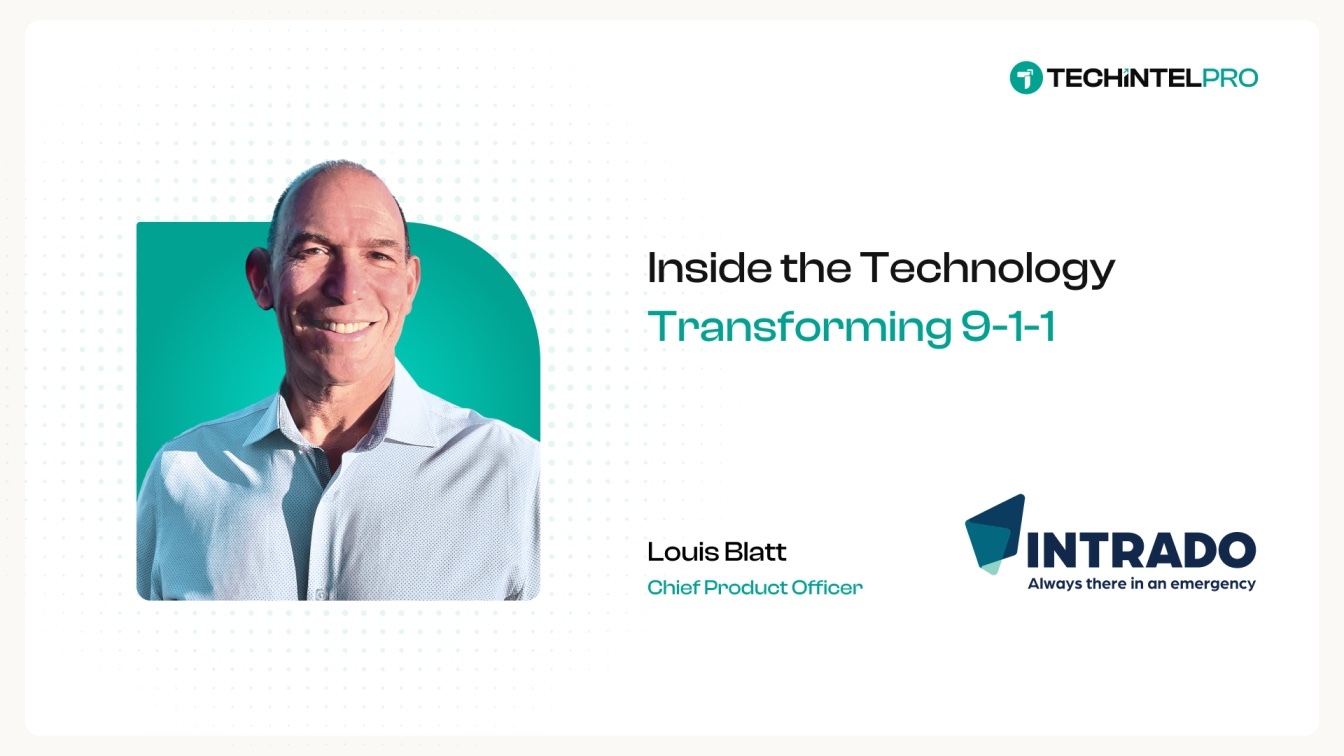
Louis Blatt, who oversees Intrado’s next-generation 9-1-1 portfolio, explains how the company is approaching that transformation through AI, cloud and advanced connectivity without putting reliability or human decision-making at risk. He discusses the thinking behind human-in-the-loop AI, stricter accuracy standards, customer and regulator collaboration, and a product roadmap designed to balance immediate needs with the bigger shift toward intelligent, anticipatory emergency response.
My background in contact centers and cloud communications at Genesys and Vonage/Ericsson, as well as my time spent in case management at Pegasystems, has turned out to be the perfect background for public safety technology – as the PSAP call handling software is essentially a highly specialized contact center solution. The Public Safety market is slow to adopt new technology, as explained in our recent State of the Industry report. So, although I have substantial experience implementing cloud and AI in the world’s largest contact centers, the Public Safety industry is not as quick to adopt these important technologies. However, we have made significant progress in recent months. Since I joined Intrado, just 8 months ago, we have certified our cloud call handling system in the AT&T lab and have sold our first five customers. Additionally, we have already delivered two AI products (Viper Translation and a non-emergency virtual assistant, Viper Answer).
Yes, transitioning to NG9-1-1 as well as cloud and AI is a lot of change for Intrado and the industry. We refer to our approach to this transition as “Evolve Wisely”. For nearly 50 years and 15 billion calls, Intrado has been there when it matters most and continues to provide support today. We’re proud to help our customers and partners evolve systems to take advantage of the cloud and AI, while updating processes to leverage modern protocols such as SIPREC, and the i3 data standard Since lives are at stake, we have to evolve without threatening the ability to quickly respond to emergencies. Intrado’s 50 years of experience has taught us one thing above all else: how you change a system that saves lives matters just as much as the change itself. The technology to save more lives exists today – and the 9-1-1 community should embrace it. But embracing it wisely, deliberately, and with public safety as the North Star is what “EvolveWisely” means to us. That is the standard we hold ourselves to, and the standard we are calling on the entire ecosystem to meet.
Achieving the long-term vision of being able to better anticipate emergencies and continually respond faster must be balanced with the delivery of a resilient and secure system that doesn’t interrupt day-to-day emergency response operations. The advancements in 5G SA and wearables led to the anticipatory capability of next gen systems, but it only matters if the system itself is always up and running. At Intrado we manage the portfolio to achieve the new application capabilities but invest equally in the availability, performance, and security of the infrastructure.
A few design principals have guided us to preserving human judgment. First, we ensure a human is in the loop (HITL) in all circumstances where this may be needed. Second, we think about how AI can support the humans – call handlers and dispatchers want to focus on the actual emergencies. So, we design a system that enables the humans to focus on the emergencies while the AI handles the non-emergency interactions. In our Viper Answer product, which handles all of the non-emergency requests, the most important feature is the ability to automatically detect that a non-emergency call has become an emergency call, at which point it is immediately transferred to a human call handler.
Accuracy for Natural Language Processing and Understanding within the context of Public Safety must be held to a higher standard. In general, accuracy rates for NLP and ASR can be 90%; but in the case of Public Safety we hold our systems to a standard of 98% accuracy. Massive, Multi-Task Language Understanding remains the gold standard for measuring accuracy and we have implemented this from the beginning. There are additional challenges that hamper accuracy in a public safety environment. Noise for example, on the side of the person requesting emergency assistance, is a real issue. So, we have developed the ability to filter noise and have layered that into our software systems. Our translation software is also held to the 98% accuracy standard and has been successfully implemented in over 20 languages. In all of these cases, it is the assurance of accuracy that builds trust.
When it comes to public safety technology, perhaps more than any other type of software, the collaboration with customers and partners is essential to effective product development. We implement three specific techniques to ensure our software meets the requirements for public safety employees and regulators. First, we drive end user research including: our Customer Advisory Board that helps review all new product concepts, as well as Executive Roundtables every month to discuss contemporary issues with users and regulators. We also insist on testing with 3 beta customers for every offer we bring to market, where we gain feedback and make changes to a solution before it is generally available. Second, we publish our State Of The Industry report each year by interviewing industry leaders in all aspects of public safety technology. Third, we participate in regulatory organizations to help drive standards. Intrado has a long and rich history of not just participating in the development of public safety best practices but leading them through our involvement with policymakers and industry authorities including NENA, APCO, and NITSA.
To ensure Intrado is responsive to changing customer needs but also has a clear vision and roadmap, we manage the roadmap at two levels. We plan for the next quarter feature by feature through a highly agile approach. In addition, we maintain what we call the “Spotlight Roadmap” which articulates the two-to-three-year vision to lead the industry. Each quarter the Product Line Managers and their teams decide which features will be developed that quarter from both roadmaps. This process enables Intrado to bring new leading functionality to market via a clear roadmap while responding to the changing needs of specific customers.
At Intrado, we believe our ability to use new technology to create the world’s most unified, trusted, easy-to-use, and intelligent system is what differentiates us from the competition. We are excited by the technology trends that will help us achieve this objective, specifically:
Louis Blatt, Chief Product Officer of Intrado, brings over 20 years of corporate and product leadership experience to Intrado. Blatt oversees the creation and development of innovative Next Generation 9-1-1 (NG9-1-1) and public safety solutions.
More about Louis: 
Intrado helps save lives and protect communities anywhere in the world. As a leading global provider of trusted emergency response solutions, Intrado improves public safety outcomes by connecting help to those in need. The company blends legacy intelligence, modern technology, and passionately dedicated people to create end-to-end solutions that are innovative, resilient, intuitive, and insightful.
Learn more at intrado.com.
Tell others what you think of TechIntelPro.



 Rate us on G2