
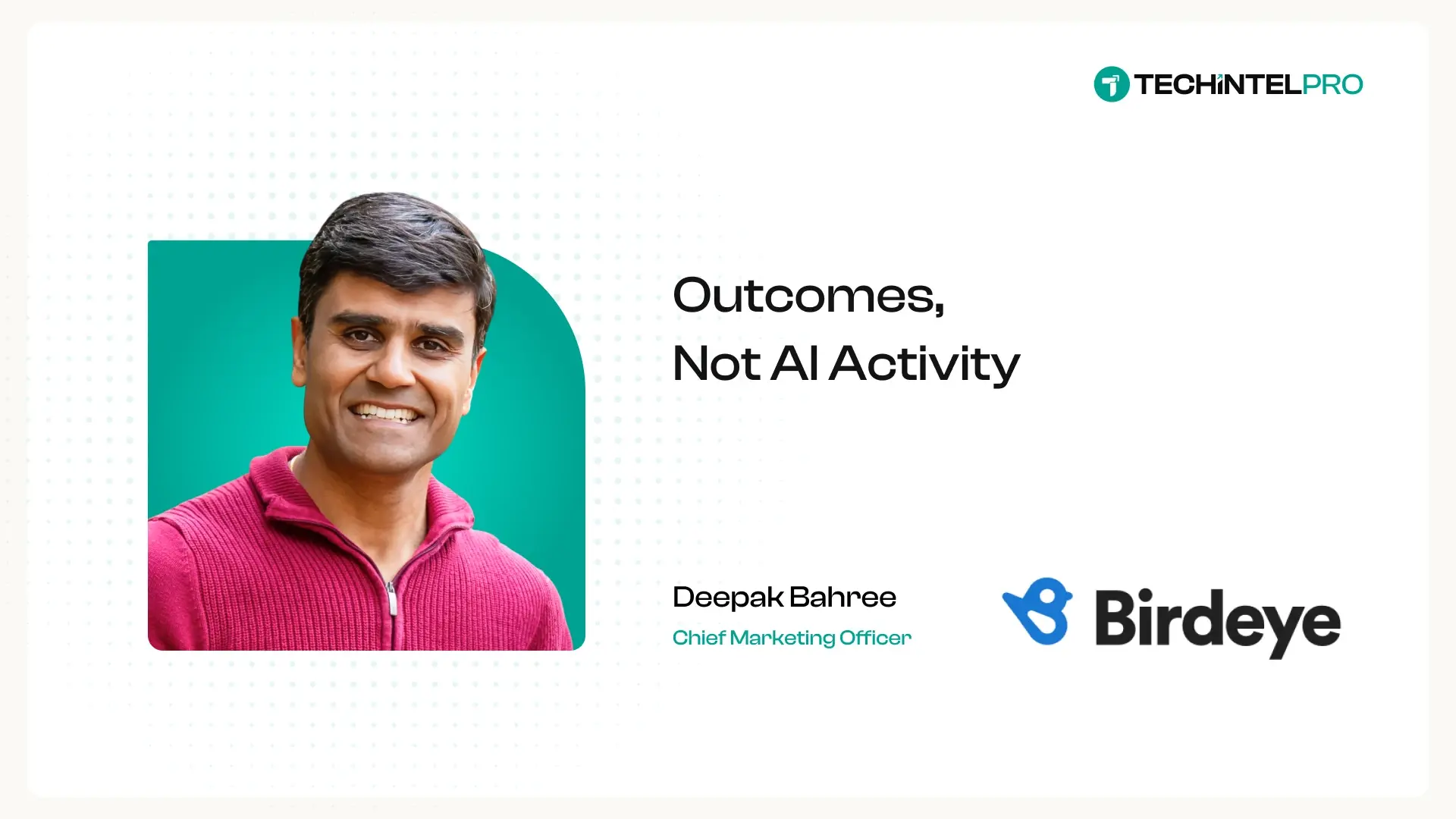
How many employees use AI? How many agents has the company deployed? Which models is it using? Deepak Bahree says none of those questions tells a CMO whether the business is performing better. For the CMO of Birdeye, too many companies are confusing AI activity with AI progress, and the metric that matters is incremental business impact, whether that shows up as revenue, productivity, cost savings or customer experience.
Bahree is Chief Marketing Officer at Birdeye, where he leads global marketing, demand generation and go-to-market strategy, bringing an analytical, revenue-focused approach shaped by an electrical engineering background and experience at HP, VMware, RingCentral and Automation Anywhere. In this conversation, he explains why Birdeye's research across more than 16,000 ChatGPT scans found roughly one in five locations missing from AI answers, how a 500-location brand should decide which to fix first, and why brand-level averages hide the real picture. He also describes how his own team cut website development cycles from five days to two, what he has deliberately kept human, and what photography has taught him about observing before reacting.
My engineering background has influenced how I approach marketing more than anything else. Engineers are trained to break down complex problems, understand what drives outcomes, and build systems that produce results consistently.
That's how I think about marketing. What drives pipeline? Where are we losing conversion? Which investments can scale? I want my team to understand the mechanics behind the numbers.
Where has it gotten in my way? Probably in expecting everything to have a measurable answer. Some of the most important marketing decisions, like building a brand or changing market perception, require conviction before the data catches up.
I've learned that marketing needs both disciplines. Engineering helps you build the machine. Creativity and judgment determine where you take it.
The first mistake I'd avoid is looking at a single brand-level visibility score.
Our research across more than 16,000 ChatGPT scans found that roughly one in five locations was missing from AI answers. A brand could be investing millions in marketing while individual locations remain virtually invisible
For a 500-location brand, I'd prioritize three things: commercial opportunity, competitive gaps, and fixability.
Which locations have high customer demand but low AI visibility? Where are competitors being recommended instead? And what's causing the gap?
Sometimes it's inaccurate business information, weak location pages, missing service details, or insufficient customer trust signals.
I'd start with the highest-opportunity locations, address those gaps, and continuously measure whether visibility improves.
The important shift is treating AI visibility as an ongoing operating discipline, not another one-time SEO project. Your brand's visibility nationally doesn't guarantee visibility in every local market.
I think too many companies are confusing AI activity with AI progress.
How many employees use AI? How many agents have we deployed? Which models are we using? None of those tell me whether the business is performing better.
I would start with the outcome. If we're using AI in demand generation, are we producing more qualified pipeline at a lower cost? If it's campaign execution, are we launching faster and improving performance? If it's customer-facing AI, are we booking more appointments or recovering revenue that would otherwise be lost?
For me, the metric that matters is incremental business impact from AI, whether that's revenue, productivity, cost savings, or customer experience.
I don't want to run a marketing organization that uses the most AI. I want one that delivers better results because of AI.
I think we're starting to recreate the same problem with AI agents that we created with SaaS applications. Every function gets another tool, every problem gets another agent, and humans are still left coordinating everything.
The real opportunity is getting agents to work together to deliver an outcome.
That's the thinking behind Birdeye's three AI Coworkers: Jay for marketing, Myna for operations, and Robin for customer experience. Together, they orchestrate 27 specialized agents.
Think about a patient calling a healthcare practice over the weekend. The objective isn't simply answering the call. It's understanding their needs, checking availability, booking the appointment, and handling follow-up.
That takes multiple capabilities working together.
And for frontline teams, the message is simple: let AI handle repetitive work so employees can spend more time on customers who need personal attention. People still set the rules, handle exceptions, and remain accountable.
We're using AI across several parts of marketing, but what has surprised me most is how quickly the productivity gains are adding up.
Take our web team. Using GitHub Copilot and Claude Code, we've reduced website development cycles from five days to two. We've also brought capabilities like A/B testing and conversion reporting in-house, using AI-assisted development to build tools that previously required third-party software. That's saving us tens of thousands of dollars in recurring annual software costs.
The impact extends beyond development. Our design team has reduced certain tasks from four hours to just 15 minutes using Figma AI. PMM content reviews that previously took five days now take two. And we're increasingly using AI to create images and videos that follow our brand guidelines instead of relying on stock libraries.
What have I deliberately kept human? Strategy, positioning, and final creative decisions. AI can help us explore ideas and accelerate execution, but understanding our customers, deciding what we stand for, and exercising judgment still require people.
For me, the real opportunity isn't just doing the same work faster. It's increasing what a marketing organization is capable of delivering.
I'd retire the idea that you can manage multi-location marketing effectively through brand-level averages.
A brand with 500 locations might have an average rating of 4.5 stars. Sounds great. But what if 50 locations consistently deliver poor experiences, or 100 locations barely appear in AI search results?
The average hides all of that.
The same problem exists in marketing automation. Brands send identical campaigns across hundreds of locations, even though customer needs and behaviors vary significantly by market.
Multi-location brands don't have one marketing funnel. They have hundreds of micro-funnels.
The opportunity is to combine centralized brand control with location-level intelligence and execution.
Ultimately, the goal should be to make every location perform more like your best locations.
Photography has been a passion of mine for a long time, particularly wildlife and bird photography.
What I enjoy is that it forces you to slow down and observe. You can have the best equipment and understand all the technical settings, but that doesn't guarantee a great photograph.
You need patience, attention to detail, and the ability to anticipate what might happen next.
I see parallels with leadership. We're constantly surrounded by dashboards, meetings, and competing priorities. Sometimes we're so focused on activity that we miss what's actually happening.
Photography reminds me to observe before reacting. It also gives me a creative outlet that balances my naturally analytical side.
I'd tell my younger self to stay curious and never shy away from challenges just because they're outside his comfort zone.
When I finished engineering, I certainly wasn't planning to become a CMO. I started with engineering and coding, moved into analytics, then demand generation, digital marketing, and eventually broader marketing leadership.
None of those transitions were carefully planned. I was simply curious, eager to learn, and willing to take on responsibilities I hadn't necessarily been trained for.
Looking back, some of my biggest career opportunities came from stepping into unfamiliar territory.
That's even more important today, with AI changing how we work.
My advice would be simple: never stop learning, and don't let what you know today limit what you're willing to take on tomorrow.
We received 750 nominations and recognized 60 marketing leaders through our Agentic Marketing Visionary Awards.
What stood out was the difference between organizations experimenting with AI and those fundamentally changing how work gets done.
The strongest leaders weren't necessarily deploying the most tools. They were integrating AI into everyday workflows, measuring business impact, and rethinking how their teams operate.
That requires more than technology. You need clear objectives, good data, accountability, and employees who understand how AI helps them do their jobs better.
To me, the dividing line isn't whether a company is using AI. It's whether AI is actually changing how the business operates.
I wouldn't start by cutting Google or paid advertising. Those channels still matter. But I'd rethink how much we're spending acquiring new traffic versus making better use of the demand we already have.
I'd increase investment in three areas.
First, AI search visibility. Brands need to know whether they're being recommended across ChatGPT, Gemini, and other AI platforms, particularly at the location level.
Second, localized lifecycle marketing. Too many enterprises still send the same campaigns across hundreds of locations, missing opportunities to personalize based on local context and customer behavior.
Third, customer insights. Reviews, surveys, and feedback tell us where customers are struggling, and AI makes it easier to identify patterns and act on them.
I'd reduce spending on low-value SEO content, manual processes, and campaigns that generate activity without measurable outcomes.
The goal isn't simply to generate more demand. It's to get more value from the demand you're already creating.
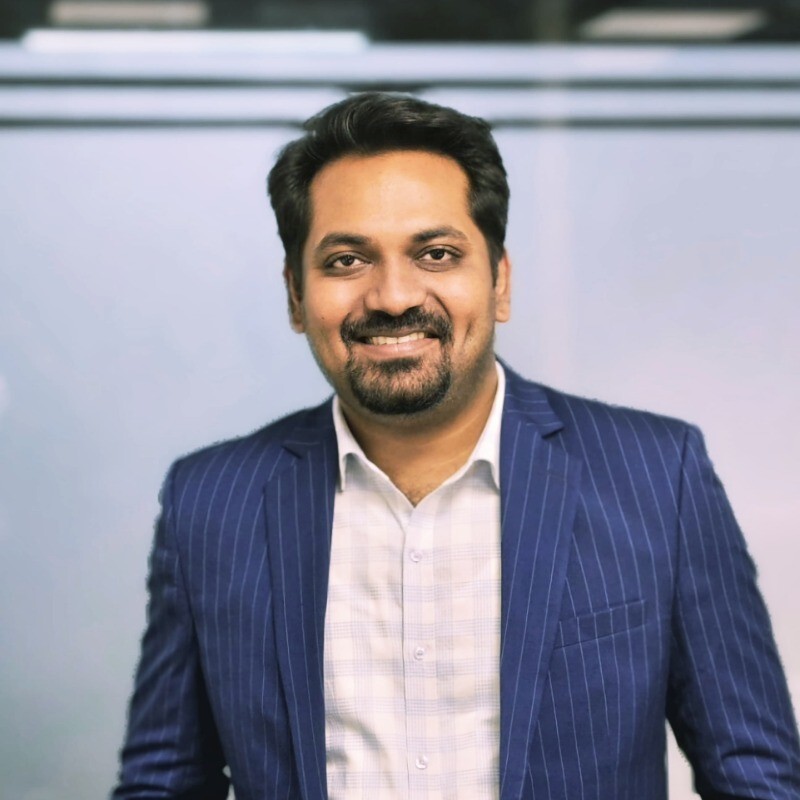
Deepak Bahree is Chief Marketing Officer at Birdeye, where he leads global marketing, demand generation, and go-to-market strategy. With a background in electrical engineering and experience spanning HP, VMware, RingCentral, and Automation Anywhere, Deepak brings an analytical, revenue-focused approach to marketing leadership. At Birdeye, he is helping drive the company's expansion into enterprise markets and establish its position as a full-cycle agentic marketing platform for multi-location brands, connecting AI-driven awareness, conversion, and customer experience.
More about Deepak : 
Birdeye is an AI-powered platform helping multi-location brands drive growth across awareness, conversion, and customer experience. Powered by BirdAI, its Agent OS, Birdeye's AI Coworkers, Jay, Myna, and Robin, orchestrate 27 specialized agents across marketing, operations, and customer experience. The platform helps businesses improve AI search visibility, engage customers, automate localized marketing, book appointments, and turn feedback into actionable insights. With more than 3,000 integrations, Birdeye supports enterprise brands across healthcare, restaurants, retail, financial services, automotive, and other industries.
Learn more at: birdeye.com.
Tell others what you think of TechIntelPro.


 Rate us on G2