The internet is far more physical and fragmented than most people realize.
Most people think of the internet as something invisible. You open your laptop, connect to Wi-Fi, load a website, and expect it to work. The complexity behind that experience is largely hidden from view.
But the internet is not abstract. It is physical infrastructure spread across continents and oceans: subsea cables, terrestrial fiber routes, internet exchanges, wireless towers, and data centers operated by thousands of independent providers around the world.
Despite decades of investment into global connectivity, access to reliable internet remains deeply uneven. More than 600 million people across Africa (roughly 40% of the population) do not have internet access, while many others continue to pay disproportionately high prices for slower, less reliable connectivity.
That gap matters more than ever as it determines who can participate in education, healthcare, banking, AI, and the modern economy itself.
In some regions, households still spend a significant percentage of their income on internet access that remains slower and less reliable than what much of the developed world takes for granted.
Many assume these challenges exist because there simply is not enough infrastructure in place, such as cables. But in many regions, internet networks and capacity already exist to power much or all of the population. The problem is that much of it remains fragmented, underutilized, or difficult for providers to access efficiently.
The Internet Works More Like a Supply Chain Than a Single Network
The internet, in many ways, works less like a single unified network and more like a global supply chain.
Especially across emerging markets, internet infrastructure is owned and operated by thousands of different entities, each managing different portions of the ecosystem. A few companies may own subsea cable capacity, others control terrestrial fiber routes. Some operate data centers, exchanges, or last-mile networks serving local communities.
While these systems are connected, they do not always operate together.
Capacity can exist within a region while neighboring communities still experience poor connectivity, limited competition, or high pricing. In some cases, internet traffic travels inefficiently across networks because providers lack simple ways to exchange, coordinate, or scale access to available bandwidth.
Infrastructure Investment Alone Does Not Guarantee Accessibility
Over the past decade, billions of dollars have been invested into expanding global internet infrastructure. According to the IFC, Africa alone will require roughly $100 billion in digital infrastructure investment by 2030 to meet growing connectivity demands.
The continent has already seen significant growth in subsea cable landings, terrestrial fiber expansion, and regional data center development. Coastal regions connected to major cable systems often experience dramatically stronger connectivity than inland areas further removed from these network hubs.
But building more networks alone does not automatically create accessibility or affordability.
In some markets, the challenge is no longer whether infrastructure exists, but whether people can realistically access it at a cost and quality that meets modern needs. Building new networks will always be crucial, particularly in underserved regions.
At the same time, many regions already have significant capacity in place that remains fragmented, underutilized, or difficult to access efficiently. So, the conversation around global connectivity needs to include a second challenge: how existing capacity is shared, distributed, and utilized.
The Future of Global Connectivity Will Depend on Collaboration
Historically, internet expansion has often been framed through competition — who owns the most capacity, who controls the most coverage, or who can deploy networks the fastest. But the internet itself was originally designed as a network of networks, meaning its long-term success depends on collaboration between providers, not isolation from one another.
In practice, though, competing networks do not always have much incentive to share capacity or collaborate efficiently with one another. That is creating growing demand for more neutral, open-access models that help providers work together more effectively and extend connectivity beyond major infrastructure hubs.
That does not mean ISPs, telecom operators, or network providers are the problem. In fact, these organizations are responsible for building and maintaining the systems that power the modern digital economy. The opportunity now is to improve how those systems interact with one another.
In many ways, bandwidth is beginning to resemble other shared utilities or commodities. The challenge is no longer simply whether capacity exists, but whether it can move efficiently to where demand exists most.
Better coordination between networks can help reduce inefficiencies, improve scalability, and expand access without always requiring entirely new physical infrastructure. It can also help create more competitive and affordable connectivity models for regions where internet access remains financially out of reach for large portions of the population.
Internet Access Determines Who Gets to Participate in the Global Economy
That has implications far beyond faster streaming speeds or better mobile service.
Connectivity increasingly shapes who gets to participate in the global economy. It influences where businesses can grow, where startups can emerge, how students access education, how healthcare systems modernize, and how communities engage with rapidly evolving technologies like AI.
The next generation of builders, developers, educators, and entrepreneurs will not come exclusively from the world’s traditional technology hubs. Expanding affordable and reliable internet access will play a major role in determining who gets included in the future digital economy.
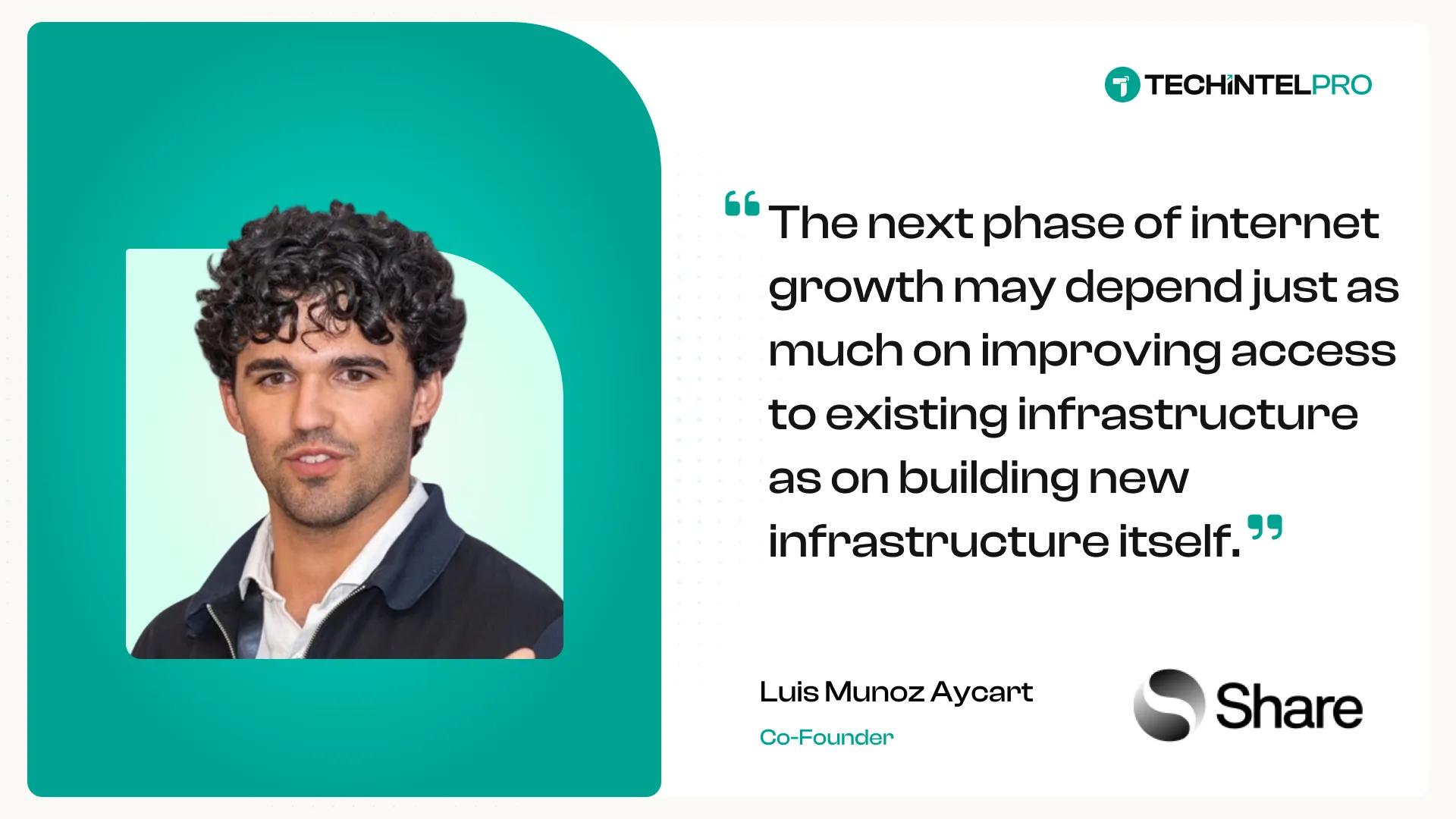
For years, the global connectivity conversation has focused primarily on building more infrastructure. But the next phase of internet growth may depend just as much on improving access to the infrastructure that already exists — making connectivity more affordable, scalable, and accessible for the communities still underserved today.


 Rate us on G2