Most voice agents deployed today are pretty good at the easy part of a phone call. Ask one to reschedule an appointment or read back an account balance and it will usually get there. The trouble starts when the caller stops cooperating with the script, and scripts aren’t reality.
Someone starts answering before the agent has finished asking the question. Someone else corrects themselves halfway through a sentence, or says "hold on a sec" while they dig for a policy number and comes back with a completely different request. A human rep handles these moments without thinking twice, but many voice systems still struggle with them.
I've spent the better part of two years building speech models and sitting across the table from enterprise buyers comparing vendors, and I keep hearing about agents that impressed in the demo but stumbled with real callers. That's because demos happen in quiet rooms with cooperative testers, and contact centers look nothing like that.
Solving for the real call is the next step for voice AI. What I call Voice 4.0 is the technology an agent needs to stay steady when the call gets messy. That starts with designing for the caller who interrupts and backtracks, because that's the one who actually shows up.
Conversation is a loop, and timing is part of it
On an ordinary call, a human agent listens, keeps track of what's been said, reads the other person's tone, and decides when it’s their turn, often while pulling something up on a screen.
A study in the Proceedings of the National Academy of Sciences looked at conversations in 10 languages and found the same pattern everywhere. People rarely talk over each other, and they keep the gaps between turns short. Every language's average gap landed within a quarter of a second of the overall average.
Most voice agents fall short on exactly those two things. They talk over callers or leave them hanging, and the margin for error is tiny. On a voice call, latency changes how the interaction feels. A response that comes too late can make a caller wonder whether the system heard them at all. Callers will forgive an agent that gets a detail wrong and corrects itself. They're much less forgiving if one feels awkward to talk to, because awkwardness makes them doubt everything else it says.
The problem with bolting tools together
Most of these systems run as a pipeline stitched together from different vendors. A speech-to-text model from one turns the caller's audio into a transcript, and a language model from another writes a reply that a third vendor’s text-to-speech reads out loud. Orchestration code wrapped around all of it tries to guess when the caller has finished talking and what to do if they cut in.
Each piece can post an impressive latency number on its own, but callers hear the whole chain. Every handoff adds a little delay, and by the time it all stacks up, the caller has decided the agent is too slow and wants to speak to a human.
Tone and timing get lost at each handoff. A transcript can capture the words, but not how they were said, so the language model never hears the hesitation or the caller trying to cut in. Handling interruptions means layering rules onto components that were never designed to work together, and teams can burn weeks just tuning how long a pause has to be before the agent jumps in.
People don't talk in neat, separate turns. We listen while we speak and adjust the moment the other person starts talking.
Building the model around the conversation
Voice 4.0 starts with models built together around that loop from day one, so they share context throughout. A full-duplex speech-to-speech model takes in audio and streams audio back within a single session, listening the whole time it talks. That lets it handle interruptions as they happen, without a separate layer of rules to manage them. It can also start working on a reply before the caller finishes, and pull up an account mid-call without going quiet, much like a good rep does.
Speech and text can inform each other as the conversation unfolds, so tone and timing travel with meaning instead of getting stripped out in a transcript.
A shorter path from caller to reply makes for a faster call that feels more like talking to a person. Smaller specialized models can help get there, particularly for teams focused on speed or keeping data in-house. The next generation of voice AI needs models designed for the full conversational loop. When models are built together, each can be tuned for one job and share context with the others, so the system keeps pace with the caller.
Testing for the calls you'll actually get
The quickest way to tell whether a system is ready for Voice 4.0 is to stop testing it on clean scripts. If your privacy and compliance requirements allow it, pull real recordings from your own contact center, the ones full of false starts and sudden changes in direction, and see how each system copes.
I'd focus on three things. First, test the timing. Measure end-to-end voice-to-voice latency, since that's the pause callers actually hear.
Second, test interruptions. Have testers talk over the agent mid-sentence, go quiet unexpectedly, and reverse a request they made thirty seconds earlier.
Third, test memory. Give the agent information early in the call and see whether it can use it correctly later, even after the conversation changes direction.
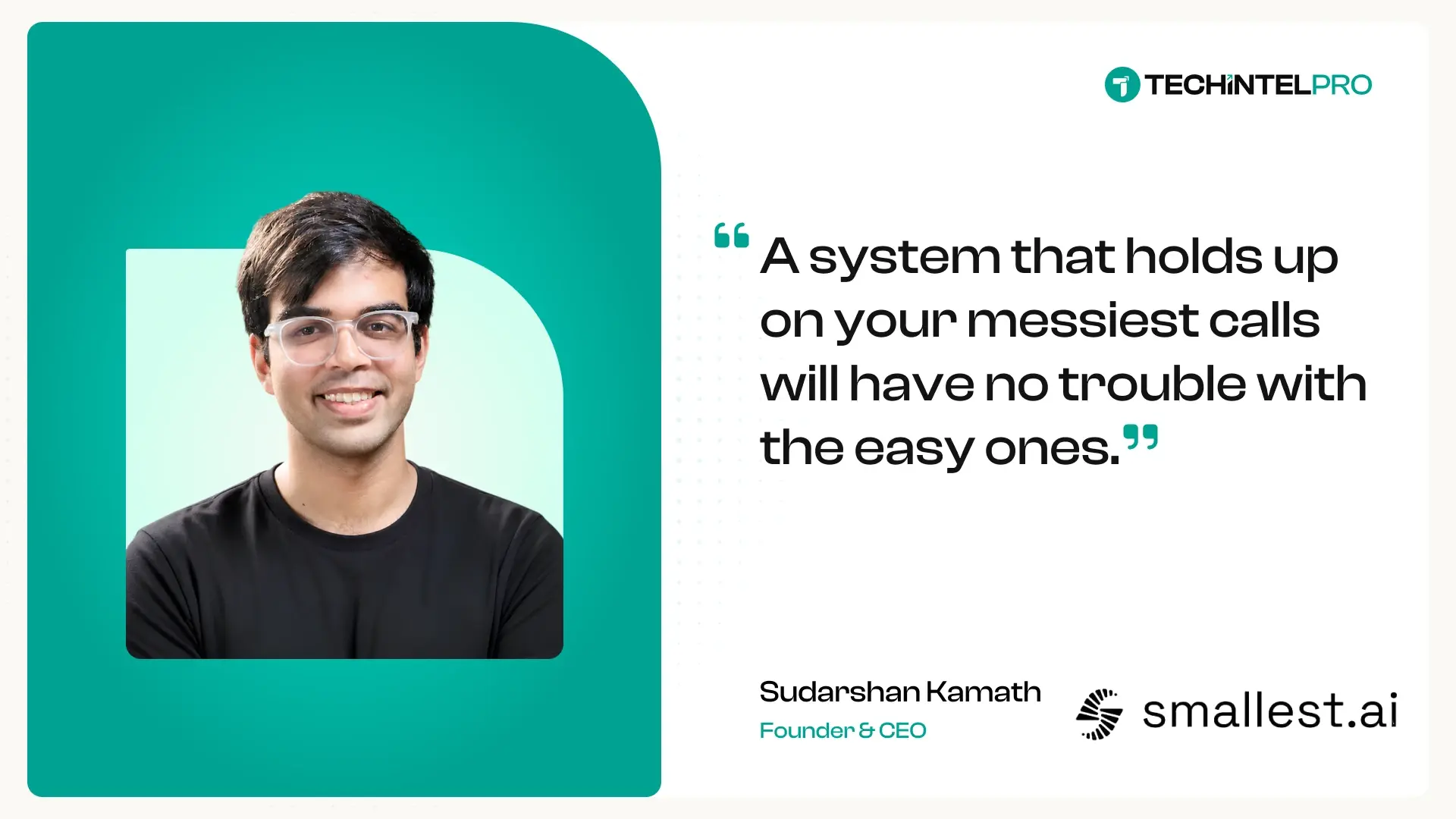
A system that holds up on your messiest calls will have no trouble with the easy ones.
Where this is heading
Voice agents have already shown they can finish a task. Voice 4.0 is about whether they can get through a real conversation without making the caller work harder than they would with a person. If the agent can handle interruptions and remember what has already been said, it starts to feel like talking to someone who's actually listening.



 Rate us on G2