
Ask any engineering leader whether AI has made their teams faster and most will say yes. Ask whether they can show exactly what their AI tools changed last Tuesday, and who approved it, and there may be some looking down and shuffling of feet.
That gap is the real story of enterprise AI right now. Code generation got fast. Governance hasn’t kept up. Gartner expects more than 40% of agentic AI projects to be cancelled by the end of 2027, and inadequate risk controls are one of the reasons it gives. Most of those projects won’t fail because the models are weak. In fact, they’re getting better all the time. They will fail because someone asked what the AI touched, and nobody could answer. That someone might be an external regulator.
AI is putting pressure on the database
Application code is more forgiving because, for the most part, if a change goes wrong you can roll back and redeploy. Databases are different. Many changes are one-way doors. Once you’ve passed through, you can’t go back. Transactions get written that can’t be undone, or a change slows everything to a crawl and costs you customers’ trust, which is hard to rebuild.
Database changes also follow application changes. As AI coding tools write more of the application, database changes are piling up downstream, faster than before. The 2026 State of the Database Landscape report found 82% of respondents say their security burden is increasing. Meanwhile, nearly four in ten organizations still deploy database changes by hand. Add AI agents with direct database access to that mix, and you have a lot of pressure applied to the most fragile part of the stack.
What are you using AI to optimize?
The response will be dictated by whatever you’re optimizing for. If you want control, the reaction is to add greater scrutiny through more reviews, more sign-offs, a committee. That works for a while. Then people find ways around it, the speed you bought evaporates, and you’ve pushed AI use into the shadows, where you can see even less.
If you’re enjoying the speed, the second approach is to let agents run with broad credentials and sort out the audit trail later. That keeps your developers happy, but you can’t explain what happened when something breaks, and regulators are asking you why.
These approaches treat speed and control as competitors. They aren’t. The real problem is where control sits. If it lives beside the work, as a meeting or a spreadsheet, it will always lag. It has to sit in the path of the change.
The fundamentals of database administration still work
There are five key database administration practices that make the difference when optimizing with AI, and none of them needs you to slow anyone down.
-
Know who, or what, made every change. An agent working on a database shouldn’t borrow a developer’s credentials. Give it its own identity with narrowly scoped permissions, so you can always tell whether a person, a tool or an agent made a change, and so a mistake has a limited blast radius.
-
Turn policy into automatic checks. Policy as code is the modern way to do this. Write your rules once, in a form machines can enforce, and keep them under version control like any other code. Rules such as no destructive operations without approval, no exposure of sensitive data and consistent naming standards then run against every change before it reaches production, whether a human or an agent wrote it. Changes are tested before they’re applied, and anything outside policy is blocked or sent to a person. Machines check in seconds. Committees take days.
-
Match oversight to risk. People should set the policies agents work within and approve the changes that carry real risk. Adding a nullable column in a development environment doesn’t need a human. Dropping a table, changing permissions or touching regulated data in production does. Route low-risk changes straight through and put named people where judgment matters. Oversight everywhere is oversight nowhere.
-
Capture evidence at the point of change. Record what changed, what made the change, who approved it, and what the schema looked like before and after. Regulations such as the EU’s Digital Operational Resilience Act and PCI DSS 4.0, and the EU AI Act for AI systems, increasingly ask for evidence of control, not statements of intent. A tamper-proof record created automatically costs far less than reconstructing events during an audit, and it lets you spot unexpected changes early.
-
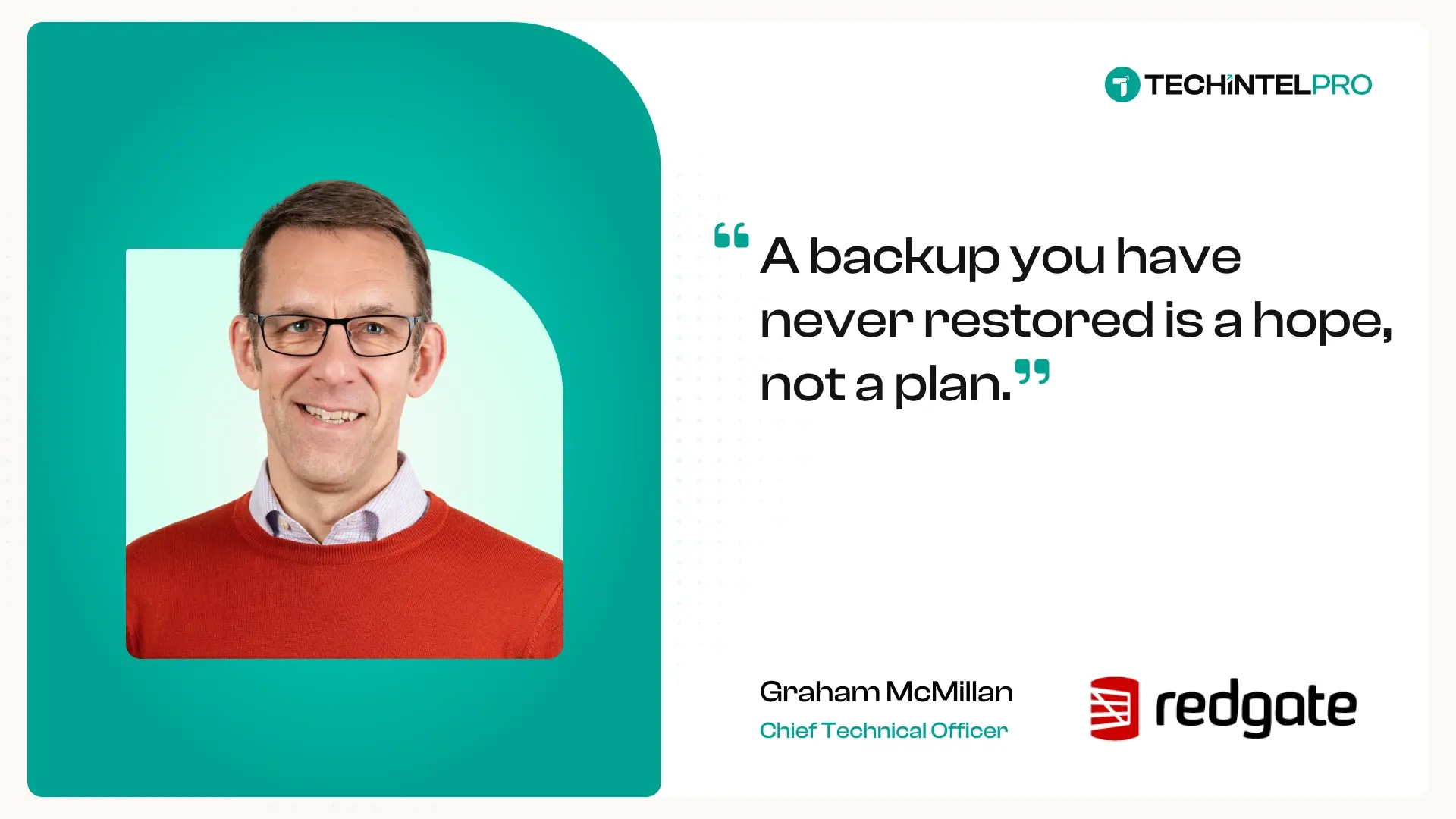
Plan for the day it goes wrong. Even good controls reduce risk without removing it, so assume a bad change will eventually get through and plan the recovery. Keep backups that sit outside anything an agent or a deployment tool can touch, and test restoring from them regularly. A backup you have never restored is a hope, not a plan. Earlier this year, a coding agent deleted a company’s production database in nine seconds, and the backups stored alongside it went too. The business was running again within a day, from a three-month-old copy, while customers rebuilt recent bookings by hand. The full data only came back days later, because the cloud provider held offsite copies the company didn’t know about. Not everyone gets that lucky.
Where human involvement still matters for the database
None of this removes people from the loop. It moves them. In an AI-heavy workflow, that same expertise is better spent writing the policies agents work within, and making the call on the changes that carry real risk.
That’s a better use of a senior database professional, and it’s a safer one. A reviewer who sees ten high-risk changes a day pays attention to each. A reviewer who sees two hundred of every kind skims them all.
Measures that matter for data professionals
Measuring both sides isn’t a new idea. The DORA metrics, from the DevOps Research and Assessment program, have been best practice for years. Deployment frequency and lead time for changes tell you how fast you’re moving. Change failure rate and time to recover tell you whether that speed is safe. The value has always been in reading them together. That’s why DevOps and site reliability engineering (SRE) emerged: to stop treating delivery speed and stability as a trade, and to put numbers on both.
AI makes this matter more, not less. When AI tools write more of the code, throughput jumps quickly, and the cost of any shortcut shows up just as quickly in failures and recovery time. Now you can see the trade-offs as they happen and put the evidence in front of senior leaders, instead of asking them to trust a feeling. Agree the rule up front: if failure rate or recovery time gets worse, the throughput gain doesn’t count. We hold ourselves to this internally. Every AI-written change is reviewed and tested before it reaches production, and we watch defects and incidents alongside delivery speed. It makes the headline numbers a little less flattering. It also makes them believable, which matters when you’re asking a board to fund the next phase.
The organizations that scale AI will be the ones that can prove it
That evidence is what settles the argument. There’s a tempting story that AI forces a choice between moving fast and staying in control. DevOps and SRE already showed that story is wrong for software delivery, and DORA’s research has long found the best teams are both fast and stable. AI doesn’t change that. The teams that can say yes quickly are the ones who can show, in numbers, that scaling up isn’t damaging anything, and show, in seconds, what changed and why it was allowed.
So try the Tuesday test on your own organization. Pick a database, pick a day, and ask what changed, what made the change and who approved it. If you can answer in minutes, you have the foundation to scale AI safely. If you can’t, that’s the first thing to fix, before the next pilot gets approved.


 Rate us on G2