
Supply chain technology has made enormous progress. Supply chain leaders have never had more data, more advanced planning tools, or more sophisticated forecasting capabilities. Yet disruptions, delays, and last-minute changes remain everyday realities.
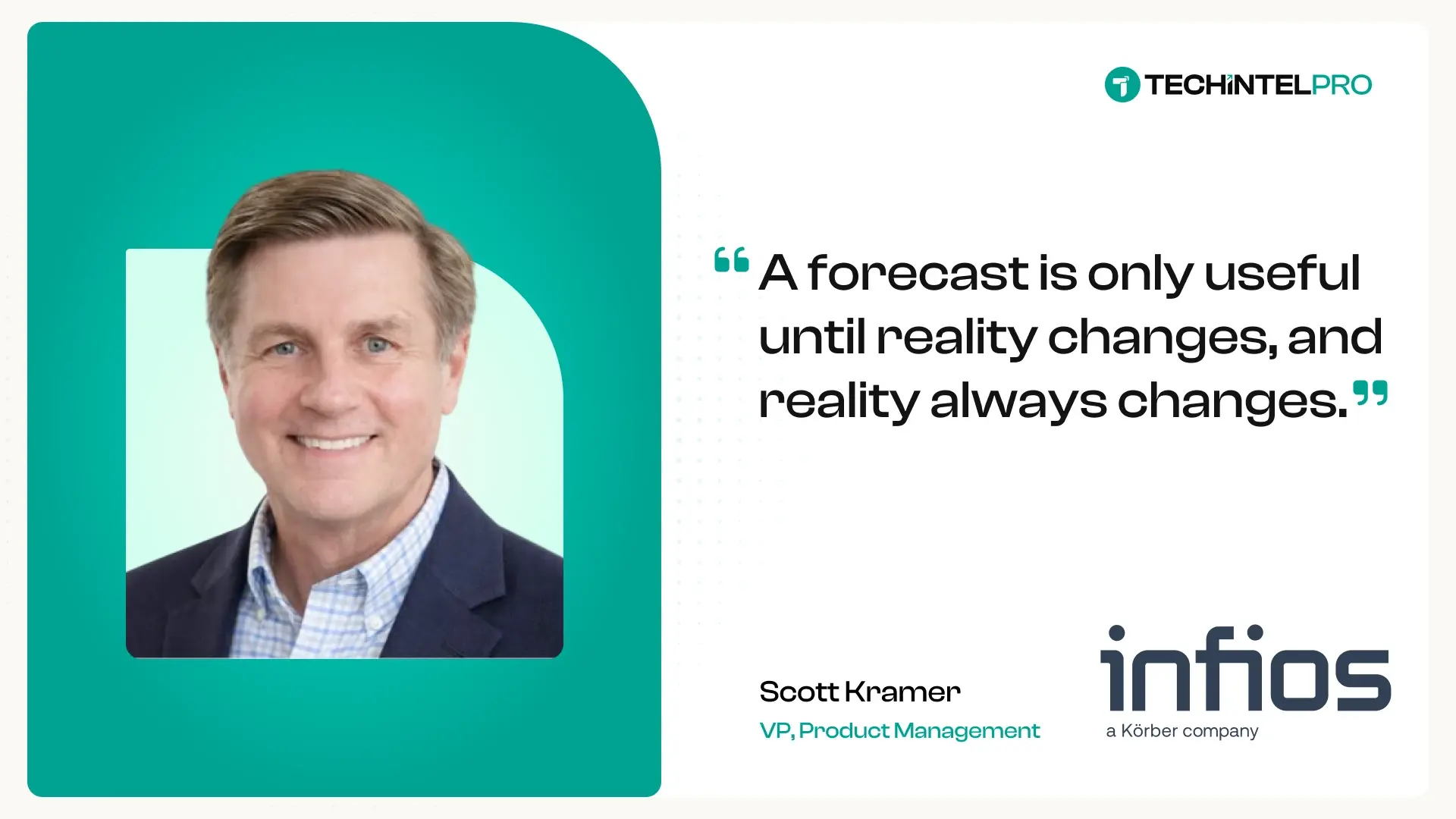
That is not a failure of forecasting. Forecasting allows organizations to anticipate demand, prepare for risk, plan capacity, and position inventory. However, a forecast is only useful until reality changes — and reality always changes.
A carrier runs late. Severe weather closes a route. Inventory arrives a day after it was expected. A warehouse is short on labor. A customer order comes in through a spreadsheet or PDF rather than a clean digital channel.
The real question has moved from “Could we have predicted this?” to “What do we do now?”
That is why the next era of supply chain excellence needs to move beyond better forecasts alone. Instead, it will come from intelligent supply chain execution by connecting operations and embedding AI directly into workflows, enabling organizations to understand what a disruption means, coordinate a response, and keep satisfying customers.
Forecasting Helps You Prepare. Execution Helps You Respond.
For years, the supply chain industry has focused heavily on planning. This involved improving demand forecasts, running scenarios, and gaining increased visibility into potential risks. Those are all important capabilities. However, visibility without action does not solve an operational problem.
Consider a delayed inbound shipment. On the surface, it looks like a simple transportation issue. But if inventory on that shipment has already been promised to customers, the delay can trigger a chain reaction, for warehouse, customer service, and transportation teams to scramble to adjust plans and reset expectations.
When this process is manual, teams have to go through multiple systems just to understand what's happening before they can even start fixing the problem.
That is where execution breaks down. Teams may have the information they need, but what they are missing is a shared operational context that connects what is happening to what needs to happen next — and helps turn that understanding into action. In a traditional environment, this often depends on people communicating information across teams and executing established processes at each handoff. Even well-designed processes can introduce delays: an email may go unread, a Teams message may be missed, or an issue may need to be manually escalated before the right person can respond. At scale, these small gaps between knowing and acting can create significant downstream impact.
The organizations that will lead in the years ahead are not necessarily those with the most accurate forecast. They will be the ones that can sense change, understand its impact across their network, decide what to do, act quickly, and learn from the outcome when conditions diverge from the plan.
The Advantage Is in the Moment After Disruption
The reality of supply chain management is that plans are always being tested. Everything from demand shifts to weather disruptions to labor availability can impact operations. But plans will undoubtedly change at some point, and the real challenge is building a process that can keep up.
Fast, dynamic execution enables organizations to reallocate inventory, reprioritize orders, adjust warehouse work, reroute shipments, and communicate proactively with customers. It allows teams to respond to what is happening now, rather than spending valuable time reconciling disconnected systems and determining downstream impact.
This requires more than a collection of point solutions. Teams across the supply chain must be able to operate with a connected understanding of the same event. A decision in one domain should be able to trigger the right action in another, not create another manual handoff or to-do list.
In a volatile environment, responsiveness is an operational benefit and a key competitive differentiator. The companies that keep promises when conditions change are the companies that earn customer loyalty, protect margins, and build greater resilience over time.
AI Must Move from Insight to Action
Much of the discussion around supply chain AI has focused on prediction, including better demand models, more precise estimates and earlier warnings. These capabilities are valuable, but insight without action has limited impact.
The next phase of supply chain AI must be designed for the operational moment. When an exception has occurred, a decision is needed, and teams are under pressure to keep work moving.
This is where AI can help create a continuous cycle of Sense, Decide, Act and Learn.
Sense: AI can continuously process signals from across orders, inventory, warehouse operations, transportation and external conditions to identify changes, exceptions and emerging risks.
Decide: AI can connect those signals to the broader operational context, assess their potential impact, and help determine the best course of action based on business priorities and defined rules.
Act: Rather than simply presenting another alert or recommendation, AI can help initiate and coordinate the appropriate response across workflows — from reprioritizing an order or reallocating inventory to adjusting warehouse activities or communicating with a carrier.
Learn: Every action and outcome provides another signal. By learning from what happened and how teams responded, AI can continually improve how it identifies patterns, prioritizes exceptions and supports future decisions.
The value is not in any one AI capability operating in isolation. It comes from connecting intelligence to the systems and processes where execution takes place, so that information can move quickly from understanding what is happening to determining what to do and putting that decision into action.
This creates a continuous feedback loop between intelligence and execution. Instead of simply predicting what might happen or alerting teams when something has already gone wrong, AI can help organizations sense change, decide what matters, act with speed and learn from the outcome.
That is how supply chain intelligence moves beyond static reporting or isolated automation and becomes a continuous capability for adapting to change.
From Daily Friction to Graduated Autonomy
Organizations do not need to reinvent the wheel to begin realizing value from execution AI. The best place to start is often with the manual work that creates the most friction every day, such as shipment exceptions, blocked orders, inventory discrepancies and labor reallocation
Order intake is a strong example. Many organizations still rely on PDFs, emails, faxes, and spreadsheets that require manual interpretation and entry, which are error-prone and time-consuming. Instead, AI can read these documents, extract and validate the details, and route the order into the right workflow, freeing teams to focus on exceptions and decisions that require real judgment.
The same logic applies as trust builds. While there is understandable caution around AI-driven decisions in complex supply chain environments, eventually teams should be able to introduce automation in stages.
AI can start by surfacing issues and recommending actions while teams review and approve. As performance proves reliable, companies can selectively automate routine actions within defined guardrails. This graduated approach earns trust through outcomes, and keeps people focused where their expertise matters most: managing exceptions and making calls that require experience and accountability.
The goal is not to remove people from the process. It is to give them better context, reduce unnecessary manual work, and enable them to intervene where human judgment adds the most value.
The Future Belongs to Organizations That Can Act
Forecasting will always be foundational to supply chain management. Organizations need to understand what may be coming and prepare accordingly.
However, preparation is only the starting point. The advantage increasingly belongs to organizations that can respond when the unexpected happens.
That means moving beyond an excess number of alerts, dashboards, and disconnected point solutions. It means creating connected execution environments where intelligence can flow across orders, warehouses, inventory, transportation, enterprise systems, and partners and insights can lead directly to coordinated action.
The best supply chains will do more than predict setbacks. They will sense what is changing, understand what it means, decide what to do, act at speed, and learn from the outcome.
In a world where disruption is constant, that is what turns supply chain intelligence into supply chain advantage.


 Rate us on G2