Workplace AI in 2026 is a paradox.
Formal adoption has never been higher. 88% of organizations now use AI in at least one business function, up from 78% a year earlier. Boards are receiving quarterly updates. CIOs are signing seven-figure enterprise contracts. The number of "AI transformation" initiatives in the average Fortune 500 has tripled.
The reported return on investment has never been weaker. Only 5% of organizations report transformative returns from formal AI investment. The other 95% report zero measurable impact on profit and loss.
That is not a curve. That is a chasm.
Beneath the official layer, something different is happening. Employees in over 90% of organizations regularly use personal AI tools for work — ChatGPT, Claude, Gemini, and Copilot through personal accounts, often many times per day. Only 40% of companies have purchased official LLM subscriptions. The other half is running on shadow AI.
This is the most important dynamic in workplace AI today, and most CEOs are still not looking at it.
The shadow economy is delivering the productivity gains that enterprise programs have mostly failed to capture. It is also delivering the undocumented compliance risk. 50% of U.S. workers use AI tools at work without knowing whether it is allowed. 44% knowingly use it improperly. Harmonic Security's 2026 analysis of 22 million enterprise AI prompts found that six applications account for 92.6% of sensitive data exposure — but traffic flows across 665 different AI tools, most unsanctioned.
Read those numbers as a single picture. Half your workforce is using AI without policy clarity. Almost half is using it, knowing they shouldn't. Sensitive data is moving through hundreds of tools your IT department has not approved. The productivity is real, but it is happening on personal accounts, where it can't be measured, governed, or scaled.
The companies that are getting AI right are not the ones with the biggest enterprise contracts. They are the ones channeling shadow usage into governed enterprise infrastructure.
Five things every CEO should do in the next 90 days.
- Survey your employees about AI use, with amnesty. Make it explicit that the survey is for shadow-AI inventory, not punishment. The inventory is the leading indicator of where your enterprise program needs to go. Most CEOs will be surprised. The use cases the workforce has discovered are usually broader and more productive than the ones official programs have authorized.
- Build a sanctioned-use catalog. Convert the shadow inventory into approved tools with clear data-handling rules. Lead with the highest-leverage use cases your employees are already running. Resist the urge to start with risk management; start with productivity capture, then layer in governance.
- Train your workforce. This is the single biggest unforced gap in the workplace AI landscape. BCG found that positive employee sentiment about AI swings from 15-55% when leadership openly supports adoption. That swing is bigger than any technology rollout I have seen in 25 years. Training is cheap. The lift is enormous.
- Write an AI use policy that your employees will actually read. Most enterprise AI policies are unreadable, which is why half the workforce is operating without policy clarity. The policy should fit on one page. It should distinguish clearly among approved tools, conditionally approved tools, and prohibited use cases. It should be updated quarterly.
- Stop reporting AI ROI as a single number. The 5% transformative-return statistic is a category error. AI is not a single program. It is a stack of distinct interventions — coding agents, customer service automation, marketing content production, document review, internal knowledge retrieval, sales enablement — each with its own ROI profile and its own adoption curve. Report each separately. The companies reporting the highest aggregate returns are the ones that stopped trying to aggregate.
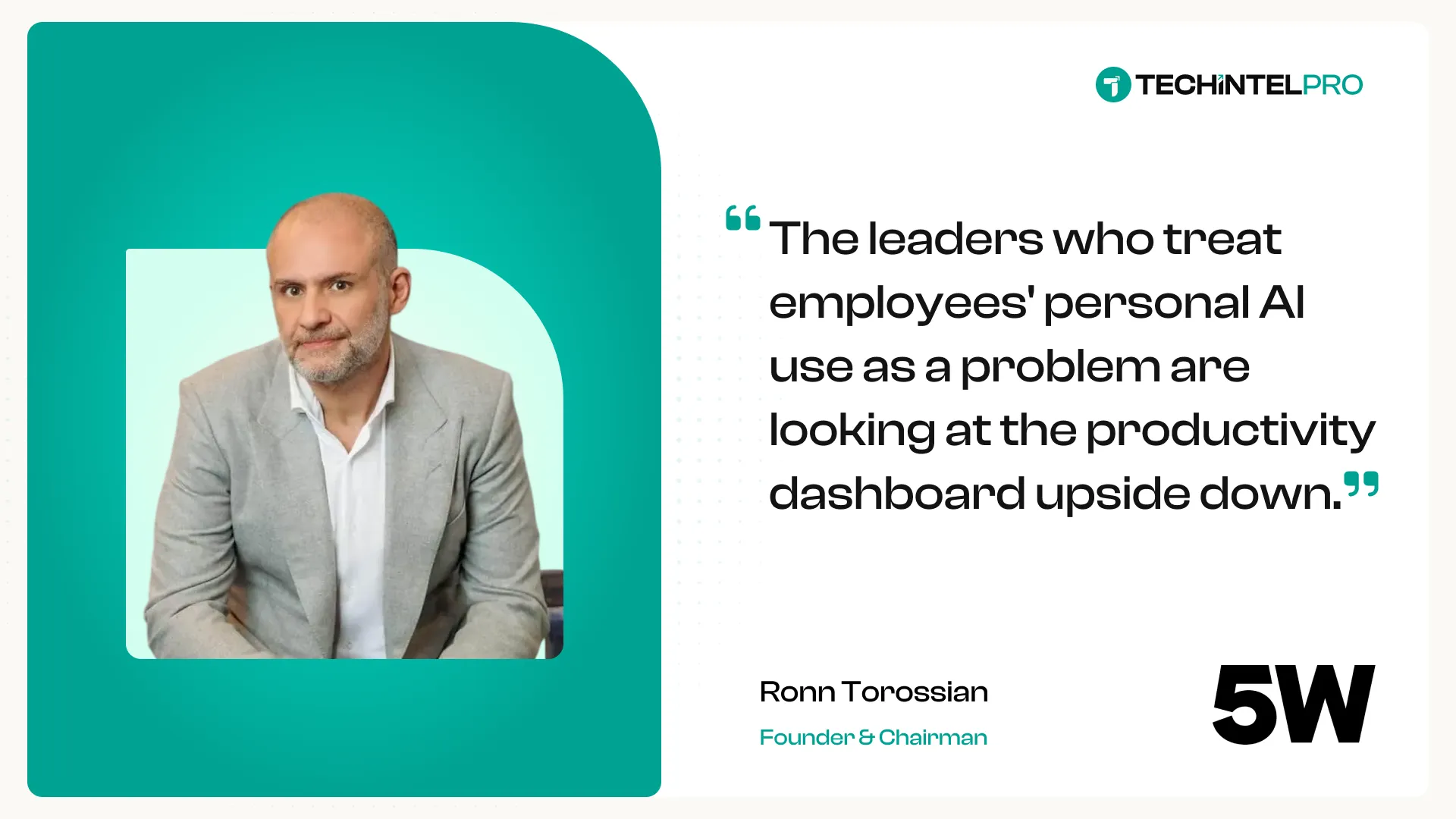
The companies that figure this out in 2026 are the ones that recognize shadow AI as the answer, not the question. The leaders who treat employees' personal AI use as a problem are looking at the productivity dashboard upside down.
The shadow economy is where the work is. The CEOs who channel it will own the next decade of enterprise productivity. The CEOs who suppress or ignore it will keep paying for AI programs that show no measurable return — while watching individual employees out-produce their official systems on personal accounts.
Further details can be found in the 5W’s AI at Work Index 2026.


 Rate us on G2