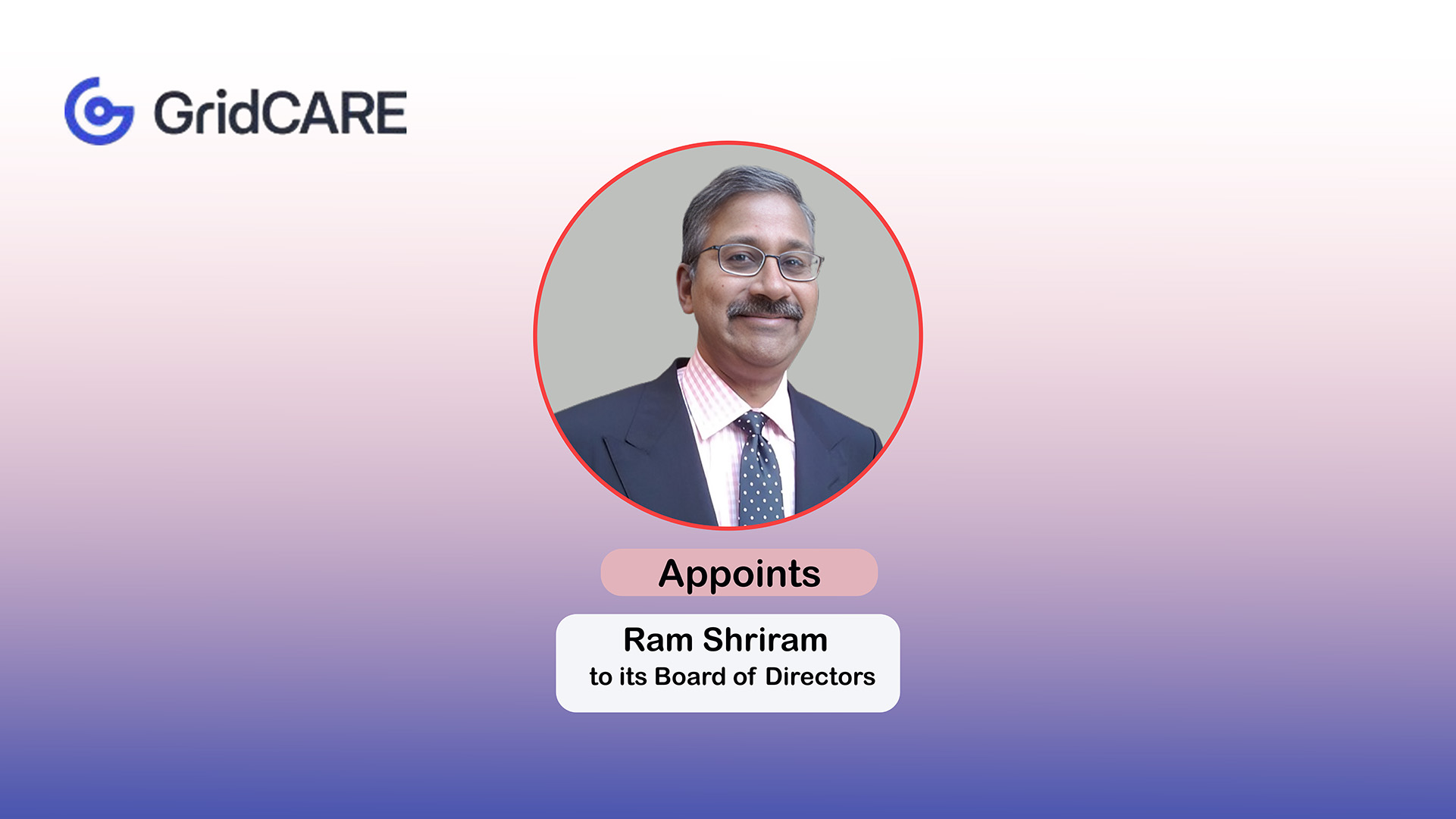

GridCARE has appointed Ram Shriram, a founding Google board member and prominent Silicon Valley investor, to its Board of Directors. Shriram joins the Stanford-born startup as it addresses one of AI’s most critical bottlenecks: power availability for large-scale AI data centers and factories.
GridCARE is tackling the power constraint throttling AI’s growth by identifying and activating underutilized capacity already present on today’s electric grid. This approach enables AI data centers to come online years ahead of traditional timelines, supporting the rapid expansion of compute-intensive AI workloads.
Shriram brings unparalleled experience in scaling transformative technology platforms. As one of Google’s first outside investors in 1998 and a continuous board member through its evolution into Alphabet, he has guided companies through major industry shifts. His prior roles at Netscape and Amazon, along with founding Sherpalo Ventures, position him to advise GridCARE on building enduring solutions at the intersection of AI and energy infrastructure.
“I’ve always invested in exceptional entrepreneurs and innovators solving real, consequential problems,” said Shriram. “The AI revolution is being throttled by a single constraint: power. GridCARE is tackling a foundational challenge for the AI economy, and its team brings unmatched depth across power systems and AI to solve it at the scale and urgency the moment demands.”
“From recognizing Google’s potential at its inception to helping shape some of the most iconic technology companies of our era, Ram’s track record speaks for itself,” said Amit Narayan, Founder and CEO of GridCARE. “His experience scaling category-defining platforms and building enduring companies will be invaluable as we meet the unprecedented demand for AI infrastructure.”
Since emerging from stealth in May 2025, GridCARE has demonstrated rapid progress. Its platform has already unlocked significant capacity, including 400 MW in a prime AI data center hub, creating substantial economic value for developers by accelerating deployment schedules. Partnerships with major utilities and engagement with hyperscalers underscore its practical viability.
"The pace of AI and cloud growth demands new thinking about how we power the digital economy," said Christian Belady, a GridCARE advisor, former Vice President of Data Center R&D at Microsoft, and creator of the industry-standard PUE metric. "GridCARE's approach is exactly what the industry needs: making better use of existing infrastructure to accelerate time-to-power while keeping costs down for everyone. Ram Shriram joining the board validates what those of us in the data center world already know: this team is building something essential."
“Ram Shriram understands how to build companies that matter, and this one matters,” said Mohsen Moazami, GridCARE advisor and former Office of the CEO/President of Groq (asset acquired by Nvidia). “GridCARE makes better use of our existing infrastructure — that is good for AI, good for utilities, and good for every consumer.”
GridCARE’s team combines Stanford expertise in AI for power systems with seasoned industry operators. Key members include Stanford professors and leaders from AWS, PG&E, Goldman Sachs, and successful venture-backed exits. The company’s investor base, including Breakthrough Energy Discovery, Temasek-backed Xora, and prominent individuals like Tom Steyer and Gokul Rajaram, highlights its strategic importance at the nexus of AI competitiveness and sustainable energy.
About GridCARE
GridCARE delivers Speed-to-Power for AI data centers. Our physics-based AI platform identifies and activates near-term capacity on today’s grid, enabling data centers to energize faster while helping utilities grow without compromising reliability or affordability. Founded at Stanford’s Doerr School and backed by leading AI and energy investors, GridCARE strengthens U.S. AI competitiveness by accelerating access to power at scale. To date, the GridCARE platform has created more than $10 billion in economic value for data center developers by bringing hundreds of megawatts online years ahead of schedule.


TechIntelPro empowers B2B technology decision-makers with the latest industry trends, deep insights, leadership perspectives and actionable intelligence to drive both organizational and professional milestones—and thrive on the tech pulse.