
Enterprise growth breaks fast when payment systems don’t scale with it. Disconnected invoicing, manual reconciliation, and fragmented workflows are quietly becoming business liabilities.
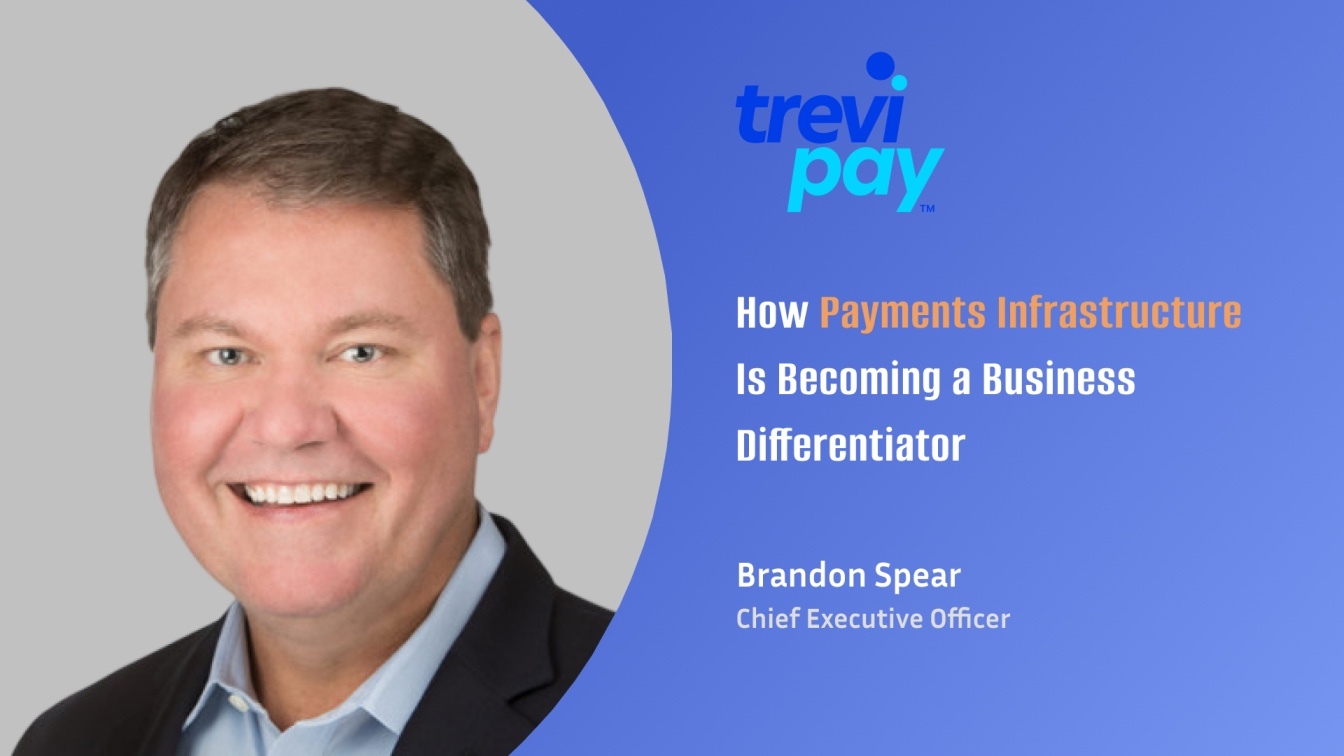
Brandon Spear, CEO of TreviPay, discusses why the future of B2B commerce depends on connected order-to-cash infrastructure that balances flexibility, automation, compliance, and customer experience together. He also shares how companies expanding globally can rethink payments not just as operational infrastructure, but as a driver of retention, predictability, and sustainable growth.
I’ve learned uncertainty tends to expose whether a company is built around short-term reactions or long-term priorities. When the stakes are high, I try to focus first on what will remain true regardless of market conditions or noise around us. Buyers still expect reliability. Customers still want transparency. Teams still need clarity around where the business is headed.
What’s consistently shaped my leadership approach is staying commercially grounded while keeping the organization close to the customer reality. In B2B payments and especially invoicing, you’re often operating at the center of trust between businesses. If you create unnecessary friction during uncertain periods, customers remember it. When you help make operations more predictable and easier to navigate, relationships tend to deepen over time.
I also believe leaders need to create decisiveness without pretending to have perfect information. Ambiguity is part of scaling businesses. The important thing is building systems, teams, and operating discipline that allow you to adapt quickly without losing focus on the bigger objective.
Early on, the clearest signal was that the market opportunity was much larger than how B2B payments had traditionally been framed. Many companies still viewed invoicing, trade credit, and accounts receivable as disconnected operational functions. Meanwhile, business buyers were expecting a far more connected and flexible experience.
We saw buyers wanting the same ease and transparency they experience as consumers, but within much more complex purchasing environments involving procurement systems, multiple stakeholders, and international operations. That told us the opportunity was not simply modernizing payments. It was improving the full order-to-cash relationship.
Internally, that shaped where we focused first. We invested heavily in leadership, platform scalability, and capabilities around automation, underwriting, and global support. We also focused on building alignment across product, operations, and commercial teams because fragmented internal execution creates fragmented customer experiences.
The traditional model starts to break down when businesses try to scale across channels, customer segments, and geographies while still relying on disconnected workflows. You might have invoicing in one system, credit management somewhere else, and collections handled manually across spreadsheets and emails.
That creates delays, inconsistent buyer experiences, and poor visibility into cash flow. It also introduces friction at exactly the wrong point in the customer relationship. Buyers may complete a purchase successfully, but if invoicing is difficult to reconcile or payment workflows are inconsistent, trust erodes quickly.
For global businesses, complexity multiplies. Different tax requirements, currencies, payment preferences, and eInvoicing mandates require systems that can operate cohesively. The companies scaling successfully are moving toward integrated order-to-cash environments where payments, invoicing, credit, and reconciliation operate together instead of as isolated functions.
Buyers no longer view invoicing and net terms as premium features. They view them as part of being easy to do business with.
The reality is that B2B purchases are operationally complex. Procurement approvals, inventory planning, cash flow management, and reconciliation all sit behind the transaction. Flexible invoicing and payment terms help buyers manage that complexity predictably.
Our research shows 78% of global B2B buyers say invoicing is necessary for a seamless purchasing experience, while 51% say they would switch merchants for more flexible net terms. That tells you these capabilities are no longer differentiators. They’re becoming baseline expectations for doing business.
The shift happening now is that payments are becoming embedded into the overall buying experience. Companies that still treat invoicing as a back-office process are missing how directly it influences loyalty, repeat purchasing behavior, and long-term growth.
The Aventon expansion highlights something many companies discover quickly when entering new markets: growth strategies only work if operational infrastructure scales alongside them.
Expanding a B2B payments program internationally is not simply translating invoices into another language or enabling a new currency. Every market brings different buyer expectations, regulatory environments, tax structures, and payment behaviors. Germany, for example, has strong expectations around invoicing transparency and operational predictability. 76% of German business buyers report issues with payment options, underscoring how critical accuracy, visibility, and reliability are in the purchasing process.
What makes partnerships like this effective is creating consistency for buyers while adapting locally where necessary. Aventon already saw success with its North American payment terms program. The goal in Germany is to extend that same confidence and flexibility to retailers entering a new stage of the company’s international growth.
The broader lesson is that payments infrastructure becomes increasingly strategic as businesses expand globally. If buyers encounter friction early, it slows adoption and weakens momentum in the new market.
One of the biggest challenges is balancing localization with operational consistency. Buyers expect payment experiences that align with local norms, whether that involves invoicing structures, currencies, settlement timing, or compliance requirements. At the same time, global businesses still need centralized visibility and control.
Cross-border taxation and regulatory compliance also create significant complexity. Businesses need to navigate VAT requirements, eInvoicing mandates, and local financial regulations while maintaining accurate reconciliation and reporting processes.
Another challenge is infrastructure fragmentation. Many companies still operate regional systems that don’t communicate well with each other. That creates operational blind spots, slows dispute resolution, and increases failure rates in cross-border transactions.
The companies succeeding internationally are building payment ecosystems designed for flexibility from the beginning. That includes strong local partnerships, integrated technology infrastructure, and automation that reduces manual intervention across markets.
Convenience only works long-term if the underlying controls are strong. In B2B, you’re often dealing with larger transaction sizes, more complex approval structures, and higher fraud exposure, so balancing flexibility with risk management is essential.
The approach we take is to embed risk management directly into the workflow instead of creating friction around it. Automated underwriting, real-time decisioning, and identity verification allow buyers to move quickly while still maintaining strong controls behind the scenes.
It’s also important that compliance and operational oversight scale globally. Different regions have different regulatory expectations, so businesses need infrastructure that can adapt locally while maintaining centralized visibility into receivables, disputes, and credit exposure.
We’re also seeing growing demand for A/R Automation as companies look to improve accuracy, reduce manual reconciliation, and create more predictable cash flow without adding operational burden to finance teams.
Ultimately, buyers want flexibility, but businesses also need predictability. The best systems create both simultaneously.
One assumption the industry needs to rethink is the idea that payments sit at the very end of the customer relationship.
Historically, payments were treated as a transactional back-office function focused mostly on settlement speed or operational efficiency. But payments now influence how buyers experience the brand itself. They affect loyalty, repeat purchasing behavior, trust, and even competitive positioning.
When buyers encounter friction around invoicing, approvals, or reconciliation, they don’t separate that experience from the supplier relationship. They view it as part of doing business with the company overall.
That’s why the conversation is shifting from payments as infrastructure to payments as part of the commercial experience. Companies that understand this are designing order-to-cash systems around buyer outcomes, not just internal workflows. And increasingly, those companies are the ones building stronger long-term customer relationships.
Brandon Spear leads TreviPay with expertise in managing large, diverse global teams. His strength is discerning and focusing on the most important challenges facing an organization at a particular point in time and unifying all stakeholders behind accomplishing a set of specific goals. Brandon has a unique ability to connect across all levels of an organization, motivate staff with diverse skill sets, while ensuring a common alignment and results.
More about Brandon: 
TreviPay, The Pay by Invoice Company™, is the global B2B payments infrastructure partner for manufacturers, retailers, travel companies, and banks. With our fully managed platform, intelligent apps, and 40 years of buyer intelligence, we help buyers buy and sellers grow and get paid faster. Behind the scenes, we streamline the order-to-cash process, from fast customer onboarding and predictive marketing to smart invoicing and settlement, all powered by AI that improves with every transaction. The result is fewer errors, higher AOV, and guaranteed DSO. Enabling more than $8B in global trade annually, TreviPay operates in 35 countries and was named a Leader for Embedded Payment Applications by IDC and a top vendor in cash application by The Hackett Group.
Learn more at trevipay.com.
Tell others what you think of TechIntelPro.



 Rate us on G2