There's a particular kind of chaos that lives inside most brand marketing orgs right now, and almost nobody is talking about it.
It doesn't announce itself. There's no single moment of failure, no blinking red alert. It just slowly, quietly bleeds performance, campaign by campaign, quarter by quarter, until someone finally asks why the numbers aren't moving despite all the investment in "AI-powered" tools.
The culprit is tech sprawl. And the AI boom made it significantly worse.
How We Got Here
The pitch was compelling: AI-powered tools for every function. One platform for listings, another for reviews, and a separate one for social. Don’t forget, an additional vendor for paid media; each one claiming to be intelligent, automated, and essential.
Brand leaders, under pressure to modernize and show they were "using AI," said yes, and yes, time and time again.
The result is a martech stack that looks impressive on a vendor slide, but is a quiet operational nightmare in practice. Multiple logins, dashboards, account teams, and invoices. Crucially, there are multiple systems that don't share data with each other, making the "AI" in each one dramatically less useful than advertised.
Here's the uncomfortable math: if your AI tools can't see each other's data, none of them are actually intelligent. They're just isolated automation running in silos.
The Data Fragmentation Problem
Real AI, specifically the kind that actually drives performance, gets smarter the more it knows. It needs a complete picture: how paid campaigns are performing, what organic search is doing, how reviews are trending, what content is resonating on social. These signals feed each other. A dip in reviews in a specific market should influence ad spend in that market. A spike in search demand should trigger a content and paid response simultaneously.
When your tools are siloed, none of that cross-channel intelligence exists. Your paid media AI doesn't know what your listings platform is seeing. Your social tool has no idea what's happening in your ad campaigns. Each system is optimizing its own narrow slice while the full picture goes unseen.
This is the hidden cost of tech sprawl that vendors, selling point solutions, never mention: fragmented data produces fragmented intelligence, and fragmented intelligence produces fragmented results, regardless of how many AI badges are on each tool.
The Hidden Operational Tax
Beyond the performance impact, there's a very real cost in time and human capital that brand leaders tend to undercount. Consider what it actually takes to manage a five-tool martech stack across 200 locations:
- Onboarding: Each new tool requires setup, training, and integration work. Multiply that by every vendor and every future location.
- Reporting: Pulling a coherent picture of marketing performance means logging into multiple platforms, exporting data, and stitching it together manually — or paying someone to do it.
- Troubleshooting: When performance drops, where do you start? With five tools involved, diagnosing the root cause becomes a multi-vendor conversation where everyone points at someone else.
- Renewals: Every additional tool is another contract, another negotiation, another line item competing for budget.
None of this is what brand leaders signed up for when they were promised the efficiency of AI. But this is the operational reality of stacking point solutions, each one marginally useful, collectively expensive, and cumbersome.
Why Vendors Love Selling You Point Solutions
It's worth asking why the martech industry defaults to selling narrow, specialized tools rather than unified platforms. Part of the answer is market dynamics, meaning it's faster to build and sell a focused product than a comprehensive one. But a bigger part of the answer is accountability avoidance. When a tool only handles one function, it can only be blamed for one function. Poor paid performance? That's not the listings vendor's problem. Weak organic reach? The paid media platform shrugs.
Fragmentation is, in a perverse way, good for vendors. It diffuses accountability across the stack, making it nearly impossible to hold any single player responsible for overall marketing performance. A unified agentic platform doesn't have that escape hatch. When one system owns paid, organic, social, and reputation — it owns the outcomes. That's a much higher bar. It's also exactly what brand leaders should be demanding.
What Consolidation Actually Looks Like
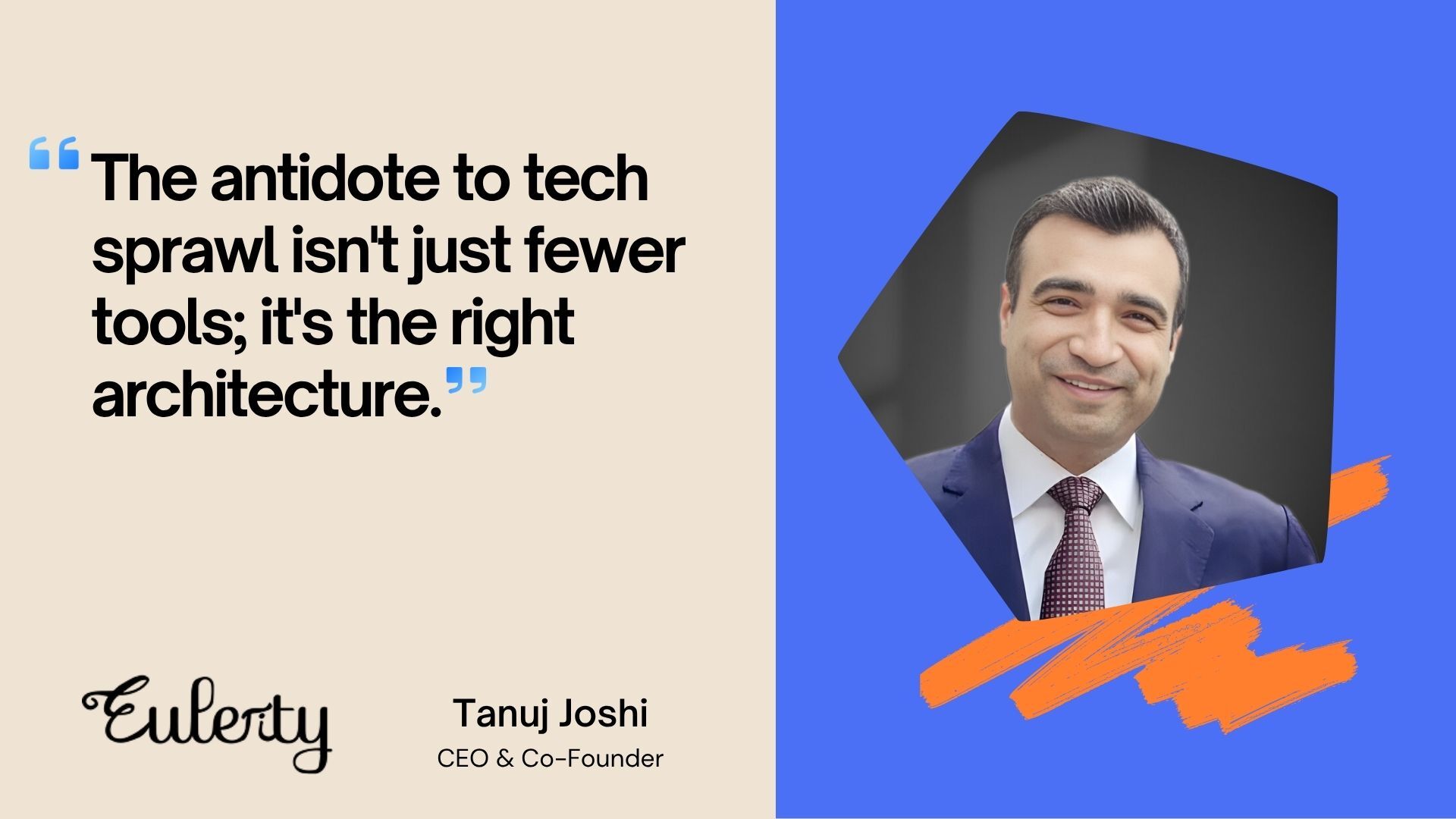
The antidote to tech sprawl isn't just fewer tools; it's the right architecture. A genuinely intelligent marketing system needs to do three things that a stack of point solutions structurally cannot:
- Unify data across channels. Paid performance, organic signals, reputation data, and social engagement need to exist in the same system — feeding the same intelligence engine — for any of it to be meaningfully useful.
- Act across channels simultaneously. When demand spikes in a market, the response shouldn't be siloed. Ad spend, local content, and business listing data should move together, instantly, without requiring four separate logins and four separate approvals.
- Own outcomes, not just outputs. Outputs are impressions, clicks, and posts. Outcomes are leads, revenue, and growth. A consolidated agentic platform is accountable for the latter, which is how marketing technology should always have been measured.
The Question Worth Asking Before Your Next Renewal
As you head into vendor review season, the question isn't "what does this tool do?" It's "what does my entire stack cost me — in dollars, in time, and in the performance I'm leaving on the table because my tools can't see each other?"
For most multi-location brands, the answer is more than they realize. The AI promise was efficiency at scale. A sprawling stack of disconnected point solutions is the opposite of that promise.
Somewhere between the budget line items and the quarterly reviews, the dream of intelligent, autonomous marketing got replaced by a more complicated version of what you had before.
It doesn't have to stay that way.


 Rate us on G2