
Earlier this month in London, beehiiv co-hosted a half-day conference with Google on audience ownership and how media is evolving.

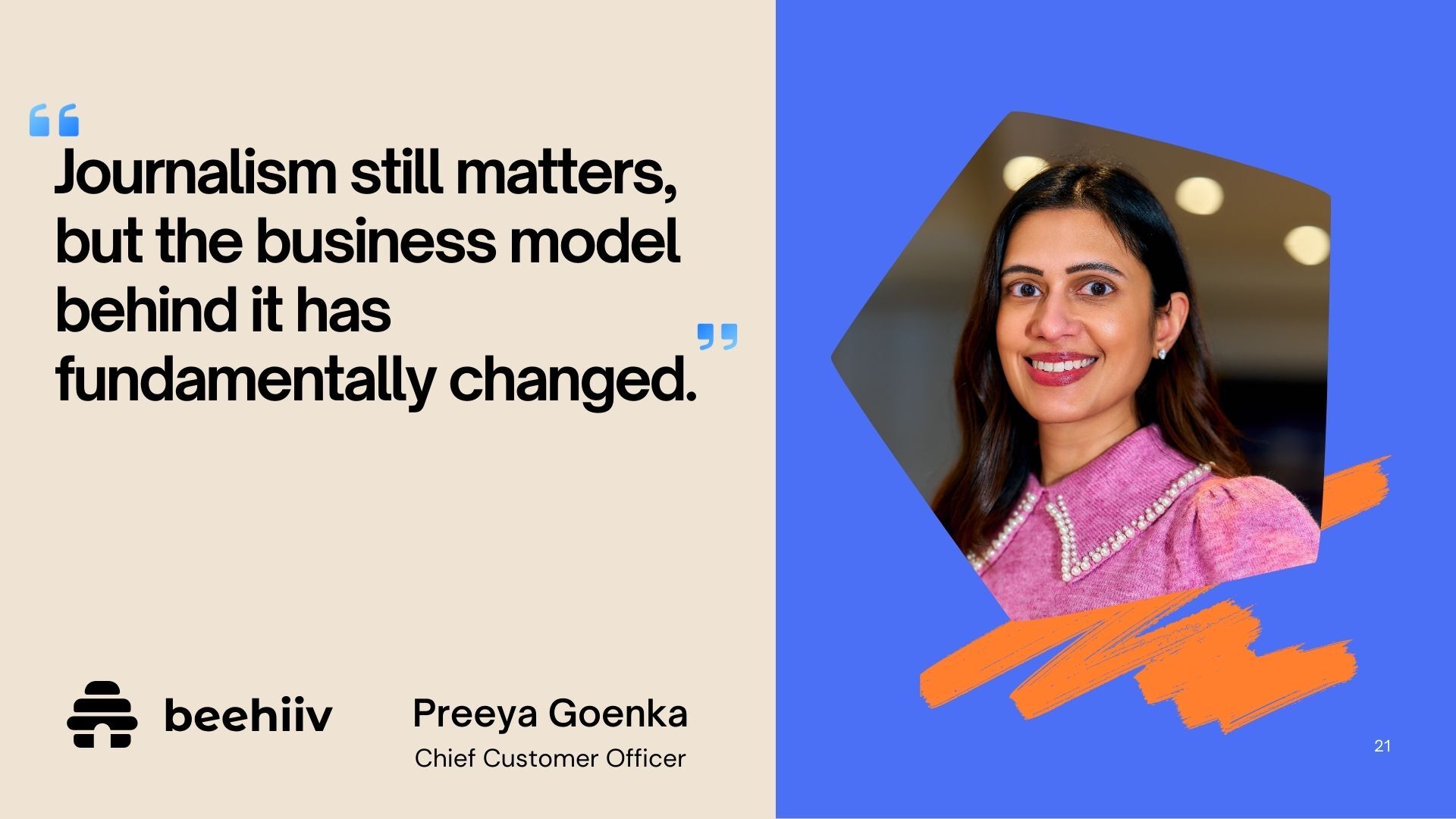
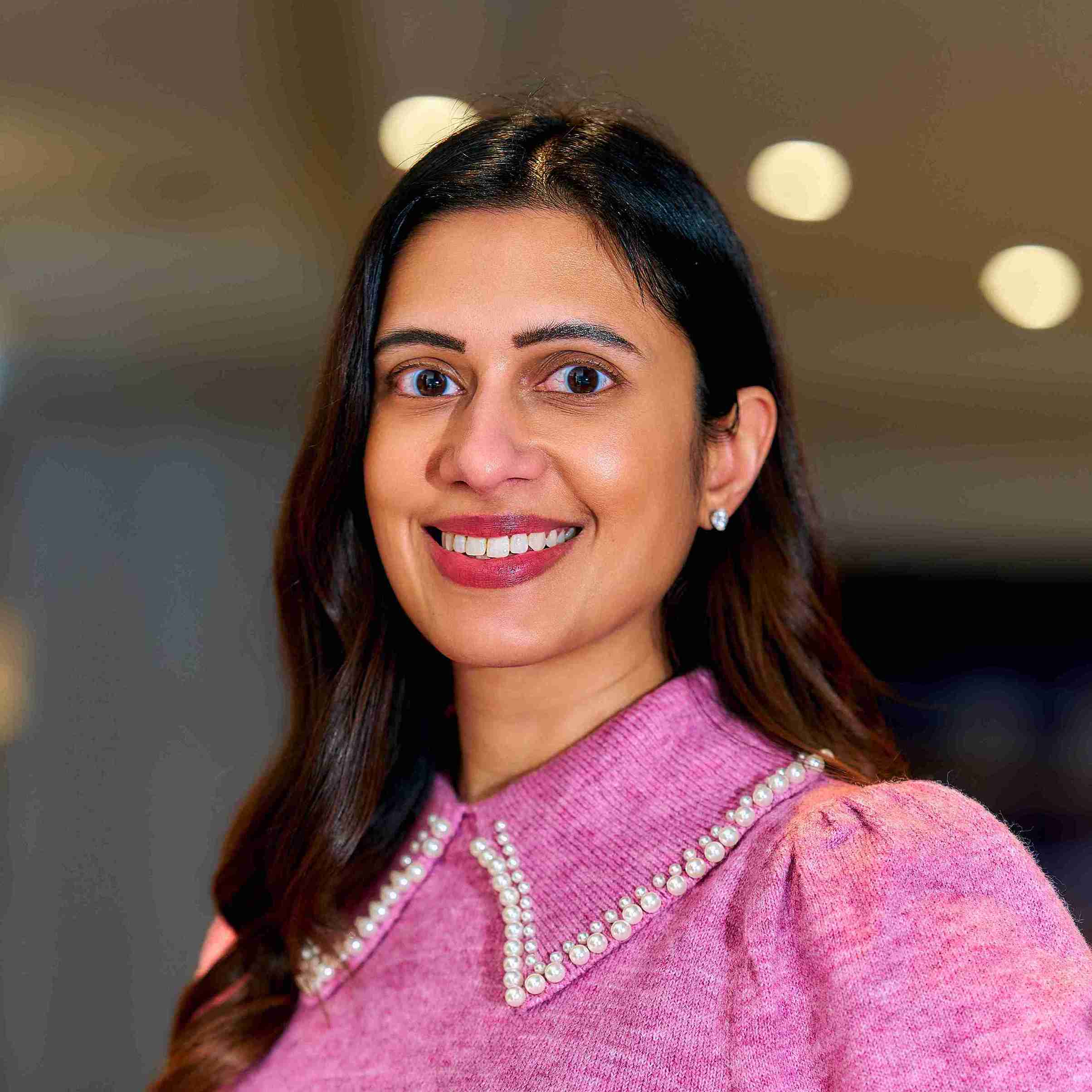
Preeya Goenka, Chief Customer Officer of beehiiv
The room was full of journalists, founders, newsroom leaders, and investors talking about something the industry has been wrestling with for years: Journalism still matters, but the business model behind it has fundamentally changed.
I’ve spent the past three and a half years at beehiiv working directly with media companies, reporters, and publishers as they rethink distribution, revenue, and audience relationships. We traveled to London to meet local journalists and publishers and deepen our engagement with the UK market.
Independent journalists around the globe have more opportunities than ever to build businesses around their voice and expertise. But that opportunity sometimes comes with pressure and uncertainty. They’re suddenly responsible for distribution, engagement, community, and revenue, not just reporting. The most common question we hear is simple: how do you grow a business when you’re trained to be a journalist?
Legacy organizations face the opposite problem. They’re trying to build or rebuild direct audience relationships in a world where platforms control discovery and turn newsletters into core editorial products — not just drivers of traffic. Publishers like TIME and Newsweek are already operating this way on beehiiv, alongside independent journalists building their own trusted brands.
In this model, the newsletter becomes the hub where the relationship starts, and everything else grows, including podcasts, video, communities, and events. Forward-looking media organizations aren’t choosing between institutional journalism and independent voices. They’re combining them.
Just today, CBS News contributor David Begnaud announced the launch of his independent media company, Do Good Crew, featuring a newsletter powered by beehiiv, a podcast, and live events, all while continuing in his on-air role at CBS. His approach reflects where the industry is headed: journalists expanding their own brands and revenue streams without cutting ties with traditional newsrooms.
For independent journalists, this shift allows them to build directly on the trust they’ve already earned and continue reporting on their own terms.
Through the Media Collective, we extend the support traditionally tied to traditional newsrooms, such as legal review services, health insurance, and business, editorial, and audience growth tools, so journalists can operate independently without giving up stability or sacrificing editorial ownership.
Independent outlets are already demonstrating what’s possible. The Nerve, launched by former Observer journalists, quickly built a paying membership to fund investigative reporting directly through readers. Oliver Darcy’s Status surpassed $1 million in revenue in its first year, and Lachlan Cartwright’s Breaker became profitable within a year, supporting him at a legacy media salary through subscribers.
This isn’t a theory anymore. Media companies are folding newsletters into their core strategy, and independent journalists are building entire businesses on them. We saw this firsthand in London and continue to see it play out across the industry every day.
Across every room we were in — a press gathering with journalists, editors, and executives from Sky News, BBC, Reuters, Bloomberg, POLITICO The Telegraph, and more; beehiiv co-founder and CEO Tyler Denk’s fireside chat with more than 75 founders; small dinners and one-on-one meetings with reporters and publishers; and our conference at Google’s campus — the same conclusion kept resurfacing: the demand for journalism hasn’t declined. The way it’s supported has.
Here are a few more key takeaways from the week.
Authority and intimacy are merging
Tyler opened the beehiiv & Google conference with a 45-minute presentation about audience ownership and how a newsletter can scale from a side project into a real media business (including his own newsletter, Big Desk Energy, which has more than 120,000 subscribers).

beehiiv co-founder and CEO Tyler Denk presents at "A New Era for Media & Journalism" half-day conference presented by beehiiv x Google in London
beehiiv advisor and former CBS News president and CEO Wendy McMahon described the shift as authority meeting intimacy. Traditional newsrooms were built to broadcast credibility. Independent journalists are built to deepen relationships. Audiences now expect both simultaneously.

CBS News' Imtiaz Tyab, beehiiv's Wendy McMahon and Preeya Goenka with LNI Media's Lauren Saks at "A New Era for Media & Journalism" half-day conference presented by beehiiv x Google in London
Lauren Saks, co-founder of LNI Media and formerly of The Washington Post, made a similar point from the startup side: transparency itself is becoming part of editorial standards, something Local News International practices by openly listing its funders.
Trust is increasingly anchored in individuals. Institutions still matter, but audiences increasingly enter journalism through a voice before a masthead.
A structural shift, not a cycle
These conversations happened after news broke that The Washington Post cut more than 300 jobs. These moments reinforce that the challenge isn’t audience demand, but economics.
For decades, media bundled reporting, distribution, and monetization together. Now distribution is fragmented, discovery is unpredictable, and monetization models are changing. The need for trusted news and reporting, however, remains constant.

beehiiv's Preeya Goenka with Lightspeed Venture Partners' Alex Schmitt during a fireside chat at the beehiiv x Google half-day conference in London
As Alexander Schmitt of Lightspeed Venture Partners noted during our fireside chat, the barrier to creating media has fallen dramatically. What investors increasingly back are people, trusting exceptional individuals to build durable audience relationships over time.
AI is accelerating this shift. Creation costs are dropping, distribution is changing again, and monetization models are evolving alongside both. But the underlying rule hasn’t changed: distinctive, trusted reporting still finds an audience. And it always will.
The missing layer: scaffolding
The biggest obstacle to independent journalism has never been reporting. It has been operational stability.
Historically, an employer handled the invisible but critical support functions like legal reviews, health insurance, growth tools, and audience infrastructure. When journalists go independent, they don't just leave a newsroom. They lose the systems that made sustained reporting possible.
That’s the gap new infrastructure now needs to address.
Our Media Collective is designed to solve for that, giving journalists the support they need while they retain full ownership of their content, audience, and revenue. The goal isn’t to replace newsrooms, but to make independent journalism durable and economically sustainable.
What audiences actually want
Simon Collis, SVP of Content Strategy and Audience Development at Future, summarized the audience expectation clearly. The landscape changes, but needs remain constant: content, engagement, and trust.
Arun Venkataraman from the Google News Initiative echoed a similar point: sustainability for both newsrooms and independent creators increasingly depends on direct audience relationships and diversified revenue streams that don’t rely on any single platform.
Search and social alone no longer build durable audiences. Direct relationships do.
Journalism that differentiates through depth earns attention. Journalism that builds community earns loyalty. beehiiv is designed to support that work.
A layered future for media
What emerged from the week wasn’t a battle between old and new media but a clearer architecture: institutions provide scale and reporting resources. Independent journalists provide voice and connection. Shared infrastructure allows both to operate sustainably.
Journalism appears to be reorganizing into a network rather than a hierarchy. For years, the conversation centered on saving journalism. Now it’s about enabling it.
Right now, the conversations we’re having don’t feel like debates about the future. The future is being built right now, in real time.
The newsroom of the next decade may not be a place, but a system that allows trusted reporting to exist wherever journalists are. Building the infrastructure to support that system — for both institutions and independent journalists — is the work ahead.


beehiiv Press Party
(All image credits: LRock Media)

 Rate us on G2


