For a long time, artificial intelligence in software development felt like an upgrade to convenience. It completed lines of code, suggested cleaner syntax, and occasionally helped draft documentation. It saved time, reduced friction, and made everyday work smoother. Most engineers saw it as a productivity enhancer, not as something that would meaningfully alter the structure of their work.
That assumption no longer holds.
Over the past few years, AI systems have matured beyond responsive assistance. They are no longer confined to answering prompts inside an editor window. Increasingly, they are capable of participating across the software development lifecycle. They can read detailed requirement documents, translate them into technical tasks, generate structured code, produce tests, scan for vulnerabilities, and support deployment workflows. In some environments, they operate with limited autonomy, completing multi-step tasks before human intervenes.
This shift is not dramatic in appearance. It has unfolded gradually. Yet its implications are substantial. AI is moving from being a feature within tools to becoming part of the operational fabric of engineering teams.
A Structural Change, Not a Feature Update
The difference between traditional AI assistance and modern autonomous agents is more than technical nuance. Earlier systems were reactive. They waited for instructions and responded in isolation. They did not maintain context beyond immediate interaction.
Newer AI agents can interpret objectives and carry them forward through structured steps. Given a defined goal, they can generate a plan, interact with repositories, produce code across files, run tests, and evaluate whether outcomes meet predefined criteria. They do not replace human supervision, but they extend automation across workflows rather than individual commands.
This structural change alters how work is distributed. When AI systems participate in planning, coding, testing, and deployment, they cease to be optional add-ons. They become integrated contributors.
Planning with Greater Clarity
Planning has traditionally been one of the most vulnerable stages in software projects. Requirements are gathered from multiple stakeholders, often with incomplete technical detail. Documentation grows lengthy; interpretations vary, and misunderstandings surface late in development.
AI systems now assist by processing requirement documents quickly, identifying missing dependencies, highlighting inconsistencies, and generating structured technical outlines. They provide a preliminary blueprint that teams can review and refine. The value lies not simply in speed, but in establishing clarity early.
Human discussion remains essential. Business priorities, trade-offs, and long-term product considerations cannot be reduced to automated summaries. Yet beginning a coherent draft reduces misalignment and shortens the path to execution.
Development Beyond Repetition
Code generation is where the change is most visible. AI systems today can generate entire modules from structured descriptions. They can refactor legacy code, apply consistent formatting standards, and even suggest architectural adjustments based on recognized patterns.
For developers, this reduces time spent on boilerplate and repetitive implementation. The nature of effort shifts. Instead of writing every structural element manually, engineers increasingly review, adjust, and guide AI-generated outputs.
This does not diminish expertise. In fact, it raises the importance of judgment. Deciding whether generated code aligns with architectural standards, performance expectations, and security policies requires experience. The emphasis moves from producing volume to ensuring integrity.
Testing as Continuous Assurance
Testing has often been reactive. Code is written first; defects are identified later. AI systems are helping to alter that sequence.
Automated tools can generate baseline test coverage, simulate edge cases, and flag potential regressions based on historical patterns. Security scanning can be embedded into workflows, providing early detection of vulnerabilities.
This integration reduces the frequency of late-stage surprises. It does not eliminate the need for human quality assurance. Domain-specific scenarios, usability considerations, and complex integrations still require thoughtful review. However, the scale and consistency of baseline validation improve significantly.
Smarter Operations and Deployment
In deployment and operations, AI-driven systems monitor infrastructure metrics, detect anomalies, and scale resources dynamically. They can trigger alerts or initiate rollbacks when predefined thresholds are crossed.
DevOps teams remain essential, but their role evolves from constant manual oversight to supervision of intelligent automation. The benefit is not only efficiency, but resilience. Faster detection and response reduce operational risk and improve service continuity.
The Question of Human Relevance
With automation expanding across multiple stages of development, it is reasonable to ask whether the role of engineers is diminishing.
The evidence suggests otherwise.
What declines is repetitive execution. What grows is strategic responsibility. Architectural design, integration planning, governance, compliance oversight, and risk management become more central. AI systems generate possibilities; humans determine suitability.
Software development has always evolved through abstraction. High-level languages replaced assembly. Frameworks simplified infrastructure management. Cloud platforms reduce hardware dependencies. Each shift removed layers of manual effort while increasing the importance of higher-order thinking.
AI follows that pattern. It does not erase the need for engineers; it alters the balance of their responsibilities.
Governance as a Foundation
Autonomous capabilities introduce new considerations. Verification of AI-generated code becomes essential. Clear accountability must be defined when automated systems execute tasks. Security and compliance checks must remain rigorous.
Organizations that successfully integrate AI into development workflows typically establish governance frameworks early. They define where AI can operate independently and where human approval is mandatory. They maintain audit trails for transparency. They embed security scanning and compliance validation into automated pipelines.
Without governance, automation can amplify mistakes. With governance, it amplifies productivity.
A Measured Path Forward
For teams deciding to implement AI more deeply, slowly getting into it step by step is still a wise move. Instead of going through all automation, companies usually start with specific use cases such as automatic test creation, code review help, documentation updating, or server monitoring.
Well-defined limits, tangible results, and methodical feedback sessions give teams a chance to evaluate benefits so that the working environment is not disrupted. Developing human resources for working in tandem with AI systems is of similar importance. The proficiency in directing, judging, and improving automation is a fundamental skill.
Conclusion
AI for software development is having a significant transformation. It is not just used for helping with random tasks anymore. It is increasingly directly used in methods that define planning, coding, testing, and deployment.
This change is not a substitution of human ability but a shift of work. People are less involved in repetitive tasks and more in strategic oversight. The engineer is becoming more of a designer, critic, and solution provider.
The winners among the companies will not be those that indiscriminately automate or those that completely resist change. Rather, they will be the ones that integrate AI in a deliberate manner, keep up strict governance, and change roles thoughtfully.
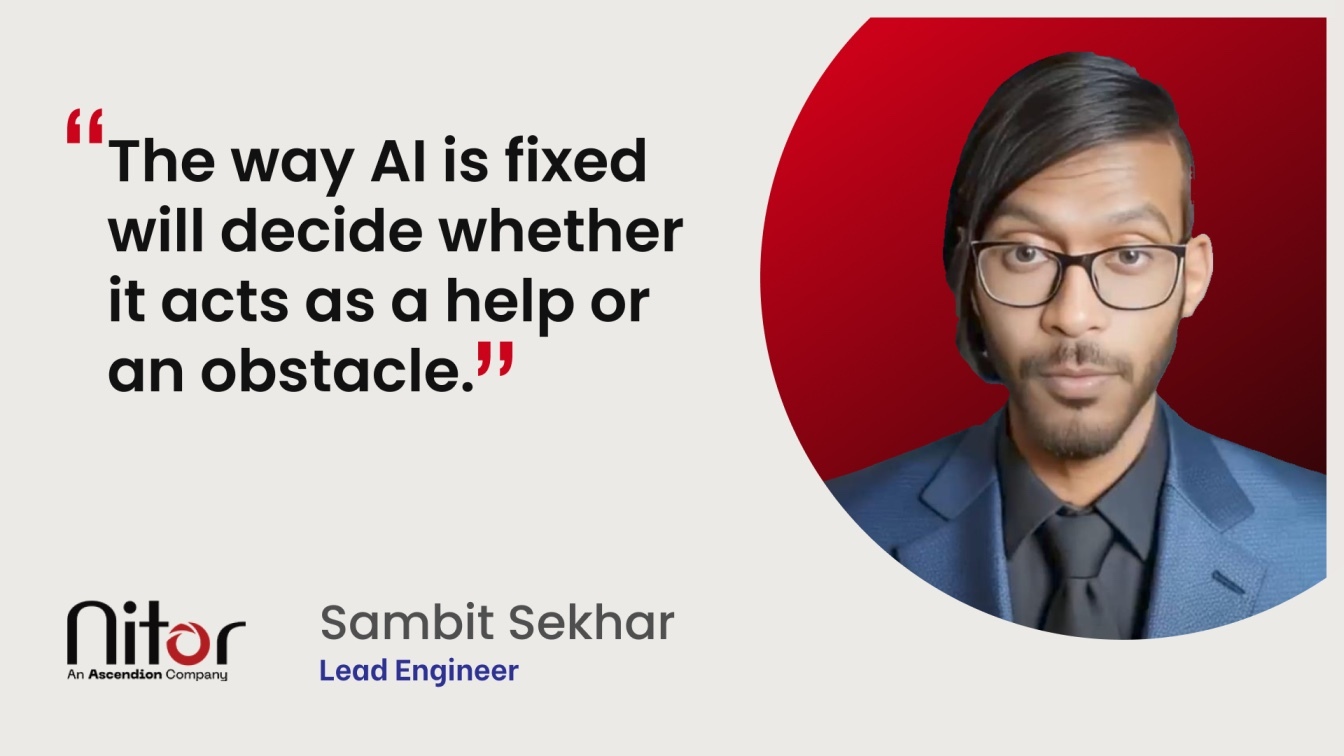
AI has already stopped being just a development edge tool. It is going to be a very important part of the system. The way it is fixed will decide whether it acts as a help or an obstacle.