Workforce analytics has evolved far beyond its original purpose. Basic reporting has given way to complex systems that not only analyze employee behavior but also predict exits and influence who gets hired or promoted.
But there’s a catch.
The more insight companies gain, the more they expose themselves to employee privacy risks, and many organizations are realizing they have moved faster on analytics than they did on workforce data governance.
That gap is where the real risk lives.
When Workforce Data Becomes Too Much Data
It’s easy to see the appeal of workforce analytics. Leaders want better decisions. HR teams want measurable impact. And technology makes it all possible.
So data starts flowing in – from collaboration tools, performance systems, engagement platforms, and sometimes even passive monitoring software.
Individually, each dataset feels justified. Collectively, it becomes something else entirely: a detailed digital profile of employees that few organizations are fully prepared to govern.
This is where things start to get uncomfortable. Not just from a compliance perspective, but from a human one.
The Subtle Rise of Employee Privacy Risks
Most privacy issues in workforce analytics don’t come from bad intent. They come from small decisions that add up over time.
A tool gets introduced to track productivity. Another analyzes communication patterns. An AI model is layered on top to predict performance or retention. And before long, organizations find themselves dealing with very real employee privacy risks, often without clear internal guardrails.
Some of the most common issues include:
- Unintended surveillance: Monitoring that feels excessive, even if it was meant to improve efficiency
- Over-collection of data: Gathering more information than is actually needed
- Black-box decision-making: Employees affected by decisions they don’t understand
- Bias in algorithms: Systems that quietly reinforce existing inequalities
None of these problems is new. What’s new is the scale and the speed at which they can impact an entire workforce.
Why Workforce Data Governance Needs a Rethink
Many organizations still treat workforce data governance as an extension of IT or compliance. That approach no longer works.
Workforce data is fundamentally different from customer or operational data. It’s personal, contextual, and deeply tied to trust. If governance frameworks don’t reflect that, they fall short.
A more effective approach starts with a simple shift: recognizing that governance isn’t just about control, but intent.
- Why is this data being collected?
- Who actually benefits from it?
- Would employees feel comfortable if they fully understood its use?
These questions matter as much as any regulation.
Making Data Minimization in HR Practical
You’ll often hear about data minimization in HR, but in practice, it’s harder than it sounds.
Analytics projects tend to follow a “collect now, figure out later” mindset. Data feels valuable, so teams hesitate to limit it. But restraint is exactly what’s needed.
Instead of asking what more we can collect, organizations should be asking:
- What problem are we solving?
- What is the minimum data required to solve it?
That shift not only reduces risk but also forces clarity. And clarity usually leads to better outcomes anyway.
The Role of Data Protection Impact Assessment
This is where a data protection impact assessment (DPIA) becomes more than just a compliance checkbox. Done properly, a DPIA forces organizations to slow down and think through consequences before rolling out new analytics initiatives.
It helps answer questions like:
- Could this data be misused?
- Are we being proportionate in what we collect?
- What happens if this system gets it wrong?
In a space where technology often moves faster than policy, that pause is valuable.
Ethics Isn’t Optional Anymore
There’s also a broader shift happening. Organizations are being judged not just on what they do but on how they do it. That’s why workforce analytics ethics is becoming a real differentiator.
Employees today are far more aware of how their data might be used. If something feels invasive or unfair, trust erodes quickly, and it’s hard to rebuild.
Ethical workforce analytics doesn’t mean avoiding data. It means using it with intention:
- Being transparent about data collection
- Explaining how decisions are made
- Giving employees a sense of control
The Growing Importance of Algorithmic Accountability
As AI becomes more embedded in HR processes, algorithmic accountability is moving to the center of governance conversations.
It’s no longer enough to say, “the system made the decision.” Organizations need to be able to explain:
- Why a model produced a certain outcome
- Whether it has been tested for bias
- Who is responsible when something goes wrong
Without that accountability, companies risk creating systems that are efficient but not fair, and not defensible.
Building Governance That Actually Works
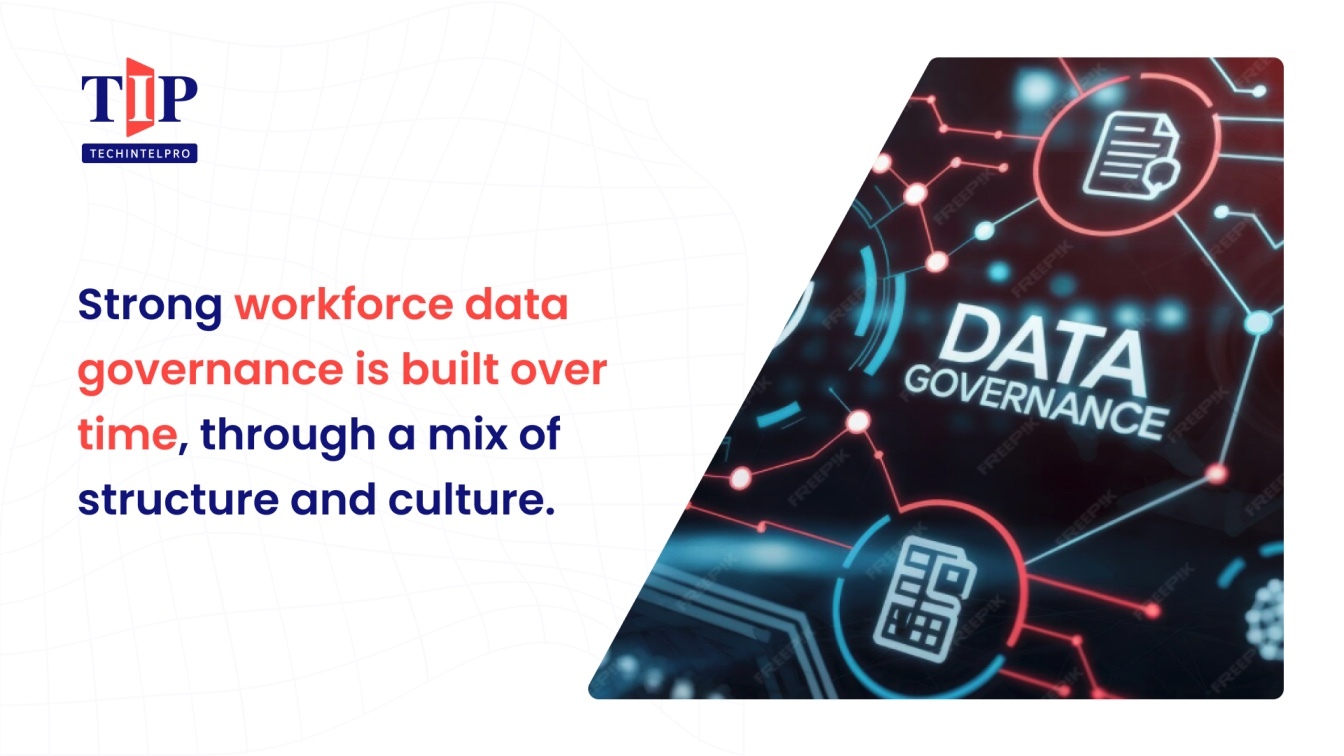
Strong workforce data governance doesn’t come from a single policy or tool. It’s built over time, through a mix of structure and culture.
Here’s what truly works in practice:
- Cross-functional ownership: HR, legal, and tech teams working together, not in silos
- Privacy by design: Thinking about risks before deployment
- Ongoing review: Accepting that governance needs to evolve with the technology
- Clear communication: Making sure employees aren’t left guessing
Most importantly, it requires consistency. Governance isn’t something you “finish”, but something you maintain consistently.
Naturally, companies that take workforce data governance seriously and actively address employee privacy risks will go beyond avoiding regulatory trouble to build something more valuable: trust.
And trust might be the most important asset of all in the modern workplace.