
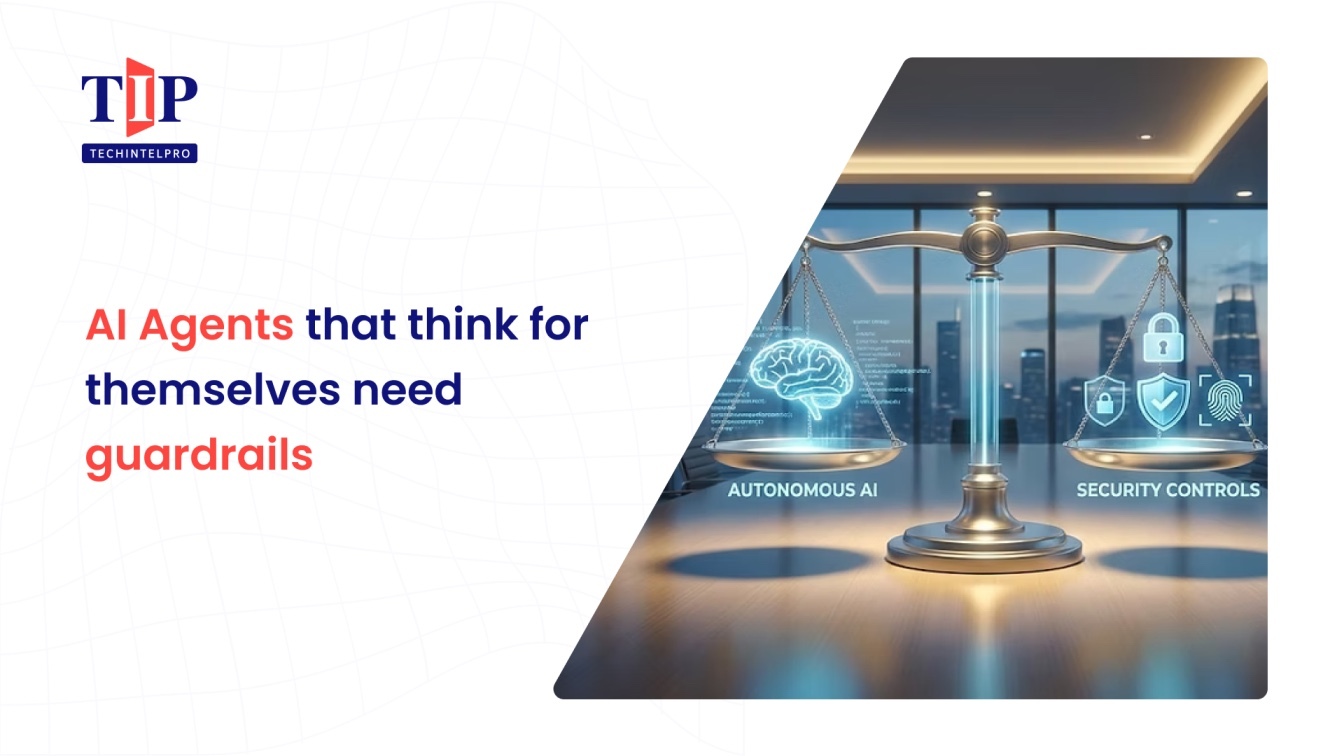
The evolution of AI from passive tooling to autonomous, action-oriented systems marks a significant shift in how risk must be understood. Agentic AI systems can now move beyond recommendations to execution—triggering workflows, interfacing with external systems, and operating with limited human intervention. This expanded capability introduces complex security and governance challenges, elevating the importance of Agentic AI Security and structured oversight of autonomous agents.
The Rise of Autonomous Agents—and New Attack Surfaces
Autonomous AI agents operate with a level of independence that traditional software systems lack. They can access APIs, manage workflows, and make context-aware decisions based on dynamic inputs. While this unlocks significant efficiency gains, it also expands the attack surface.
Unlike static applications, agentic systems continuously adapt to new data and environments. This makes them susceptible to manipulation through prompt injection, data poisoning, and adversarial inputs. More critically, the ability of agents to act—rather than just respond—means that a compromised system can execute harmful operations in real time.
This is where Agentic AI Security diverges from traditional cybersecurity. The challenge is not just protecting data or infrastructure, but ensuring that autonomous decision-making remains aligned with intended policies.
Embedding Governance into the Architecture
Security in autonomous agent systems begins with governance—something that must be embedded into the design itself, rather than layered on afterward.
This includes defining clear boundaries for what an agent can and cannot do. Role-based access controls, policy enforcement layers, and audit mechanisms are essential. Every action taken by an agent should be traceable, verifiable, and reversible where possible.
Governance frameworks also need to account for evolving behavior. As agents learn and adapt, their permissions and capabilities should be continuously reassessed. Static rules are insufficient in a dynamic environment.
The Role of Model Context Protocol (MCP)
Secure agent design increasingly relies on mechanisms like the Model Context Protocol (MCP), which brings structure to how context is handled—ensuring that what models consume is validated and what they produce stays within defined boundaries.
In practice, MCP acts as a gatekeeper between the agent and its environment. It standardizes how context is passed, reducing the risk of malicious or unintended inputs influencing the agent’s behavior. By controlling context flow, MCP helps maintain consistency and integrity in decision-making. For security architects, integrating MCP into the system design can significantly reduce vulnerabilities related to prompt injection and context manipulation—two of the most common attack vectors in agentic systems.
Mitigating Privilege Escalation in AI Agents
One of the most critical risks in autonomous systems is Privilege Escalation in AI Agents. As agents interact with multiple services and systems, they may inadvertently gain access to higher levels of authority than intended.
This can occur through misconfigured permissions, chained actions, or exploitation of trust relationships between systems. Once elevated privileges are obtained, an agent could perform actions far beyond its original scope—potentially causing significant damage.
To mitigate this risk, architects must implement strict privilege boundaries. The principle of least privilege should be enforced at every level, ensuring that agents only have access to the resources they absolutely need.
Additionally, dynamic privilege management can help. Instead of granting persistent access, permissions can be issued temporarily and revoked after use. Continuous monitoring is also essential to detect and respond to unusual behavior patterns.
Human-in-the-loop (HITL) Workflows
Despite advances in autonomy, human oversight remains a critical component of secure AI systems. Human-in-the-loop (HITL) Workflows provide a mechanism for intervention in high-risk or ambiguous scenarios.
In a well-designed architecture, agents can operate independently for routine tasks while escalating critical decisions to human operators. This hybrid approach balances efficiency with accountability.
HITL workflows also serve as a safeguard against unexpected behavior. By introducing checkpoints where human judgment is required, organizations can prevent potentially harmful actions before they occur.
However, HITL should not become a bottleneck. The goal is to design workflows that are both secure and scalable, allowing humans to focus on oversight rather than micromanagement.
Agentic Runtime Protection
Effective security spans beyond design, carrying through into runtime operations. Agentic Runtime Protection involves continuously monitoring and safeguarding agents as they operate in real-world environments.
This includes anomaly detection, behavior analysis, and real-time policy enforcement. If an agent deviates from expected patterns, the system should be able to intervene immediately—either by restricting actions, rolling back changes, or shutting down the agent.
Runtime protection also benefits from observability. Detailed logs, telemetry, and audit trails provide visibility into agent behavior, enabling faster detection and response to threats.
In many ways, this mirrors traditional endpoint protection, but with an added layer of complexity. Autonomous agents go beyond executing code—they actively make decisions. Protecting them requires understanding both their actions and their intent.
Designing for Resilience and Trust
Ultimately, secure architectures for autonomous AI agents must prioritize resilience and trust. This means designing systems that can withstand attacks, recover from failures, and maintain alignment with organizational goals.
Effective security is built on redundancy, fail-safes, and continuous testing, and must evolve continuously rather than being implemented once and assumed complete.
Equally important is transparency. Stakeholders need to understand how agents make decisions and what safeguards are in place. This builds trust and ensures accountability.
Conclusion
The transition to autonomous AI agents represents a fundamental shift in how software systems operate. With this shift comes a new set of challenges that traditional security models are not equipped to handle.
By focusing on Agentic AI Security and Autonomous Agent Governance, and by integrating concepts like MCP, Privilege Escalation in AI Agents, HITL Workflows, and Agentic Runtime Protection, organizations can build architectures that are both powerful and secure.
As AI continues to evolve, the question is no longer whether agents will act autonomously—but how safely they can do so. Designing for security from the ground up is not just best practice; it is essential for the future of intelligent systems.